
Russian Logistics Hubs Become Targets in Ukraine’s Deep-Strike Campaign
 By David Donovan · Aug 11, 2026 · 3 min read
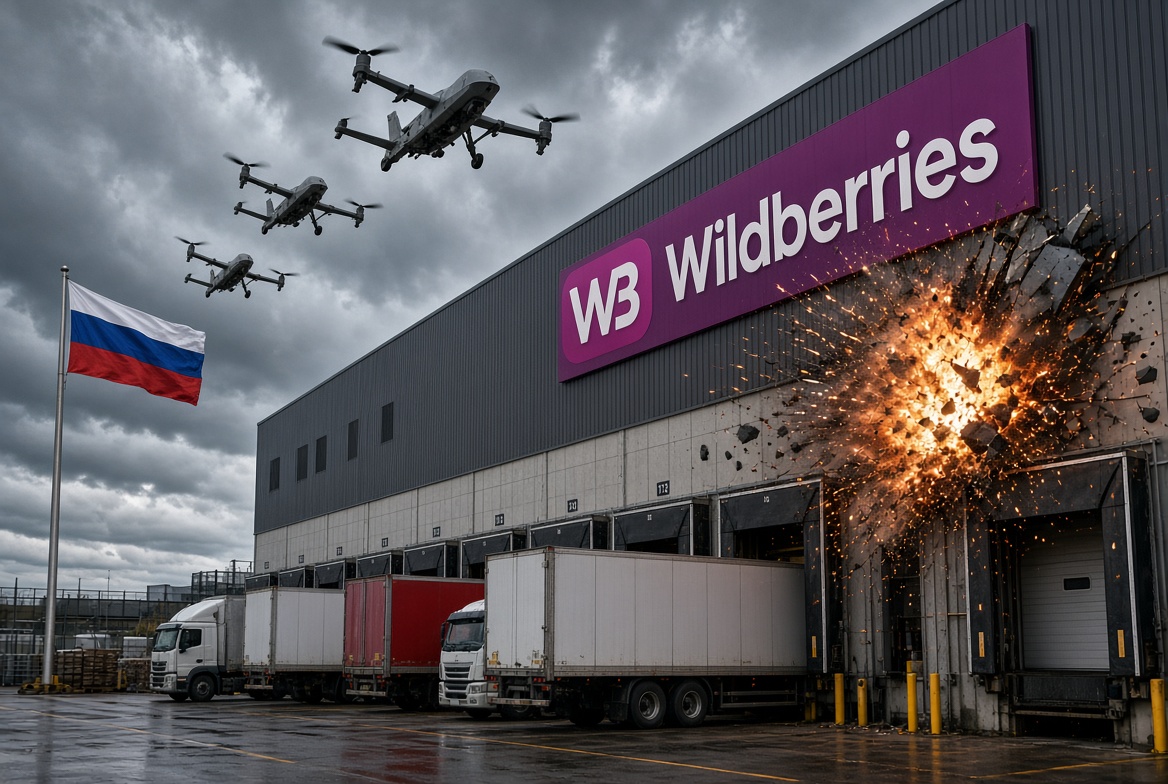
Ukraine’s long-range drone campaign against Russia is increasingly exposing a vulnerability beyond refineries, military installations and energy infrastructure: the logistics networks that keep consumer goods moving across the country. Ukrainian drones have reportedly struck logistics facilities belonging to Wildberries, Russia’s largest e-commerce marketplace, as Kyiv expands attacks deeper into Russia’s civilian industrial and distribution infrastructure.
The campaign represents a potentially significant shift for supply chain operators. Large distribution centers are concentrated, difficult to relocate and essential to maintaining inventory flows across vast geographic areas. Disrupting a small number of major nodes can therefore create consequences far beyond the physical damage at individual facilities.
A Concentrated Logistics Network Under Pressure
At least 23 of Wildberries’ 30 logistics complexes across Russia have reportedly been hit during the past month, including facilities in the Moscow region, St. Petersburg, Tula, Volgograd, Perm, Krasnodar and Samara. At least 20 reportedly sustained severe damage, while some were destroyed. By August 5, 11 Wildberries logistics complexes covering approximately 1.4 million square meters had been permanently closed, with at least nine additional facilities significantly damaged.
One of the first major reported strikes occurred July 18 at Wildberries’ Elektrostal complex in the Moscow region. The approximately 230,000-square-meter facility was described as the company’s second-largest logistics center in Russia. The operational implications extend well beyond Wildberries itself. The marketplace reportedly controls about 45% of Russia’s e-commerce market, processes millions of orders daily and reaches 79 million customers each month. Its annual sales are estimated at $68 billion.
The network also connects approximately 100,000 small businesses with customers across Russia and supports some 95,000 collection points, making its distribution infrastructure an important link between merchants and consumers.
From Infrastructure Damage to Supply Chain Disruption
The effects are already moving downstream. Consumers in Moscow and other major cities have reportedly experienced delivery delays lasting weeks, widespread order cancellations and higher prices for some basic products. Small and midsize merchants that stored inventory inside affected Wildberries facilities have also suffered losses.
The vulnerability illustrates a broader supply chain risk: highly centralized fulfillment networks can provide enormous efficiency during normal operations but create concentrated points of failure during prolonged physical disruption.
Wildberries founder and CEO Tatyana Kim said the company is relying on redundancy and rerouting to maintain operations. “The attack on Wildberries infrastructure is an attack on civilians,” Kim said, adding that entrepreneurs from Russia, Kyrgyzstan, Belarus, Kazakhstan, Armenia, Uzbekistan and China had suffered losses.
The company has also reportedly classified drone attacks, shelling and explosions as force majeure events in its terms, potentially limiting its liability for inventory destroyed at its warehouses. It subsequently announced partial assistance for some affected sellers.
Logistics Infrastructure Becomes a Strategic Asset
Wildberries may not be the only e-commerce network exposed. On July 31, Ukrainian drones reportedly struck a shipping warehouse in Zelenodolsk, Tatarstan, near a facility operated by Ozon, Wildberries’ largest competitor. Ozon accounts for approximately 32% of Russia’s online commerce market.
The emerging pattern highlights a risk extending beyond Russia and Ukraine. Warehouses, fulfillment centers and transportation hubs are no longer simply commercial real estate. In economies dependent on large, centralized distribution networks, they can function as critical infrastructure. For supply chain leaders, resilience planning must account not only for cyberattacks, weather events and transportation disruption, but also for the possibility that logistics nodes themselves can become strategic targets.