Resilient Supply Chain Podcast: When Automation Outruns Maintenance
 By The Supply Chainer · Sep 1, 2026 · 3 min read
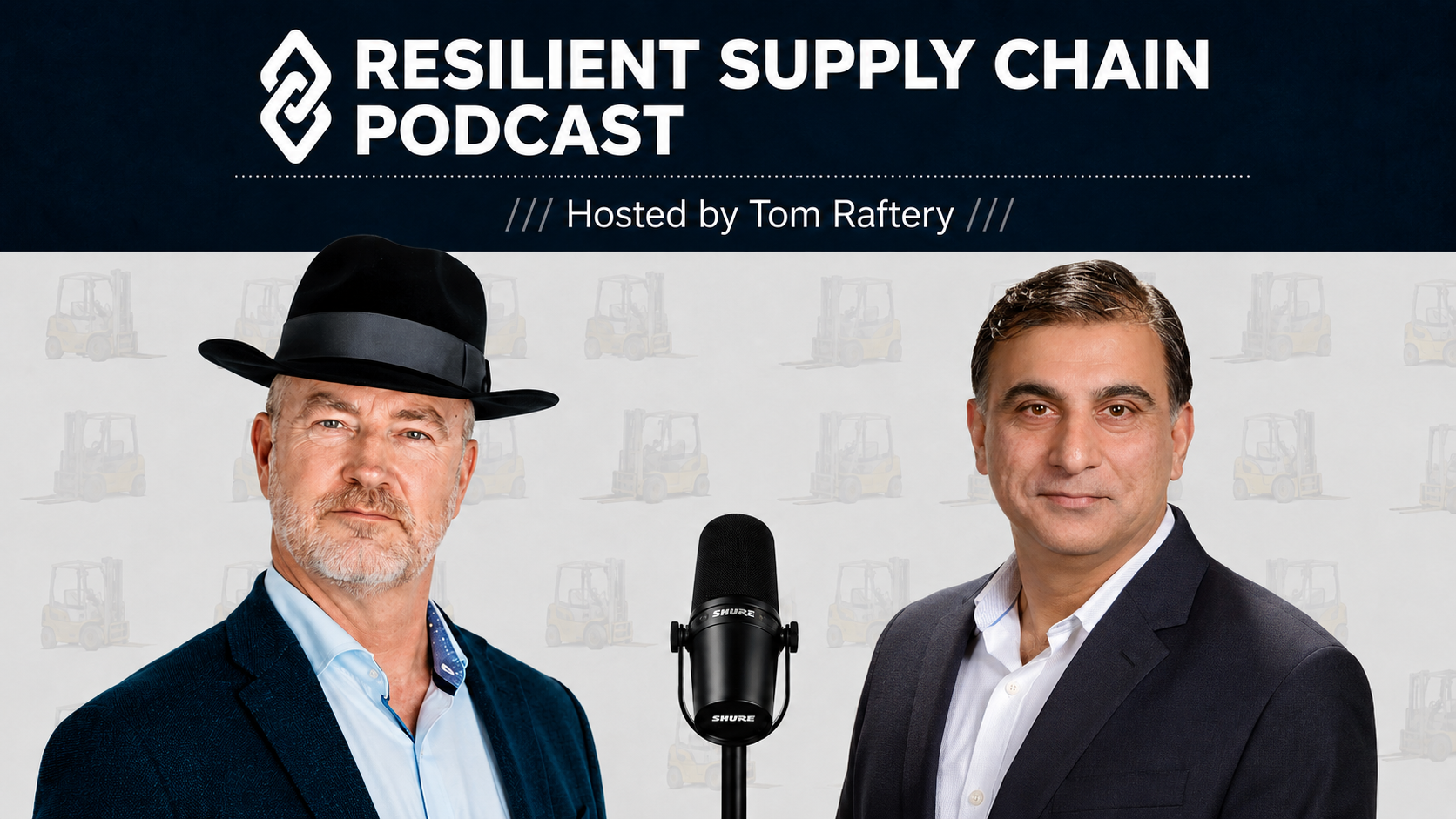
The latest Resilient Supply Chain Podcast, hosted by Tom Raftery, examines a resilience risk that sits much closer to operations than geopolitical disruption or supplier failure. Raftery is joined by Asim Akram, CEO of MultiSensor AI, to explore what happens when warehouses and fulfilment centres become increasingly automated while the maintenance systems supporting them remain periodic and manual. For supply chain leaders, the issue is consequential because failure in conveyors, motors, chillers or electrical systems can quickly become downtime, service disruption and lost revenue.
The full episode is available at www.resilientsupplychainpodcast.com
The Risk Has Moved Inside the Facility
Supply chain resilience is often framed around external disruption: suppliers, ports, transport capacity, labour or geopolitical shocks. The conversation challenges that framing by pointing to an increasingly important internal dependency. As warehouses become more digitised, more operational throughput depends on physical assets functioning continuously. Automation does not remove those dependencies. In many cases, it increases them.
Akram argues that the maintenance model has not advanced at the same speed. His blunt summary is that “assets have become more digitised. Maintenance has not.”
That creates a mismatch between highly automated operations and inspection processes that may still rely on handheld devices, periodic checks and human availability.
Gradual Degradation, Sudden Failure
One of the strongest operational distinctions in the discussion is between degradation and failure. “The degradation that happens, it happens over time, but the failure happens in one shot,” Akram says.
That matters because periodic inspections provide snapshots. A motor, conveyor or electrical connection may appear within tolerance during an inspection while still deteriorating between checks. By the time the failure becomes visible, the operational consequence may already be immediate.
The implications extend beyond maintenance itself. A conveyor failure can interrupt throughput. A refrigeration or handling failure can affect perishables. An electrical problem can create safety risk. In each case, what appears to be an engineering issue can become a service, revenue, continuity or safety issue.
From Cost Centre to Continuity Function
The conversation also reframes maintenance economics. Raftery raises the question of whether executives still treat maintenance primarily as a cost centre rather than as a continuity function. Akram argues that the economics change once maintenance is connected directly to production and service. If equipment failure stops product moving through a warehouse, maintenance spend is no longer simply about keeping machinery in good condition. It protects throughput, customer availability and revenue.
That distinction is particularly relevant in high-throughput operations where downtime creates variable emergency costs. Labour may be harder to source at short notice, repairs become more expensive, and service consequences can continue after the asset itself is restored.
Detection Still Requires Action
AI and continuous monitoring can identify changes in thermal, vibration or acoustic behaviour earlier than periodic manual inspection, but the discussion avoids treating detection as the endpoint.
The operational constraint shifts to trust and response. If a system identifies a developing problem but teams do not trust the signal, cannot validate it or do not know what action to take, the value of earlier detection falls sharply. That places governance and operating process alongside technology. Organisations need to know which assets are critical, what failure modes matter, who responds to an alert and what level of risk justifies intervention.
The broader implication is that supply chain automation cannot be separated from the systems used to maintain, monitor and govern the physical infrastructure beneath it. As operations become faster and more automated, resilience increasingly depends on whether maintenance practices, decision rights and response processes evolve at the same pace. For senior supply chain and operations leaders, that makes asset maintenance less of a technical back-office function and more of a core element of operational risk management.