Resilient Supply Chain Podcast: Why AI Needs a Nervous System Before It Can Transform Supply Chains
 By The Supply Chainer · Aug 4, 2026 · 3 min read
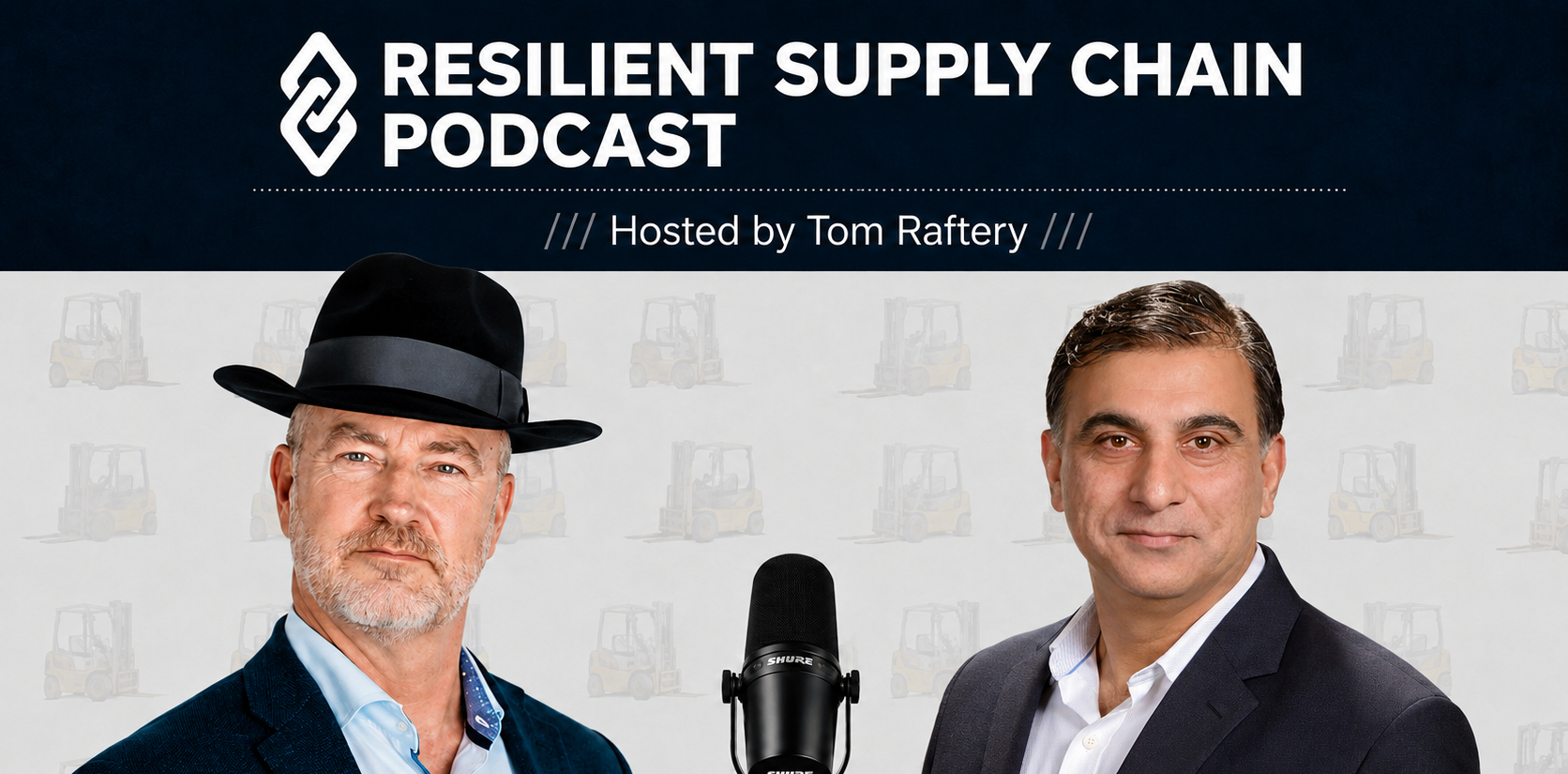
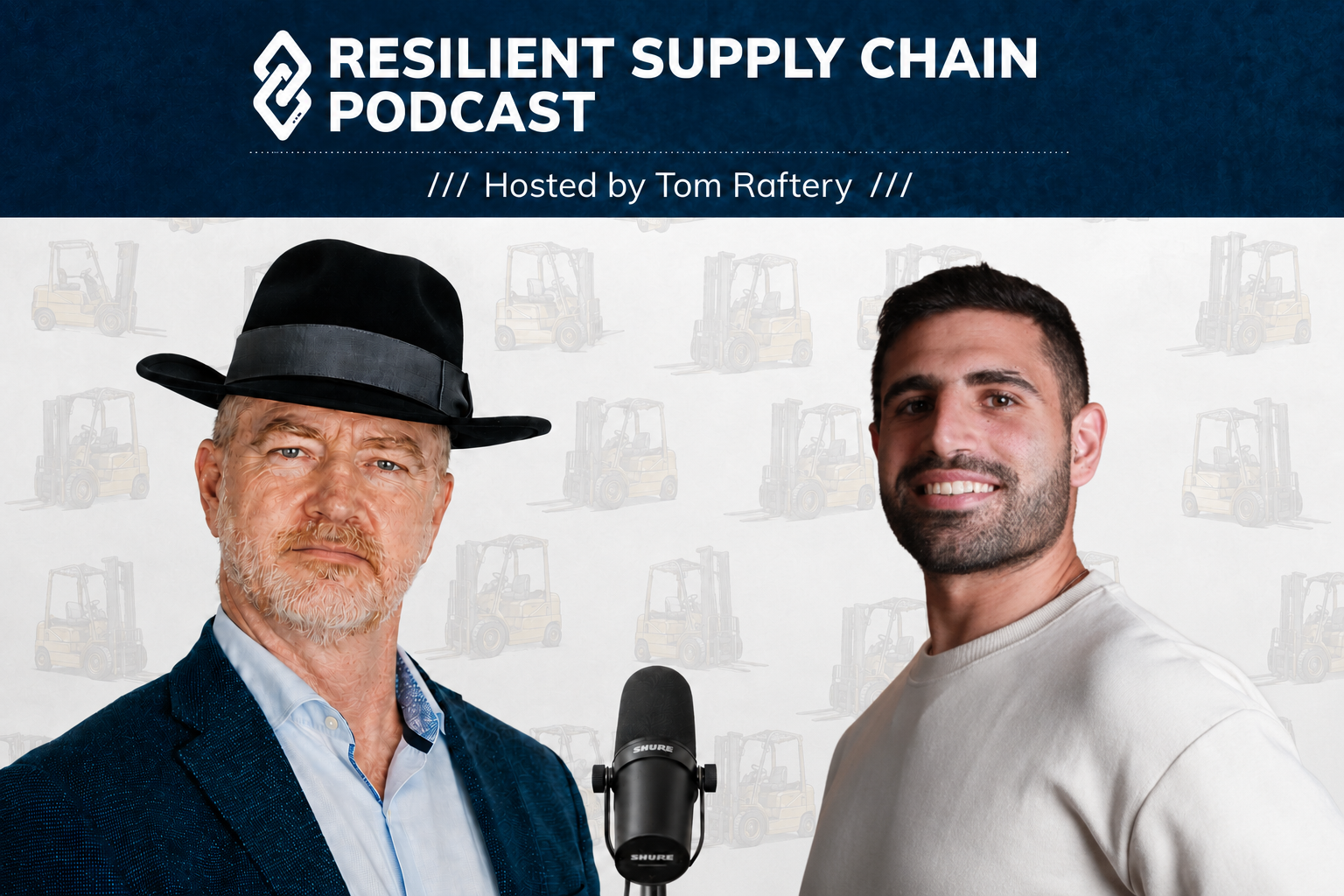
Artificial intelligence is advancing rapidly, but its biggest limitation in supply chains may have little to do with the sophistication of the models themselves. In the latest episode of the Resilient Supply Chain Podcast, host Tom Raftery speaks with Doron Hazan, Director of Data Product and Artificial Intelligence at Wiliot, about why AI can only make good operational decisions when it has reliable awareness of the physical world around it.
The discussion explores the role of continuous sensing, real-time data and human judgement in building more effective supply chain decision-making.
The full episode is available at www.resilientsupplychainpodcast.com
AI's Missing Layer
The conversation challenges one of the dominant assumptions surrounding AI adoption in supply chains: that increasingly capable models will naturally deliver better operational outcomes.
Hazan argues that the opposite may often be true. Without a robust physical data foundation, even the most capable AI systems remain disconnected from operational reality.
Using the analogy of the human body, he describes modern AI as "a very strong brain" that still lacks "a nervous system."
That metaphor becomes the organising principle for the discussion.
AI reasoning has advanced dramatically, but physical supply chains remain difficult because the systems making decisions often lack timely awareness of what is actually happening across products, pallets, warehouses and transport networks.
The Data Foundation Comes Before Automation
Another recurring theme is the importance of sequencing investment correctly.
Organisations eager to deploy AI agents and autonomous decision-making risk overlooking the underlying sensing infrastructure that those systems depend upon. As Hazan puts it, "If you don't give the data foundation to that AI, it's pretty much useless."
Rather than viewing sensors, ambient IoT and real-time operational data as supporting technologies, the discussion frames them as prerequisites. Continuous awareness of inventory location, product condition and operational events creates the context that allows AI to generate useful recommendations rather than sophisticated guesses.
Visibility Is Not the Same as Control
Another important distinction concerns the gap between digital records and physical reality.
Traditional dashboards may continue presenting apparently accurate information even when failures have already occurred deeper within the operational chain.
When the underlying data collection breaks down, leaders may receive increasingly polished reports built on increasingly unreliable information. Hazan notes that one of his biggest surprises after moving into supply chain was discovering how little genuine control organisations have over large physical networks. Even when processes operate correctly 98% of the time, the remaining exceptions become significant once they occur across millions or even billions of individual items.
Human Judgement Remains Central
Despite his enthusiasm for AI, Hazan does not argue for fully autonomous supply chains in the near term. Instead, he positions AI as a decision-support capability that enables faster and more informed human judgement. The discussion explores where automation creates value, but also where human oversight remains essential.
Strategic decisions involving suppliers, inventory, distribution and operational trade-offs continue to require context that current AI systems cannot fully observe or interpret.
Continuous physical sensing, predictive models and decision support together form a partnership rather than a replacement for operational leadership. As supply chains become more automated, the conversation suggests that competitive advantage will depend less on acquiring the latest AI model and more on building trustworthy operational data, integrating that information into decision processes and maintaining appropriate governance over increasingly autonomous systems.
For supply chain leaders, the challenge is therefore not simply adopting AI, but ensuring that AI has sufficient awareness of the physical world to support reliable execution.