Resilient Supply Chain Podcast: When Visibility Fails to Become Action
 By The Supply Chainer · Aug 13, 2026 · 3 min read
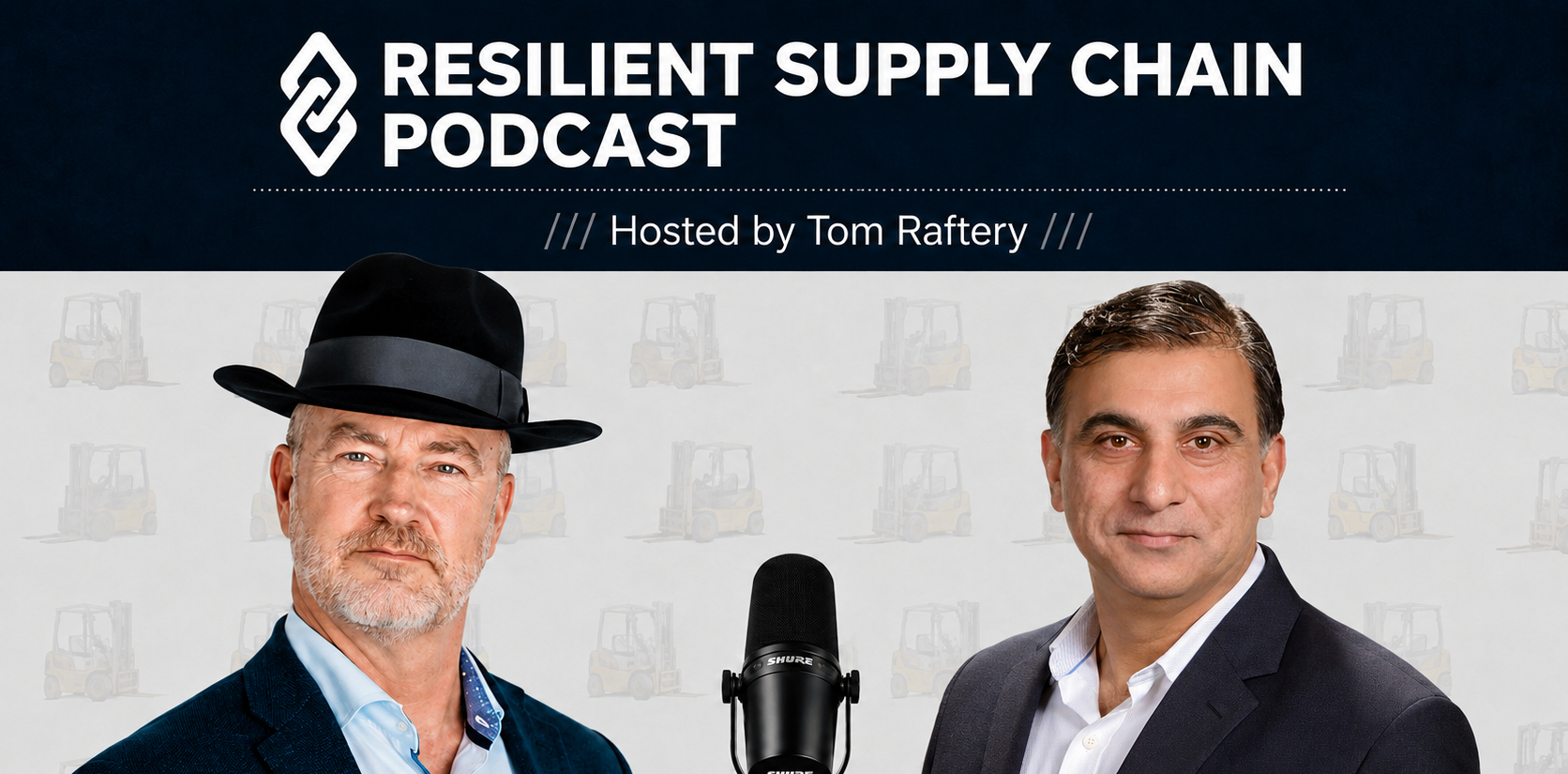
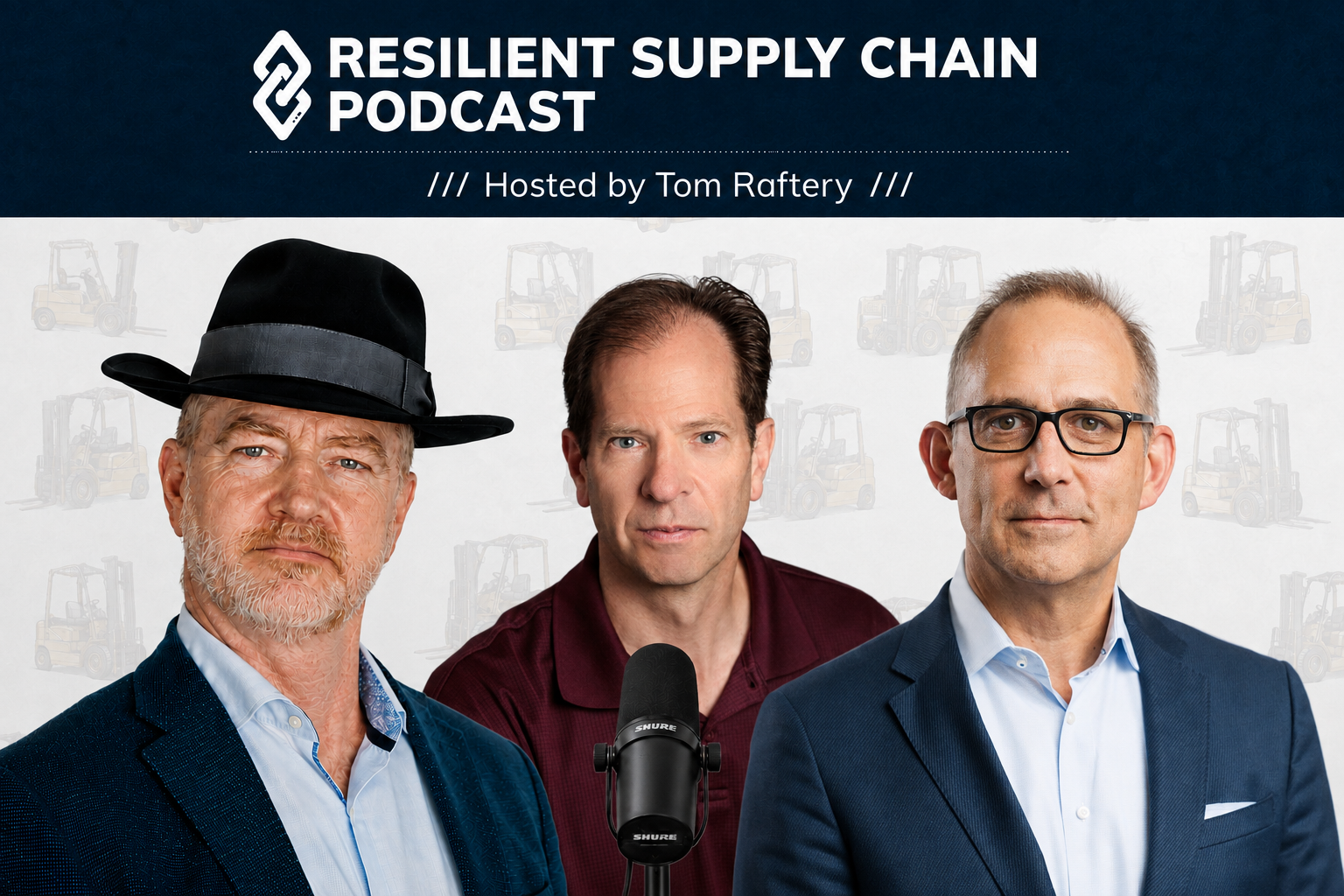
The latest Resilient Supply Chain Podcast examines a problem many organisations now face: having more operational data without necessarily making better decisions. Host Tom Raftery is joined by Scott DeGroot, Executive Director of the Global Supply Chain Institute at the University of Tennessee, and Keith La Londe, Vice President of Systems at PathGuide Technologies.
The discussion focuses on the disconnect between enterprise planning systems and warehouse-floor execution, and the consequences for cost, service and operational control. The full episode is available at www.resilientsupplychainpodcast.com
The Gap Between Planning and Execution
The central tension is one of timing. Warehouse operations run in seconds and minutes: trucks arrive, labour shifts, orders change and carrier cut-offs approach. Enterprise planning systems typically work across longer horizons and cannot always absorb that operational volatility fast enough.
DeGroot argues that this mismatch leaves people manually bridging the gap between what the ERP says should happen and what is actually happening. When that bridge fails, the consequences are tangible: idle trucks, unfulfilled orders, congestion, wasted labour and declining service levels.
The problem, therefore, is not simply visibility. DeGroot describes the result as “dashboard theatre” - organisations can see what is happening, yet fail to turn that information into better decisions for the next few hours.
Data Without Operational Ownership
The conversation also challenges the assumption that a single system should always represent a universal source of truth. La Londe argues that ERP and warehouse management systems serve different purposes: ERP typically owns financial and order-level records, while the WMS holds the granular truth about where inventory physically sits and how it moves.
That distinction becomes critical when data conflicts. Rather than allowing one system to override another informally, the discussion points to governance, reconciliation and clear ownership of data domains. Metrics create another governance problem. DeGroot warns that organisations can build measures that are “self-serving”, such as counting an order as successfully fulfilled when it has merely reached the loading dock. A metric can look strong internally while failing to reflect whether the customer actually received the product on time.
Automation Can Amplify Poor Design
Technology investment does not remove the need for process discipline. One example involved a multimillion-dollar automated guided vehicle installation that reduced productivity because robots and people repeatedly competed for the same physical space. La Londe makes a similar point about warehouse automation more broadly. A conveyor, ASRS installation or other automation may improve one task while creating new data, integration and workflow problems elsewhere if the operating environment is not considered first.
AI is presented in the same practical context. Its value lies less in generating more information than in helping operational teams identify patterns, reallocate resources and improve decisions across slotting, labour and transport flows.
Acting Before Certainty Arrives
The discussion ultimately moves beyond systems into decision-making. DeGroot argues that operations cannot wait for perfect certainty because mistakes and discrepancies are inevitable. The better model is to operate within clear guardrails, detect failures quickly and continually correct course.
That has broader implications for supply-chain governance. Resilience depends less on seeing every possible problem than on knowing who can act, which system owns which decision, and how quickly the organisation can adapt when reality diverges from the plan.