Resilient Supply Chain Podcast: When Carbon Data Becomes Financial Risk
 By The Supply Chainer · Apr 14, 2026 · 3 min read
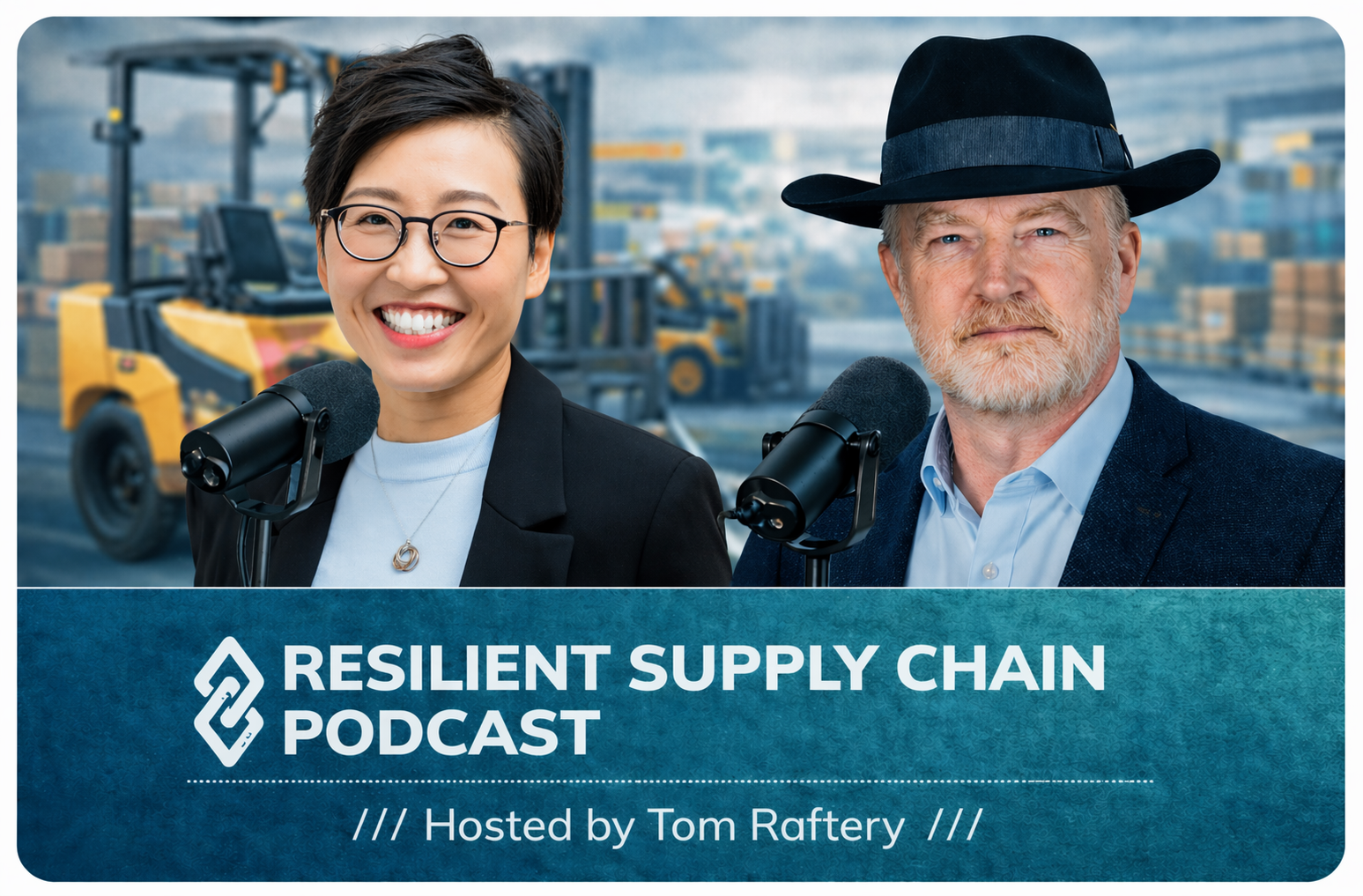
In the latest episode of the Resilient Supply Chain Podcast, host Tom Raftery is joined by Cynthia Lai, a governance and financial literacy advisor and former banking executive director. The conversation centres on a shift many supply chain leaders have not yet fully internalised: carbon data is moving beyond reporting and into the core of financing, insurance, and operational risk. As banks and insurers face tighter regulatory expectations around financed and insured emissions, weak supply chain data is no longer just an ESG problem. It is increasingly a resilience and governance issue with direct commercial consequences. The full episode is available at www.resilientsupplychainpodcast.com
From reporting burden to financing signal
The central tension in the discussion is straightforward. Many companies still treat emissions reporting as a compliance exercise, while lenders and insurers are starting to treat it as a proxy for operational quality, risk management, and future resilience. Lai argues that this shift changes the stakes for supply chain leaders. Scope 3 emissions are “not just like, fancy things for PR,” she says, but part of a wider regulatory and financial framework that increasingly shapes access to capital and insurance.
That matters because supply chain emissions are now being drawn into the risk models of institutions that sit upstream of operations. Once emissions data becomes part of a bank’s or insurer’s portfolio assessment, companies are no longer judged only on what they produce and deliver, but on how transparently and credibly they can account for the impact of doing so.
The cost of weak data
One of the clearest themes in the episode is data integrity. Lai notes that when companies cannot provide robust emissions figures, banks and insurers may rely on proxy data or industry averages instead. That is not a neutral fallback. Proxy assumptions can push a company into a higher-risk category, increasing borrowing costs and insurance premiums. In practical terms, poor carbon data may become a financial penalty.
This introduces a new kind of accountability for supply chain leaders. Emissions visibility is no longer only about satisfying customers, regulators, or sustainability teams. It is about avoiding adverse assumptions from financial institutions. The risk is not limited to high emitters. Firms with incomplete, inconsistent, or immature data systems may find themselves treated as riskier than peers with stronger evidence, even before actual performance is fully understood.
Governance, prioritisation, and execution
The episode also pushes back on the idea that better data requires perfect data. Lai advocates an 80/20 approach: identify the 20 percent of suppliers driving 80 percent of the impact, build a provisional heat map using available procurement and industry data, and begin targeted engagement there. The strategic message is that resilience improves when organisations start with concentration points rather than waiting for ideal measurement systems.
That emphasis on prioritisation ties back to governance. For Lai, governance is useful when it creates clarity, not friction. In this context, that means giving supply chain leaders a structured basis for engaging banks, insurers, and suppliers, while building a credible transition plan that can stand up to external scrutiny. A plan with evidence, even if incomplete, may carry more weight than delay in pursuit of precision.
The next phase of resilience
The discussion points to a broader shift in how resilience is likely to be judged. As regulatory requirements tighten over the next three to five years, and as emissions reporting moves closer to the rigor expected in financial reporting, supply chain transparency will become more consequential. The strategic takeaway is not simply that companies need better ESG reporting. It is that resilience increasingly depends on whether emissions data, supplier visibility, and governance structures are strong enough to support financing, insurance, and decision-making under pressure.
For supply chain leaders, that places carbon data alongside cost, service, and continuity as part of core operational execution. Organisations that respond early are likely to treat data integrity not as a reporting function, but as infrastructure for resilience.