Gulf Shipping Slows to a Crawl While Floating Supply Network Keeps Crews Fed
 By Sophia Hernandez · Apr 14, 2026 · 3 min read
Trump’s blockade of the Strait of Hormuz has pushed one of the world’s busiest maritime corridors to the edge of a logistical paradox: ships are waiting, but they still need to be fed.
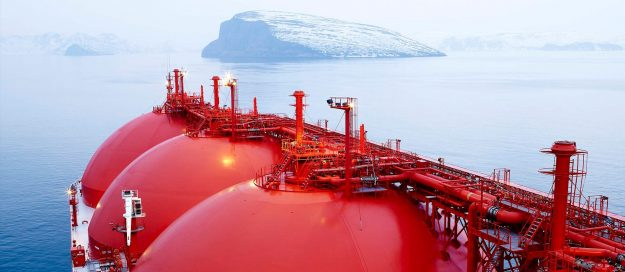
At any given moment in recent weeks, dozens and likely hundreds of vessels - oil tankers, product carriers, bulkers - have been idling across the Gulf, some inside, some outside the narrow choke point. Traffic has not fully stopped, but it has slowed sharply. The result is not just a shipping disruption. It is a floating supply chain problem.
In response to a query from The Supply Chainer, Jukka Schulz of Hapag-Lloyd said the company has “temporarily suspended selected services via the Strait of Hormuz” and is “offering alternative solutions via safer ports and inland connections - although these cannot fully replace regular routes and remain limited in capacity.” He added that services have been rerouted via the Cape of Good Hope and that a return to affected corridors will depend strictly on security conditions.
A tanker drifting off Fujairah is not just cargo. It is 20–30 crew members who need food, water, fuel, spare parts, and continuity of operations.
A Floating Supply Chain Built for Anchor
Under normal conditions, the Gulf runs on a quiet but highly efficient ecosystem designed to supply ships at anchor.
Fujairah, just outside the Strait, is one of the world’s largest bunkering and anchorage hubs. Around it operates a dense network of companies such as Gulf Agency Company (GAC), Wilhelmsen Port Services, Seven Seas Shipchandlers, and V Group. Their role is to deliver everything a vessel needs without requiring it to berth.
Small launch boats move continuously between shore and anchored vessels, delivering fresh food, frozen goods, bottled water, engine parts, and safety equipment. Suppliers like Hasaco Ship Services and AVS Global Ship Supply operate around the clock. Fuel providers including Monjasa, Peninsula, and Minerva handle offshore bunkering.
In normal conditions, the system is fast, predictable, and largely invisible.
When Disruption Turns Flow into Friction
The current situation does not shut the system down. It introduces friction at every step.
More vessels are waiting at the same time, increasing demand on the same pool of service boats and suppliers. Security risks and insurance constraints affect where and when deliveries can take place. Attacks and instability near key hubs disrupt standard bunkering and provisioning cycles.
Instead of smooth rotation, operations become staggered. Deliveries depend on narrow timing windows. A supply boat that would typically service multiple vessels in a shift now handles fewer, with longer turnaround times.
The network continues to function, but under pressure.
Life at Anchor: Waiting, Rationing, Coordinating
Consider a crude tanker that departed Kuwait weeks ago and halted before entering the Strait. Orders shift. The vessel waits.
Fresh produce is managed more carefully. Non-critical maintenance is deferred. Requests for resupply are sent ashore.
An agent from GAC or Wilhelmsen coordinates the operation. A supplier such as Seven Seas prepares provisions. A launch boat is scheduled based on availability, security conditions, and queue priority.
The transfer happens offshore. Supplies are lifted onboard. Documentation is completed. The vessel remains in position.
There is no single breakdown. Only accumulated delay.
Resilient by Design, Under Strain in Practice
The region’s infrastructure was built with disruption in mind. Fujairah’s role as a hub reflects a strategic need to operate outside the Strait when required. Alternative supply points exist in Dubai, Khor Fakkan, Bahrain, and Oman. Multiple competing suppliers and ship-to-ship capabilities add redundancy.
This is why there are no credible reports of widespread shortages of food or water onboard vessels.
But pressure is visible elsewhere. Costs rise as operations become less efficient. Waiting times extend unpredictably. Crew fatigue increases with prolonged anchorage. Minor technical issues take longer to resolve. In normal conditions, a vessel at anchor is part of a continuous flow. Now, it is part of a queue.
The Gulf has not stopped. But it is no longer moving at speed.