Resilient Supply Chain Podcast: Agility, Visibility and the New Resilience Mandate
 By The Supply Chainer · Jun 16, 2026 · 3 min read
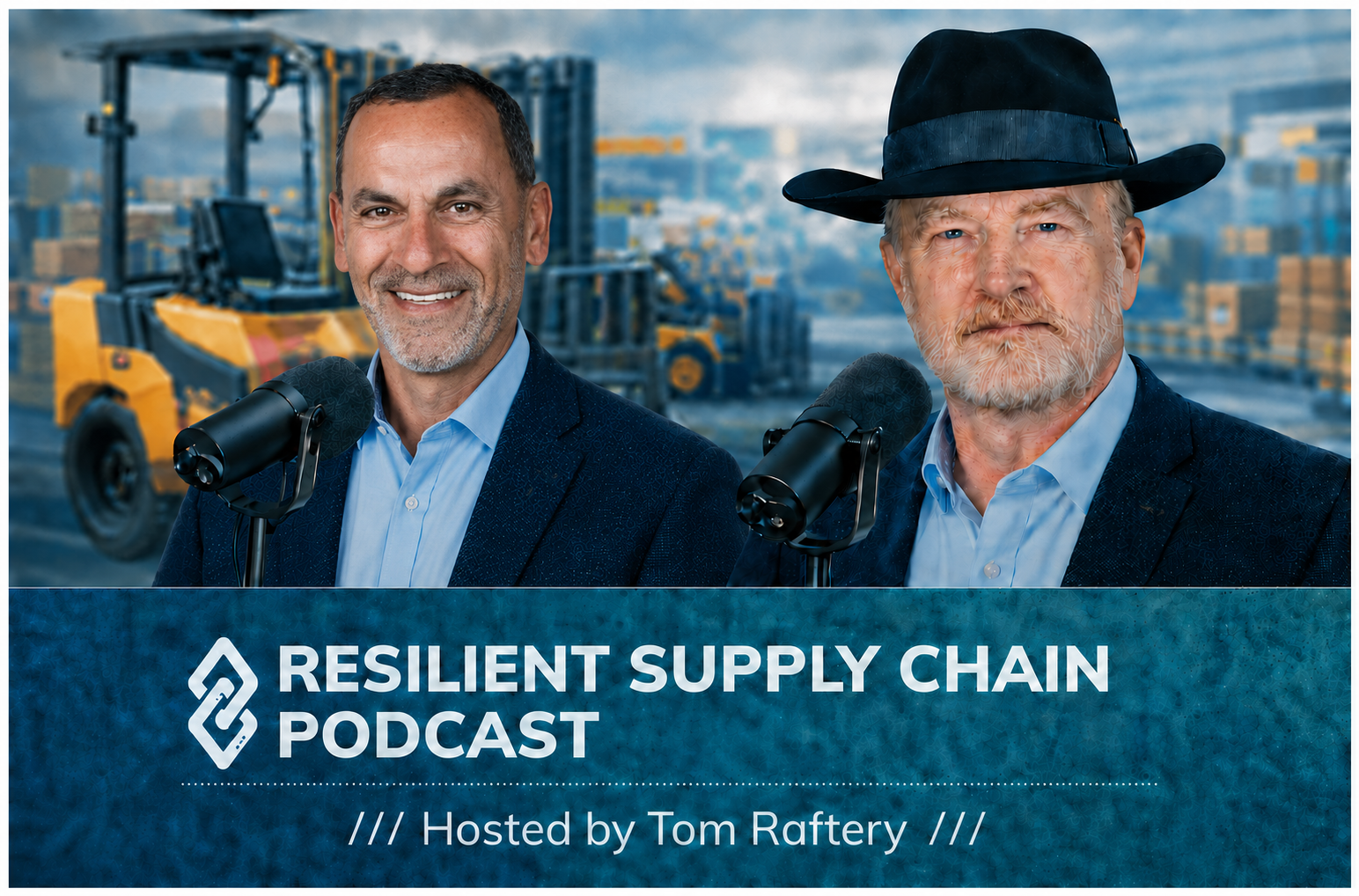
This week’s episode of the Resilient Supply Chain Podcast examined how supply chain resilience is shifting from recovery planning to faster, earlier decision-making. Hosted by Tom Raftery, the episode featured Abe Eshkenazi, CEO of ASCM, the Association for Supply Chain Management. The discussion focused on agility, supplier visibility, AI, sustainability, cyber risk and the governance pressures now reshaping supply chain leadership. For senior supply chain leaders, the conversation highlights why resilience can no longer be treated as a response capability alone. The full episode is available at www.resilientsupplychainpodcast.com or wherever you get your podcasts.
From Recovery to Anticipation
The central tension in the discussion was the difference between resilience and agility. Resilience, as framed in the conversation, is the ability to recover once disruption has already created impact. Agility is the ability to identify risk earlier and adjust before the disruption lands.
That distinction matters because disruption is no longer arriving as a single event. Export controls, tariffs, climate volatility, industrial policy, supplier risk, cybersecurity threats and cost pressure are converging inside the same planning cycle. Eshkenazi captured the shift directly: “Agility now is the competitive advantage.”
For leadership teams, this changes the operating model. Scenario planning is no longer a periodic exercise. It becomes a repeatable management discipline, requiring data, cross-functional alignment and supplier optionality.
Visibility Creates the Next Governance Question
The episode also explored the limits of visibility. The pandemic exposed how little many organisations knew beyond tier-one suppliers. That gap is no longer defensible. As Eshkenazi argued, no supply chain leader can now walk into the C-suite and say they do not know who or what is in their supply chain.
However, visibility does not solve the problem by itself. It creates the next question: whether those suppliers should remain in the network. That shifts the issue from mapping to governance. Supplier transparency must be connected to risk appetite, sourcing strategy, compliance obligations and sustainability objectives.
The implication is clear. Data integrity is valuable only when it supports accountable decisions.
The CFO-CSCO Tension
A further theme was the growing tension between financial discipline and operational resilience. CFOs are naturally focused on cash flow, lower inventory and short-term cost control. Supply chain leaders, by contrast, are increasingly seeking flexibility, pre-qualified suppliers and longer-term response capability.
This tension is not a departmental disagreement. It reflects a strategic trade-off. Lower inventory may improve near-term financial performance, but it can reduce the organisation’s ability to respond when disruption hits. Diversification improves optionality, but it introduces cost and complexity.
The leadership challenge is to define where resilience investment protects enterprise value rather than simply adding redundancy.
Technology Without Capability Adds Risk
AI, automation and real-time visibility were treated as necessary tools, but not sufficient answers. The conversation highlighted a growing mismatch between investment in technology and investment in talent. Systems can process more data and support faster decisions, but they do not remove the need for judgement.
Eshkenazi also pointed to a less comfortable trade-off. By digitally connecting extended supply chains, organisations improve visibility but may increase cybersecurity exposure, particularly through smaller suppliers with weaker security resources.
This is a governance issue as much as a technology issue. The more connected the supply chain becomes, the more accountability has to extend beyond direct operational control.
The strategic takeaway is that supply chain resilience is moving towards earlier visibility, faster decisions and clearer governance. Agility and resilience are no longer separate concepts; they are becoming linked board-level concerns. For supply chain, procurement and operations leaders, the execution challenge is not simply to add more data, suppliers or technology. It is to build decision systems capable of acting before disruption becomes expensive.