Opinion: What Procurement Managers are Actually Dealing with Right Now
 By Spencer Penn, CEO LightSource · Jun 16, 2026 · 2 min read
Over the past few months, I've been recording Source Code, a podcast where we sit down with the people actually doing procurement. Not analysts describing it from a distance, but operators who've spent careers in the middle of it. Three episodes in, a common theme stood out: many of procurement’s issues aren’t new, but are becoming even harder to ignore.
The dual-source lesson hasn't actually landed.
Kris Stasukaitis has spent nearly two decades running mechanical commodity management at Shure, a company that makes highly engineered audio products for touring artists and enterprise conferencing. His takeaway about contingency planning stuck with me: "If you don't have another switch that you can flip, you're dead."
Most teams know this. Fewer have built the redundancy. The problem isn't awareness. It's that qualifying a backup supplier before you need one requires making a business case for a risk that hasn't materialized yet. The teams that skipped this work during the post-shortage recovery are exposed again. Kris’s approach is to use should-cost modeling to have data-driven conversations about cost structure with suppliers. Not to squeeze margin, but to build enough trust that both parties can have an honest conversation about what resilience actually costs.
The adversarial procurement dynamic is costing everyone time.
Another recurring challenge is that the procurement process has become more complex. Nels Hinderlie has spent over a decade in software sales. He’s also married to a procurement director, which gives him an unusual read on both sides. Review cycles now include IT, legal, data privacy, and AI vetting, while the relationship between procurement teams and their internal stakeholders has gotten worse, not better.
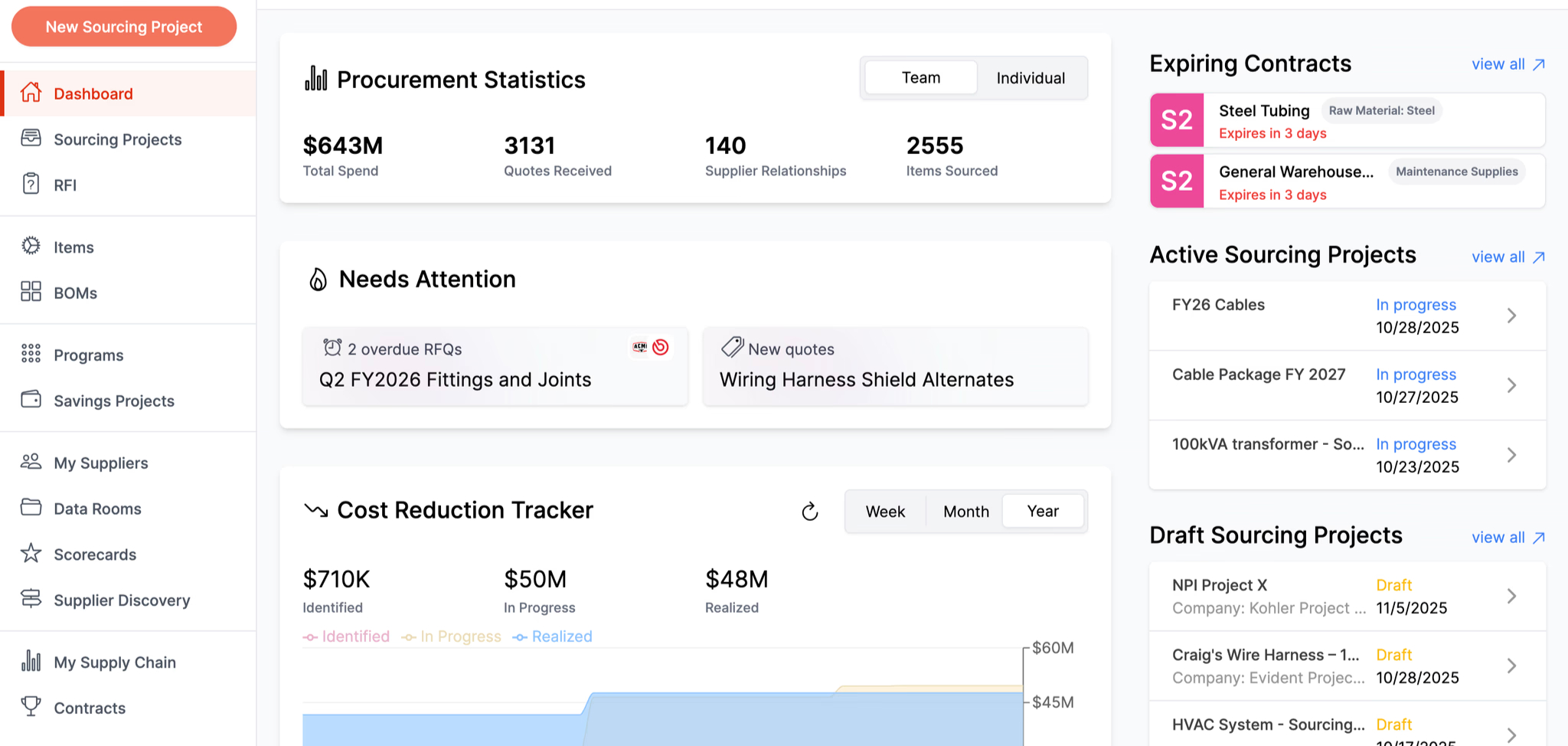
The result is that deals stretch from 90 days to 180, not because of legitimate due diligence, but because nobody was honest about the process upfront. Nels’ counterintuitive point is that strong procurement teams make deals move faster. Being transparent about the real timeline and real requirements from day one is what collapses cycles, not looser standards.
Cost is locked before procurement ever sees a drawing.
This one hit hardest. Nico Orduz built the strategic sourcing function at Time Manufacturing from scratch. His argument is blunt: by the time engineering releases drawings, most of the cost is already determined. Procurement that shows up after design freeze isn’t strategic sourcing. It’s damage control.
Tariffs are making this worse. Nico’s point was that the noise phase is over. The real impact is landing on invoices now. For teams without early procurement involvement, there’s no lever left to pull. None of these issues are new or trends. These are challenges procurement professionals have been managing for years. What’s changing is the level of pressure surrounding them.
The opinions expressed in this article are those of Spencer Penn, CEO and Co-founder of LightSource, a direct materials procurement platform built for engineering-driven manufacturers. The Supply Chainer’s Insights are submitted content. The views expressed in this column are that of the author and don’t necessarily reflect the views of The Supply Chainer.