
Running Coverage: Hormuz - 16 Ships Attacked, Hundreds Delayed, Insurance Costs Rise - “Energy Volatility Feeds Quickly Into Manufacturing Inputs”
 By Hannah Kohr · Mar 27, 2026 · 3 min read
Updated: March 27 08:23
For professionals responsible for keeping cargo moving, the Strait of Hormuz has always been one of the world’s most sensitive maritime chokepoints. Over the past two weeks, it has also become one of the most operationally disruptive.
The escalating U.S.-Israeli conflict with Iran is now directly affecting commercial shipping in the Gulf. Iranian leadership has publicly threatened to keep the Strait of Hormuz closed, while the country’s Revolutionary Guards warned that vessels passing through the narrow corridor could be targeted. For operators managing tankers, container vessels and bulk carriers, this has quickly turned from geopolitical noise into operational disruption.
According to data from the Institute for the Study of War and the AEI Critical Threats Project, at least 16 civilian vessels have been attacked since the campaign began. The incidents include oil tankers, container ships and other commercial carriers operating in the Gulf region.
Two tankers caught fire Thursday in an Iraqi port following attacks linked to naval drones, according to maritime authorities and analysts monitoring the situation. The use of naval drones against commercial shipping is particularly worrying for maritime operators because the systems are relatively cheap, difficult to detect and capable of causing severe damage to large vessels.
For logistics teams, the consequences are already visible in vessel traffic patterns.
Hundreds of ships are now experiencing delays across Gulf shipping routes as operators slow transit, wait for security guidance or hold outside higher risk zones. Some vessels are choosing to remain offshore while owners and charterers assess the risk of entering the Strait. Others are waiting for naval guidance or adjusting routes while insurers review exposure. This hesitation cascades quickly through supply chains.
The Strait of Hormuz normally carries roughly a fifth of the world’s oil and liquefied natural gas shipments. When vessels slow down or queue outside the corridor, port rotations slip. Tankers arrive late to terminals. Container ships miss berth windows. Downstream scheduling - from refinery feedstock deliveries to manufacturing supply lines - begins drifting out of alignment.
Insurance is adding another layer of friction. War risk premiums for vessels entering Gulf waters are already climbing as underwriters reassess exposure. Shipowners and charterers moving cargo through the corridor are facing significantly higher voyage insurance costs, particularly for energy shipments. Those pressures are already filtering into industrial supply chains far from the Gulf itself.
“The instability around the Strait of Hormuz is one of the most important factors right now because it sits at the center of global energy flows,” said Oliver Auston, CEO of Safehold Ltd and former Chairman of the Lifting Equipment Engineers Association, in comments to The Supply Chainer. “Roughly twenty million barrels of oil pass through that narrow corridor every day. When disruption occurs there, the shock moves very quickly through the system.”
Auston noted that the impact is already being felt across industrial material supply chains tied to petrochemicals.

“What many people do not immediately see is how quickly energy volatility feeds into manufacturing inputs,” he said. “Polyester yarns and many of the synthetic fibres used in lifting slings, harnesses and safety equipment are derived from petrochemicals. When oil prices surge, the pressure moves step by step through the chain - oil to petrochemicals, petrochemicals to polyester, polyester to webbing and eventually into finished lifting equipment.”
He added that producers across Asia and Europe are already reacting to the sudden shift in input costs.
“In the past few days we have seen yarn producers dramatically increase prices, and some weaving partners have paused new production while they reassess costs and supply stability,” Auston said. “This is not profiteering by manufacturers. These pressures are already well into the double digits. Raw materials are rising, shipping routes are becoming longer, freight costs are increasing and lead times are extending. What we are seeing in the market today feels very similar to the uncertainty businesses experienced during the early months of the 2020 pandemic.”
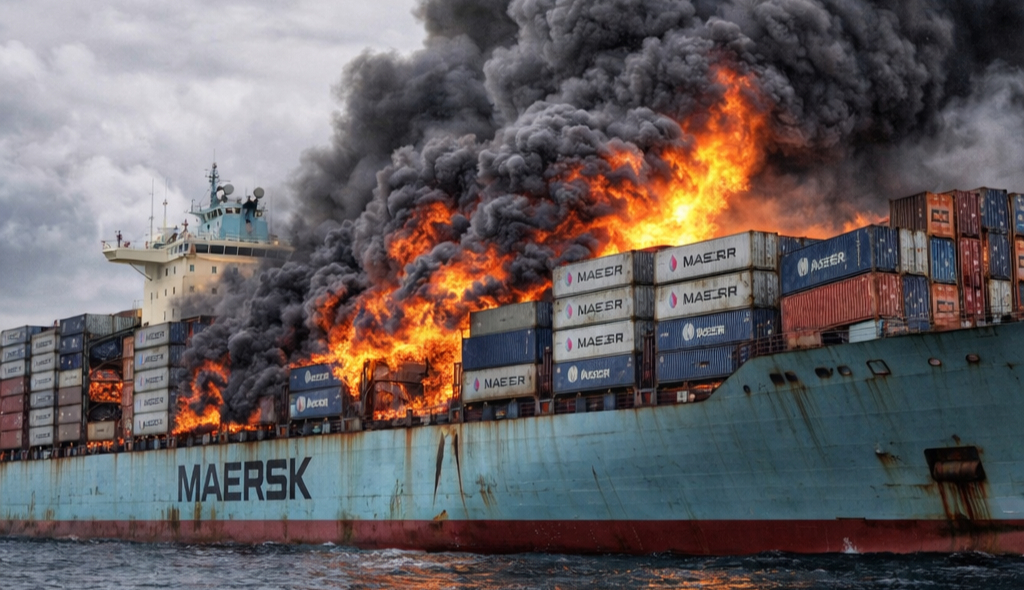
For logistics planners, the result is operational friction spreading across multiple layers of the supply chain. Schedules built even a week ago may already be obsolete. Insurance assessments are changing daily. Shipping operators are recalculating transit risks while manufacturers begin adjusting procurement plans.
The Strait of Hormuz remains open for now, but the operating environment around it has clearly shifted. For supply chain teams responsible for cargo flows through the Gulf, the challenge is no longer theoretical risk. It is the day to day operational headache of keeping ships, materials and production schedules moving through a corridor that has suddenly become one of the most contested pieces of infrastructure in global trade.