Hyundai's Challenge - When AGV Charging Downtime Quietly Caps Warehouse Throughput
 By Hannah Kohr · May 7, 2026 · 2 min read
If you run automation in a distribution center or manufacturing site with a fleet of AGVs or AMRs, you already track utilization numbers that look solid on paper. Yet many operators are discovering that a fundamental operational friction persists once the systems scale: routine battery charging cycles that regularly pull robots out of productive work.
The issue manifests as robots diverting to stationary chargers, waiting, and then re-entering the workflow — time during which they deliver zero throughput. For growing fleets this translates into fleet inflation, higher capital expenditure, and valuable warehouse space consumed by charging stations rather than productive activities.
For warehouse operators scaling AGV fleets, the costs are concrete and compounding. Robots diverted to stationary chargers create predictable gaps in throughput, forcing teams to deploy 15 to 20 percent more units simply to maintain target output. At the same time, dedicated charging zones consume premium floor space that could otherwise support additional storage or picking stations, while the extended work-to-charge cycle stretches ROI timelines and inflates both capital and operating expenses.
Noam Geffen, chief business officer at CaPow, told The Supply Chainer that the success of a recent proof-of-concept with Hyundai Glovis demonstrates how in-motion power delivery can break operational efficiency barriers.
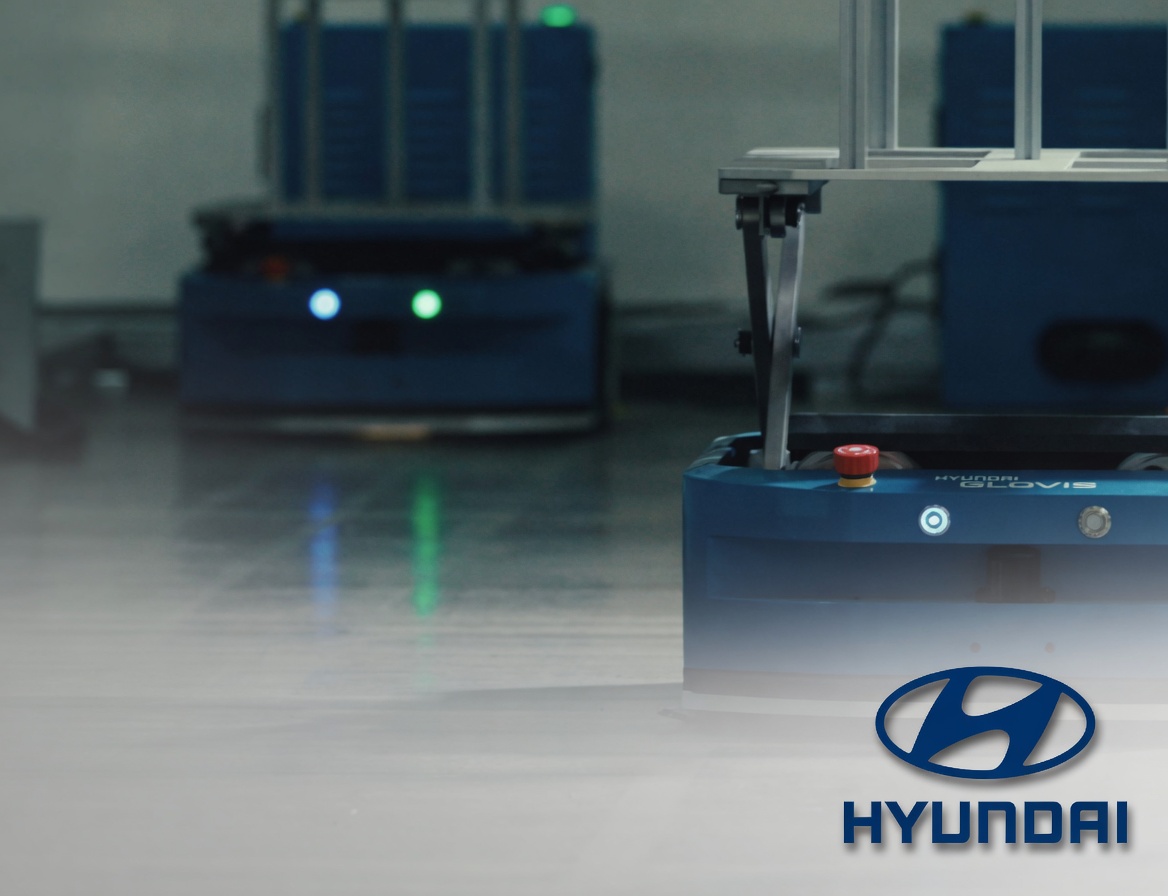
The test at Hyundai Glovis compared conventional charging practices against in-motion charging at natural workflow stopping points in a bin-to-person application using Hyundai RT-30 robots. Traditional clusters experienced average battery declines of around 8 percent per hour and periods of operational inefficiency reaching roughly one-third of tested shift time in some segments. Robots using the CaPow in-motion system maintained stable or slightly positive battery levels across full shifts while staying on primary routes, achieving uninterrupted performance without the need for additional robots or dedicated charging infrastructure.
This case underscores a broader reality facing warehouse automation leaders. Power management is no longer a minor technical consideration but a key limiter of capital efficiency and system throughput. The common industry practice of purchasing 15–20 percent extra robots to compensate for charging downtime increases both CAPEX and operational complexity.
As fleets mature, two additional execution challenges often emerge. The first is real-time orchestration and traffic management in high-density environments. The second is interoperability across robots from multiple vendors, which can create fragmented systems and limit overall optimization.
Solutions addressing these layers — such as advanced orchestration platforms from companies like Locus Robotics and GreyOrange, or alternative wireless charging approaches — are gaining attention. For supply chain and operations executives, the focus is shifting from individual robot performance to end-to-end system reliability and predictable execution under real-world conditions.
The Hyundai Glovis experience suggests that aligning power delivery with actual workflow patterns can deliver meaningful gains in uptime and efficiency. As mobile robotics become core infrastructure rather than experimental technology, operators will continue to evaluate how energy solutions, intelligent coordination, and flexible integration can work together to close the gap between theoretical automation capacity and consistent operational output.