
Early Peak Season and Persistent Red Sea Disruptions Drive Sharp Rise in Container Spot Rates
 By Evan Porter · Jun 9, 2026 · 2 min read
Container shipping operators face renewed pressure on capacity and pricing as front-loading ahead of the traditional peak season combines with ongoing Red Sea diversions to tighten available space on key east-west trades.
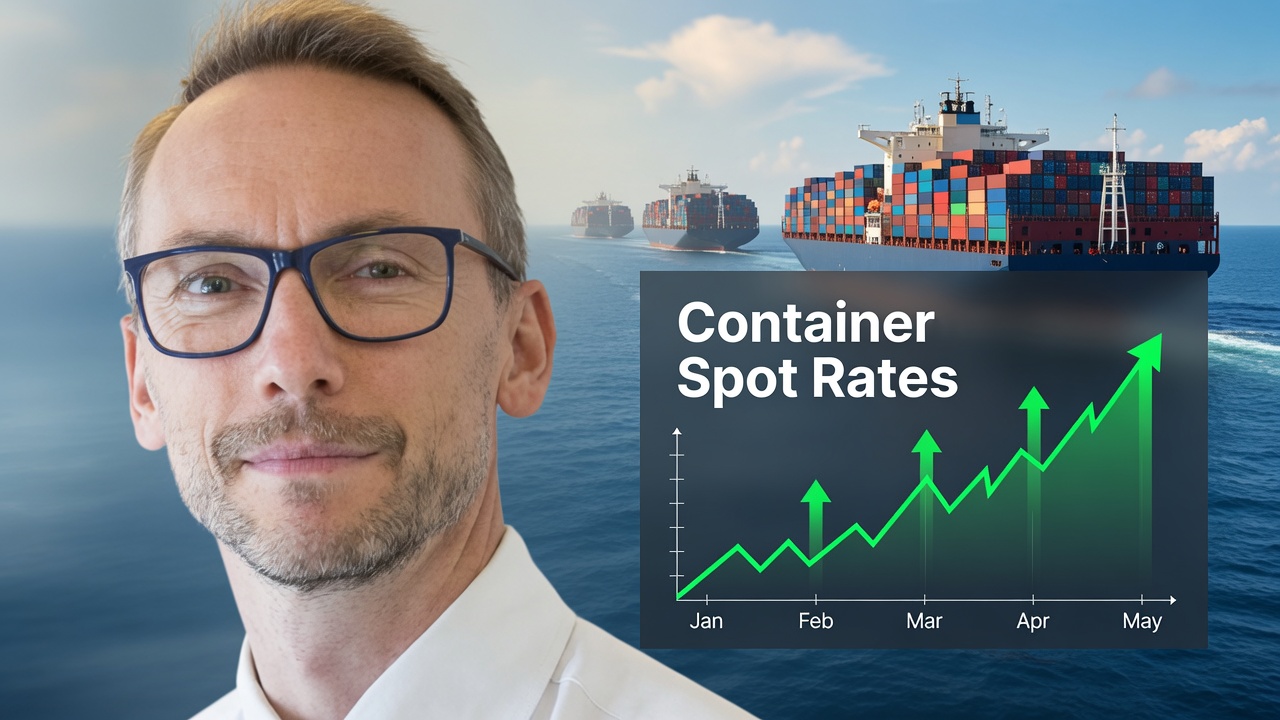
Spot rates have climbed rapidly in recent weeks. According to Drewry data, the World Container Index rose 23% in early June 2026 to $3,433 per FEU. Xeneta reported that Far East to US West Coast spot rates were set to reach around $5,170 per FEU by early June, exceeding prior Red Sea crisis peaks on that lane.
The SCFI composite index also moved higher, reflecting stronger demand on Shanghai-originating routes amid the combined effects of seasonal booking surges and extended transit times from Cape routing.
Operational Pressure Intensifies
Shippers and logistics managers are contending with tighter booking windows, higher surcharges, and growing inventory carrying costs as importers pull forward orders to mitigate risk. Port congestion at key transshipment hubs has compounded the issue, extending lead times and forcing adjustments in yard and warehouse planning.
This dynamic hits core operators—retailers, manufacturers, and shippers—particularly hard on transpacific and Asia-Europe lanes, where reliable ETAs directly affect fulfillment schedules and exception handling.
Industry Context
Carriers continue to manage capacity through blank sailings, but front-loading has accelerated the usual Q3 peak into Q2. Red Sea diversions, now a structural feature rather than a temporary shock, keep vessels committed to longer routes, limiting effective capacity even as new tonnage enters the market.
Peter Sand, Chief Analyst at Xeneta, noted the shift in drivers: “The early arrival of peak season is adding to the cocktail of uncertainty in the market. Back at the start of 2024 you could point to the Red Sea crisis as the root cause of spot rate increases, this time around it is far more nuanced.”
Drewry analysts observed: “East–West container freight markets are strengthening as the peak season arrives earlier than usual this year. Continued Red Sea diversions are extending transit times and encouraging importers to place orders earlier.”
Forward Implications
For supply chain teams, the near-term outlook points to sustained volatility in landed costs and the need for tighter coordination between procurement, logistics, and inventory teams. While some softening may occur later in the year if disruptions ease, current conditions underscore the persistent gap between planning assumptions and execution realities in global ocean freight.