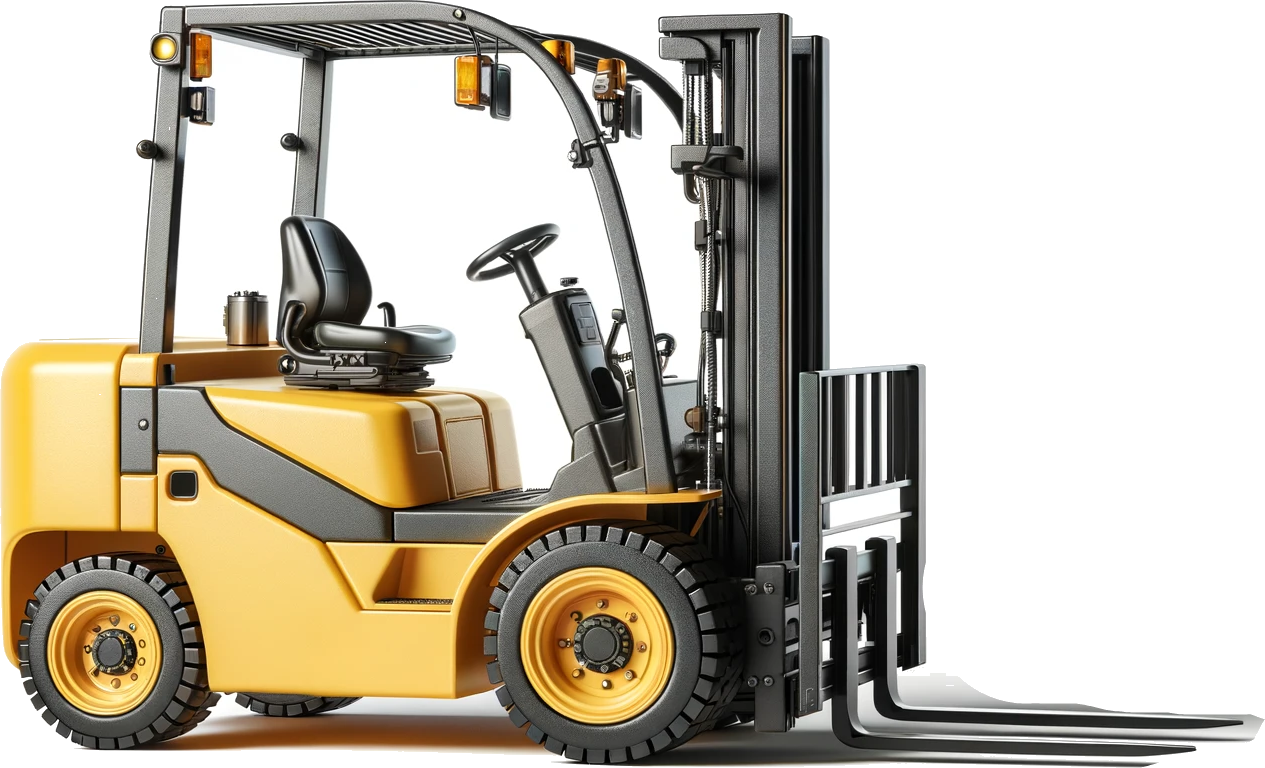
Diesel Price Surge and Battery Price Collapse Make Lithium the Default in Material Handling
 By Sophia Hernandez · May 18, 2026 · 3 min read
Fleet operators continue to face intense pressure on energy costs and asset utilization. With U.S. on-highway diesel averaging above $5.35 per gallon, the search for measurable total cost of ownership (TCO) improvements has become urgent across mixed-energy environments.
Battery Economics Drive the Shift
Electric forklifts already accounted for 71% of North American retail orders in 2024, according to the Industrial Truck Association. The real acceleration — in both indoor warehouse applications and heavier Class IV/V conversions — comes from the dramatic decline in LFP (lithium iron phosphate) battery prices.
BloombergNEF data shows lithium-ion pack prices fell from $137/kWh in 2020 to $108/kWh globally in 2025, with prices in China reaching as low as $84/kWh. This structural repricing removed the longstanding upfront-cost barrier that kept many operators on lead-acid batteries or internal combustion engine (ICE) equipment for decades.
At ACT Expo 2026 these tensions were evident across the show floor. While on-road fleets discussed telematics and payment systems, material handling professionals highlighted how battery economics now determine execution reliability in multi-shift warehouse and yard operations.
ENEROC USA supplies LFP lithium batteries purpose-built for industrial trucks and forklifts. The company operates at the intersection of warehouse execution and battery cost curves, where uptime, throughput, and labor productivity are directly affected.
Mark D’Amato, Vice President of Sales at ENEROC USA, explained: “LFP lithium batteries are now nearly at price parity with traditional lead-acid in the retail market. When a fleet manager compares an ENEROC USA lithium battery against a traditional lead-acid battery, the upfront numbers are very close. Add in that LFP lithium delivers higher performance from day one, offers a much longer useful life per battery, and comes with a longer warranty — the conversation has completely changed. We are still lowering the TCO overall, but now the acquisition price is much lower too.

In multi-shift, power-hungry operations an LFP battery typically delivers roughly 40% lower total cost of ownership than lead-acid. Fleets see positive ROI inside 36 months, with documented savings exceeding $120,000 over five years for a ten-truck fleet. The flat discharge curve means a truck at 80% depth of discharge lifts and moves as fast as one at 20% DOD. This eliminates voltage drops, reduces component wear, and maintains consistent performance even in freezing temperatures or narrow-aisle Class II and III applications. For heavier Class IV and V trucks that long resisted electrification, lithium-first designs are now replacing propane and diesel outright.”
Data Visibility Closes the Utilization Gap
Geotab provides telematics and fleet intelligence platforms that quantify real-world EV performance. The company is relevant because operators need clear visibility into underutilization before they can justify and scale full fleet transitions.
Charlotte Argue, Senior Manager of Sustainable Mobility at Geotab, noted: “Our aggregated data from more than 100,000 connected EVs shows that 41% of heavy-duty trucks drive less than 250 miles before returning to base, making them strong candidates for electrification. Yet fleets managing EVs are only drawing on 36% of their battery capacity each day on average. That’s a significant operational gap.
Data closes this gap. It identifies which routes and vehicles are best suited to electrify first, then helps maximize every asset through real-time state of charge, remaining range visibility, and integrations with routing and charge management software.”
Mixed-Fleet Payment Complexity Remains
WEX delivers unified payment and energy management solutions for mixed-fuel fleets. The company is relevant because even as operators shift toward electrification, most still run hybrid energy environments and need simple, secure ways to control and report every dollar spent on fuel and electricity.
Brian Fournier of WEX said: “The shift toward multi-fuel fleet operations requires new partner and system integrations to create a payment ecosystem that works for both drivers and fleet managers. Seamless payments — whether at a fuel pump, store counter, or EV charger — are critical for maintaining security, control, and data capture. Fleets reduce administrative burden by consolidating invoices and payment methods. A unified ecosystem minimizes the number of systems drivers and managers use, improving efficiency while maintaining strong control and visibility over energy spend.”
The operational default in material handling has shifted. When LFP battery technology reaches near price parity with lead-acid while delivering superior uptime, cycle life, and performance, the economic case for remaining with older power sources disappears in most warehouse and yard applications.
The remaining question for operators is no longer whether to electrify, but how quickly they can capture the TCO gains and productivity improvements already available today.