Trump, Xi and Boeing: The Real Message Behind Last Week’s Beijing Meeting
 By Hannah Kohr · May 18, 2026 · 2 min read
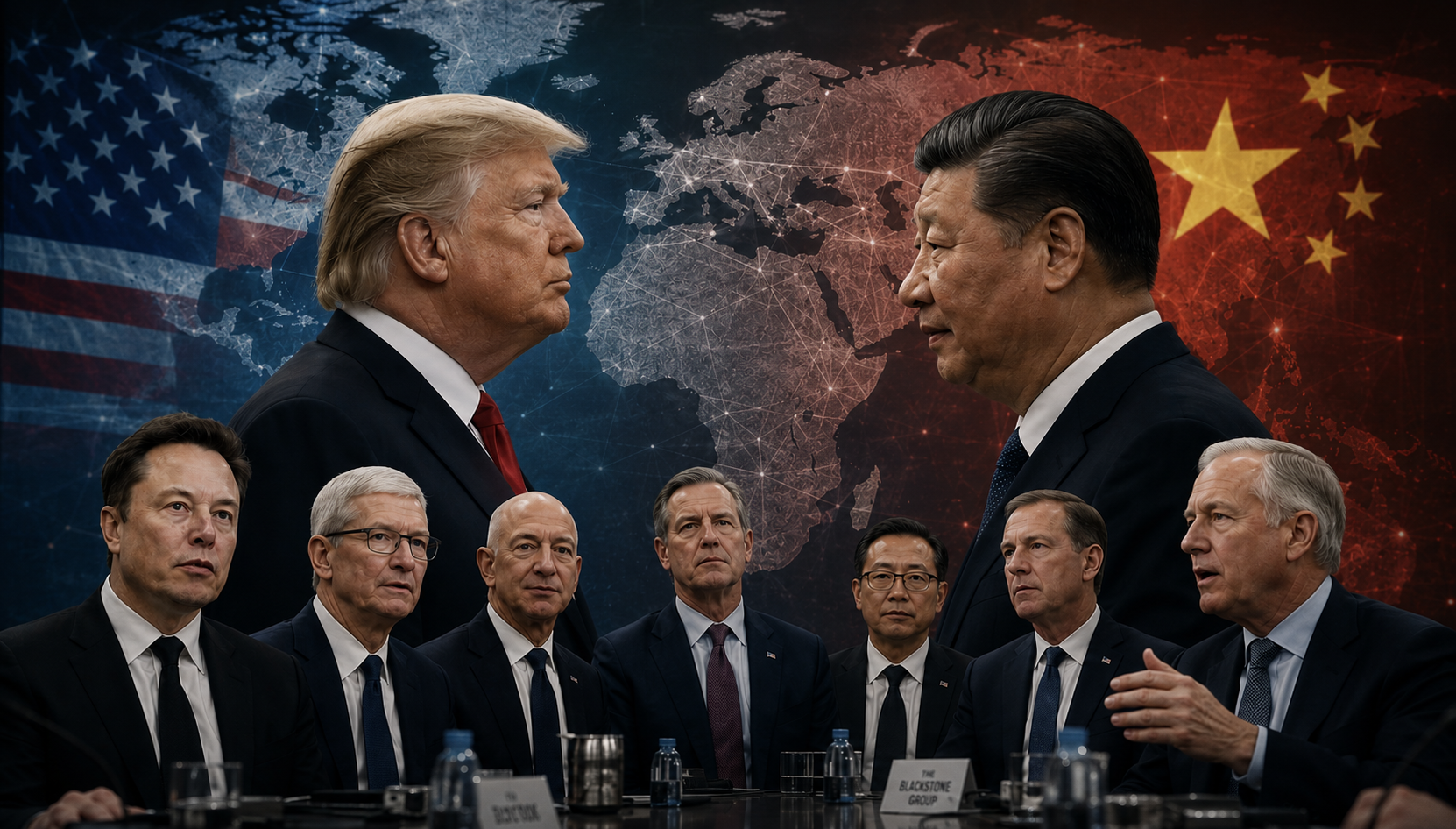
American business leaders did not travel to Beijing for optics. They came because the global economy still runs through China. Donald Trump’s visit to Beijing last week immediately made headlines, but the bigger story was who joined him. Alongside the former president were senior representatives from major American companies including Boeing, Tesla, Blackstone and several manufacturing and industrial firms with deep exposure to the Chinese market.
At the center of the discussions were renewed trade talks and reports of a potential large-scale Boeing aircraft deal with Chinese airlines - a move that would have been almost unthinkable at the peak of the trade war.
The message from both sides was clear: despite years of tariffs, sanctions and political hostility, complete economic separation is not happening.
The Market Has Moved Past “Leaving China”
A few years ago, the dominant conversation was whether companies should exit China entirely. That discussion has changed.
Today, most global companies understand that replacing China is far more complicated than many policymakers originally assumed. Manufacturing capacity can be moved. Entire industrial ecosystems cannot.
China still offers something few countries can match at scale: supplier density, infrastructure, engineering talent, manufacturing speed and mature logistics networks. Even companies aggressively diversifying into Vietnam, India or Mexico continue to maintain major operations inside China.
This is why meetings like the one in Beijing matter so much to executives. Not because they expect a political breakthrough overnight, but because every signal between Washington and Beijing influences business risk calculations worldwide.
Boeing Is More Than a Commercial Story
The Boeing angle is especially important.
For Boeing, access to the Chinese market remains critical after years of delivery freezes and geopolitical tension. For China, American aircraft are still difficult to replace quickly despite efforts to develop domestic alternatives.
A potential deal would not simply represent aircraft sales. It would signal that both governments still recognize the cost of pushing economic confrontation too far.
That matters well beyond aviation. Procurement teams, sourcing managers and logistics leaders globally are watching these developments closely because geopolitical tension now directly affects operational planning.
Inventory strategies, supplier concentration, regional sourcing decisions and long-term contracts are no longer based only on cost efficiency. Political stability and trade predictability have become equally important.
The Next Phase Is “Managed Dependence”
What we are likely seeing now is not a return to the old globalization model, but something more cautious.
Companies are not rebuilding a world where everything flows through China. But they are also not preparing for a clean break.
Instead, many are building what could be called managed dependence - maintaining access to China while reducing overexposure wherever possible.
That means dual sourcing, regional manufacturing hubs, larger safety buffers and more flexible transportation planning. Not dramatic exits. Controlled diversification.
Trump’s Beijing visit did not resolve the rivalry between the United States and China. But it did reinforce an important reality for global business: despite all the political rhetoric, the world’s two largest economies remain deeply connected - and most companies are planning accordingly.