Amazon's Next-Gen Proteus Robot: Advancing Warehouse Automation in Europe Amid Job Displacement Concerns
 By James Samuel · Jun 7, 2026 · 2 min read
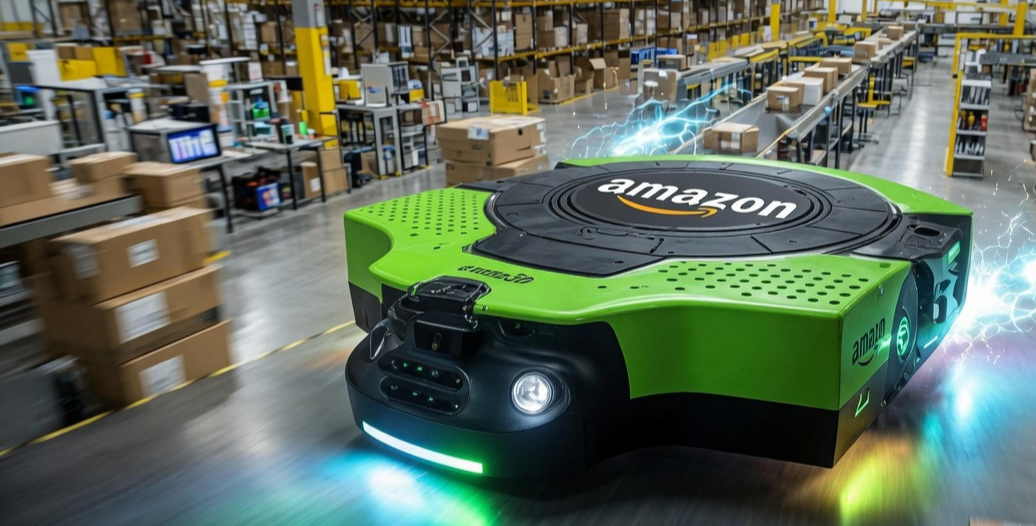
Amazon has unveiled the next-generation Proteus robot, an autonomous mobile unit enhanced with conversational AI capabilities. The announcement, made at the "Delivering the Future" event in London, positions Proteus as a more versatile tool for material movement in fulfillment centers. Unlike previous versions limited to dock areas, the upgraded robot can operate across larger warehouse spaces and respond to natural language commands from workers.
Amazon plans to deploy the new Proteus in Europe during the first half of 2027 as part of a €10 billion investment in its fulfillment network. The rollout accompanies expansions of other systems: Vulcan, a robot with tactile sensing for picking and stowing, and STARK, a collaborative tote-handling solution scaling to 15 European sites. Amazon reports over one million robots already operating globally, with the original Proteus piloted at 25 U.S. sites since 2022.
Amazon's Perspective
Scott Dresser, Vice President of Amazon Robotics, described the technology's intent: "You tell it what needs to be done. It figures out the priority, the route, the timing. It becomes your assistant for material movement." The company frames these robots as tools to handle physically demanding tasks, improve safety, and support employees while enabling faster fulfillment.
Amazon also highlights job creation, noting that robotics investments have driven employment growth in facilities. Executives like John Boumphrey, Amazon UK Country Manager, have stated that automated sites often require more workers in new skilled roles.
Broader Context and Criticisms
While Amazon emphasizes collaboration between humans and robots, internal documents and external analyses reveal a different picture. Leaked reports indicate plans to automate up to 75% of operations, potentially avoiding the need to hire hundreds of thousands of additional workers in the U.S. alone by 2027 and reducing costs by around 30 cents per item. This aligns with recent corporate layoffs, including thousands in white-collar and robotics-related roles.
Labor groups and analysts raise concerns about displacement, intensified work paces, and injury rates. Amazon warehouses have recorded injury incidents 30% higher than industry averages in some studies, partly attributed to the faster operational tempo enabled by robotics. Workers report heightened monitoring and pressure even as robots take on repetitive tasks.
Industry observers note that while new technical maintenance and oversight positions emerge, the net effect on lower-skilled warehouse roles remains uncertain. Historical data on automation shows mixed outcomes: productivity gains alongside wage pressures and job shifts in logistics sectors. Amazon's expansion occurs against a backdrop of global supply chain efforts to balance efficiency with workforce stability.
Implications for Supply Chain Professionals
The Proteus rollout signals accelerating adoption of AI-driven robotics in European logistics, likely influencing costs, throughput, and labor strategies across the sector. Supply chain leaders should monitor how these technologies reshape facility design, skill requirements, and vendor ecosystems. While efficiency benefits are clear, sustainable implementation will require addressing human capital transitions beyond corporate narratives.
This development underscores the dual nature of automation: powerful productivity driver on one side, complex workforce challenge on the other.