
Alternative Ports, Multi-Modal Routes Gain Importance as Shipping Volatility Pressures Gulf Supply Chains
 By Evan Porter · Mar 17, 2026 · 3 min read
Disruptions across key maritime corridors are pushing logistics operators and cargo owners in the Gulf to rethink traditional routing strategies. Congestion at major regional hubs, combined with broader geopolitical and shipping volatility, is accelerating the shift toward diversified port usage and multi-modal transport networks across the GCC.
For decades, major UAE gateways such as Jebel Ali and Khalifa Port have served as the primary entry points for regional cargo. However, supply chain operators increasingly view reliance on a single maritime corridor as a growing operational risk.
Logistics providers are now expanding contingency routing options through secondary ports and inland networks to maintain cargo flow when maritime lanes become constrained.
Al Sharqi, a UAE-based logistics and freight provider with more than three decades of operations in the region, recently expanded a series of operational measures designed to bypass bottlenecks affecting Gulf supply chains.
“Logistics is no longer just about moving goods; it is about managing risk,” said Kashif Rafiq, CEO of Al Sharqi, in comments shared with The Supply Chainer. “Our focus is on providing the agility that the current market demands. We aren’t just reacting to disruptions; we are engineering ways around them to ensure our partners remain competitive and connected.”
A key element of this approach involves shifting cargo flows through Khor Fakkan, a deep-water port on the UAE’s east coast that sits directly on major international shipping lanes outside the Strait of Hormuz. The port provides an alternative entry point that can reduce pressure on traditional Gulf hubs during periods of congestion or operational disruption.
Al Sharqi has expanded its operational footprint at the port, including customs brokerage services and container drayage operations designed to accelerate the transfer of containers between maritime and inland transport networks.
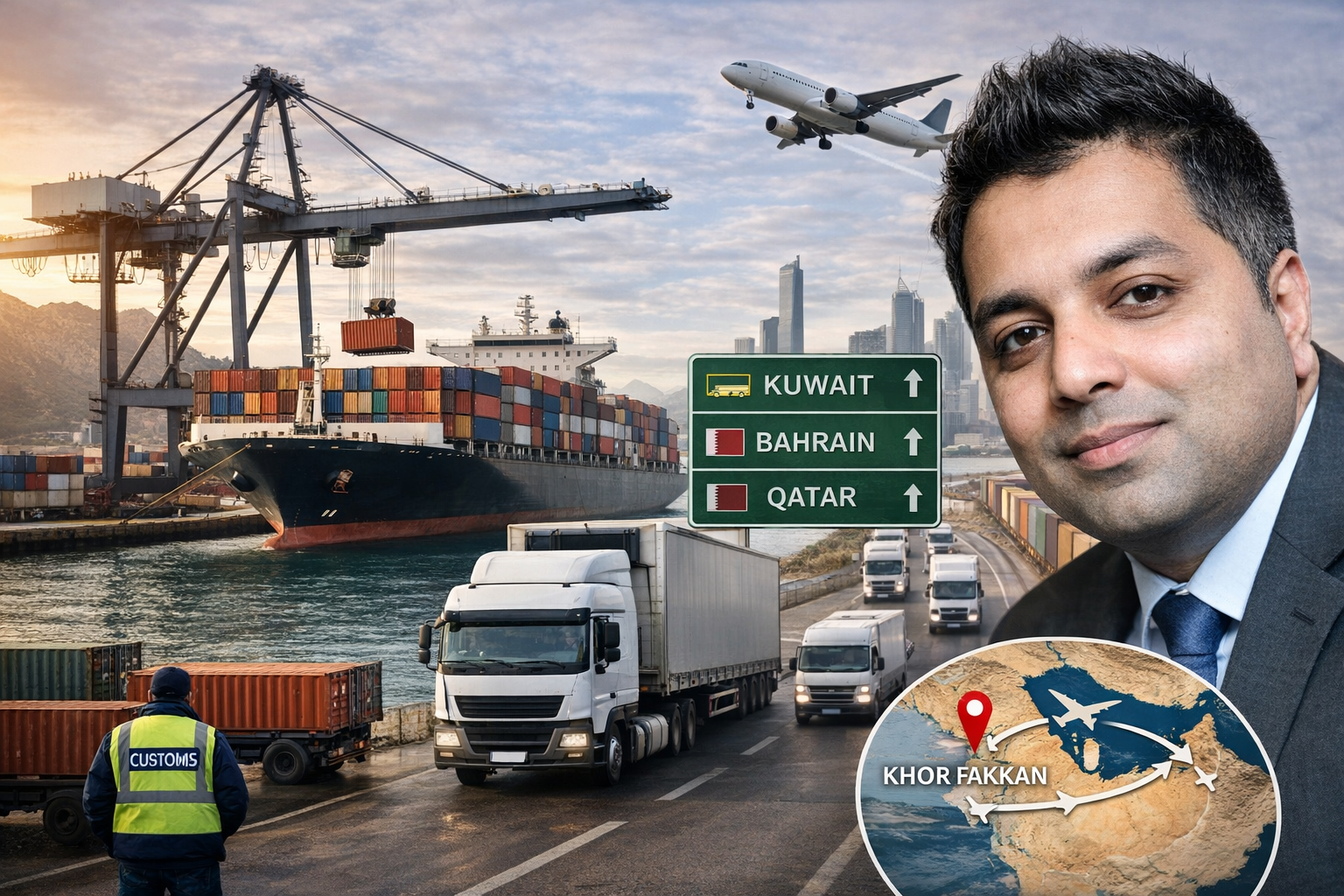
The company has also increased the use of multi-modal transport corridors, moving Full Container Load (FCL) shipments from maritime routes to cross-border trucking networks serving Kuwait, Bahrain and Qatar. The goal is to shorten inland transit times while reducing dependence on congested port infrastructure.
Industry analysts note that these kinds of hybrid logistics models are becoming increasingly common across the region as companies attempt to build greater resilience into supply chains that remain vulnerable to geopolitical shocks, shipping delays and insurance cost spikes.
Technology is also playing a growing role in maintaining operational visibility across these distributed logistics networks. Providers are investing in continuous cargo tracking and dedicated support systems to help shippers monitor shipments in real time.
According to Al Sharqi, these tools are now critical for companies operating in volatile trade environments.
“Our infrastructure across strategic ports like Khor Fakkan allows us to ensure that disruption does not automatically translate into delay,” Rafiq said. As volatility spreads beyond maritime routes and increasingly affects aviation corridors as well, supply chain leaders are also rethinking how quickly their organizations can respond when transport networks suddenly collapse.
“When an air corridor shocks your network — a sudden closure of Iranian airspace restricting key Middle East-Europe lanes, or a conflict grounding cargo flights over Eastern European corridors — you don’t need a prettier dashboard,” said Dr. Muddassir Ahmed, Founder and CEO of SCMDOJO, the global supply chain learning and intelligence platform. “You need answers to four questions within the first four hours.”
Ahmed argues that many organizations still rely on analytics systems designed primarily for retrospective reporting rather than operational decision-making during active disruptions.
“The organisations that pivoted fastest during the Red Sea crisis and Suez Canal disruptions weren’t the ones with the biggest teams,” Ahmed added. “They were the ones whose systems were already ingesting external variables and surfacing risk signals before the situation became front-page news.”
The broader shift reflects a structural change in how Gulf logistics systems are being designed. Instead of relying on a small number of mega-hubs, operators are increasingly building flexible routing ecosystems that combine maritime, road and air logistics capabilities.
For cargo owners, the change represents both a challenge and an opportunity. While volatility in global shipping networks is unlikely to disappear, the emergence of diversified logistics corridors across the GCC could provide new levels of redundancy for companies moving goods between Asia, the Middle East and Europe.
As supply chain risk management becomes a central discipline rather than a contingency exercise, logistics providers capable of orchestrating these multi-modal networks are likely to play an increasingly strategic role in regional trade.