Healthcare AI Cuts Inventory Days 20% Ahead of CISCE
 By Freddie Bolton · Jul 22, 2026 · 3 min read
A hospital procurement director receives an urgent request for sterile wound dressings following an unexpected surge in emergency admissions. The order arrives within 24 hours, routed automatically through a regional distribution center that adjusted stock levels three days earlier based on predictive analytics. The director never sees the underlying coordination between manufacturing lines in Shenzhen, warehousing nodes across Southeast Asia, and local delivery partners. That operational invisibility, enabled by tightly integrated logistics systems, is becoming the baseline expectation in healthcare supply chains where delivery delays carry clinical consequences.
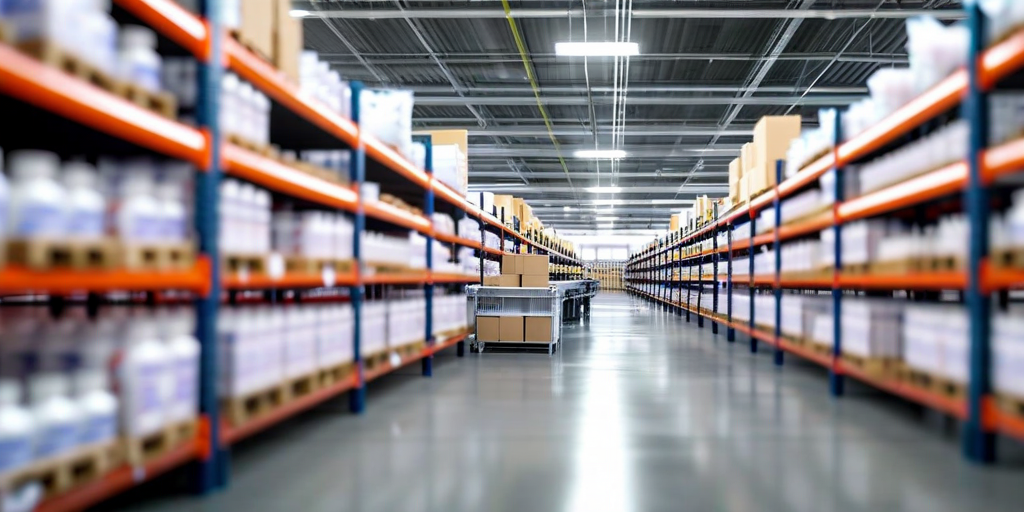
Winner Medical, a medical supplies manufacturer, will showcase its integrated supply chain architecture at the China International Supply Chain Expo (CISCE), emphasizing how digitalization and artificial intelligence are compressing lead times and stabilizing costs in a sector where supply continuity directly affects patient care. The company operates four logistics centers covering over 300,000 square meters and uses a proprietary warehouse management system to maintain end-to-end visibility from raw material sourcing through final delivery.
AI-Driven Precision Across Manufacturing and Logistics
"Winner Medical enhances supply chain visibility and traceability through digitalization and AI. In manufacturing, AI-powered visual inspection achieves defect recognition accuracy above 99.5 percent," Ruijing Li of Winner Medical said in written responses to The Supply Chainer. "In logistics, the proprietary WMS ensures full control at every stage. In decision-making, AI-driven big-data forecasting optimizes procurement and inventory, cutting inventory turnover days by 20 percent. Its multi-regional production footprint further ensures transparency and resilience across the chain."
Automation Gains Translate to Cost Structure
The operational improvements extend beyond speed. Winner Medical reported overall equipment effectiveness up 15 percent and logistics costs reduced by 12 percent through integrated logistics and AI optimization. Core products have achieved 100 percent fully automated production, reducing labor dependency and stabilizing output during demand surges. The company's global manufacturing plus regional warehousing plus local service operating model distributes inventory closer to end customers, shortening last-mile delivery windows while maintaining centralized quality control.
Healthcare logistics face unique constraints. Temperature-sensitive products, regulatory documentation requirements, and the clinical cost of stockouts create operational pressure that differs from general freight. Predictive analytics that can anticipate regional demand shifts and adjust warehousing allocations before orders arrive offer a structural advantage in sectors where emergency procurement often carries premium pricing and extended lead times.
The shift extends across the healthcare sector, not just individual manufacturers. John Wright, Chief Operating Officer of Advantus Health Partners, wrote in RFID Journal that legacy tooling cannot support the responsiveness the sector now demands. "AI will increasingly be used to analyze large datasets to reduce both shortfalls and excess inventory, improving resilience when sudden demand shifts occur. Notably, AI is poised to have the greatest impact on compressing the cycle time from question to insight to action from a supply chain perspective."
Integrated Ecosystems vs. Modular Platforms
Winner Medical's approach centers on vertical integration. The company will present its sustainable cotton ecosystem at CISCE, which closes both commercial and natural loops from farming to end products. That model contrasts with logistics platforms that aggregate third-party carriers and warehouses. Integrated systems offer tighter control and data consistency but require significant capital investment and limit flexibility when shifting sourcing regions or adding new product categories.
The strategic question is whether automation improves decision quality or simply accelerates existing processes. Operators remain cautious about surrendering procurement control to algorithms that may not account for nuanced supplier relationships or service exceptions that don't appear in data feeds. As freight orchestration becomes increasingly automated, competitive advantage shifts from carrier negotiation skill to platform architecture and the quality of underlying data models.
Winner Medical's logistics architecture supports stable delivery to global markets, according to the company. Whether that stability holds during the next major supply shock, when port closures or geopolitical disruptions fracture established routing corridors, will test how much resilience has been engineered into automated systems versus how much still depends on manual intervention when networks fail.