
Why No One Is Reading Your Marketing Content, Even If It’s AI-Generated
 By Guy Efrati, CEO of AISalesKit · May 20, 2026 · 3 min read
There’s a moment when a marketing team looks at the dashboards and feels like everything is working as it should. If there’s one thing 6 years of generating leads for software vendors in the supply chain space taught me, it’s that activity and output almost never correlate with actual demand.
Messages are going out on time. There’s personalization. The creative looks polished. The funnel is well-structured.
And still - nothing meaningful happens. No real conversations. No high-quality leads.
This isn’t a glitch. It’s the expected outcome. The problem isn’t AI. The problem is the illusion that AI solved relevance.
Personalization is not relevance
Adding a first name, job title, or company name is not real personalization.
It’s surface-level adaptation based on available data - not actual understanding.
The recipient sees through it instantly.
It doesn’t feel written for them - it feels like a process being applied to them.
And when it feels like a process, it gets ignored.
Everyone is running the same playbook
The bigger issue is uniformity.
Same messages.
Same structures.
Same promises: “increase efficiency,” “drive growth,” “optimize operations.”
When everyone uses the same models, tools, and triggers - the result is homogeneous noise.
It doesn’t matter how “tailored” it looks. It sounds like everything else.
AI is good at what’s easy to produce - not what’s hard to understand
AI produces content fast.
It also produces it “correctly” in terms of tone, grammar, and structure.
But it doesn’t truly understand:
Internal politics inside organizations
Cross-functional tensions
The gap between what companies say and what actually happens
The personal pressure on decision-makers
That gap is exactly where real relevance lives.
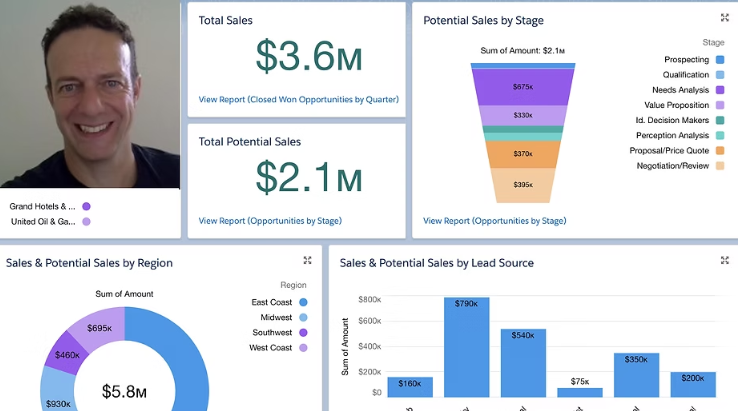
Funnels don’t create attention
You can build a perfect funnel:
Ad → Landing page → Nurture → Demo
But if there’s no real pause at the first touchpoint, everything else is irrelevant.
Most funnels are built on a flawed assumption:
that if you design the path well enough, people will enter it.
Most don’t.
Your audience isn’t looking for content. They’re looking for context
Executives are not searching for more content.
They’re overwhelmed by it.
What they’re looking for is someone who understands their situation more sharply than they do.
That doesn’t come from scale.
It comes from depth.
More automation = less attention
The easier it becomes to send messages, the less each message is worth.
Today, anyone can send hundreds of messages a day.
Which means each one carries close to zero attention value.
The implication is simple:
advantage no longer comes from volume or speed.
It comes from deviation.
What actually works
Not more automation.
Not “smarter” phrasing.
But:
A sharp point of view that doesn’t sound like everyone else
A real understanding of a specific problem - not a broad category
A message that feels risky enough to be true
Outreach that doesn’t look like a campaign
And above all:
less effort to appear sophisticated, more effort to be precise.
My bottom line:
AI didn’t break marketing.
It exposed what was already broken:
Most content was never worth reading.
Now that production is infinite -
only what is truly relevant survives.
About the Author: Guy Efrati, a B2B lead generation expert, has been a marketing consultant to startups and tech companies for 16 years. He is the CEO of AI Sales Kit, a platform that helps businesses optimize their sales outreach. The views expressed in this post are that of the author, and don’t necessarily reflect the views of The Supply Chainer.