
When a Vendor Is Breached, Most Downstream Companies Are Still Guessing
 By K.R. Samiksha · Jul 13, 2026 · 3 min read
A procurement lead learns from a news alert that a shared software supplier has been compromised. The vendor is not answering. The contract file shows a security assessment signed off eleven months ago. Nobody in the building can say whether the company is exposed, and nobody can say it is not.
That gap between an incident and the moment a downstream buyer understands its own position is where most third-party risk programs quietly fail. The recent Klue breach has put the problem back in front of security and procurement teams, but the underlying mechanics are older than any single incident. Notification depends almost entirely on the breached party choosing to talk. Incident response counsel often advises silence. Clients who do hear something rush the vendor at once, and the vendor drowns.
The Blast Radius Nobody Mapped
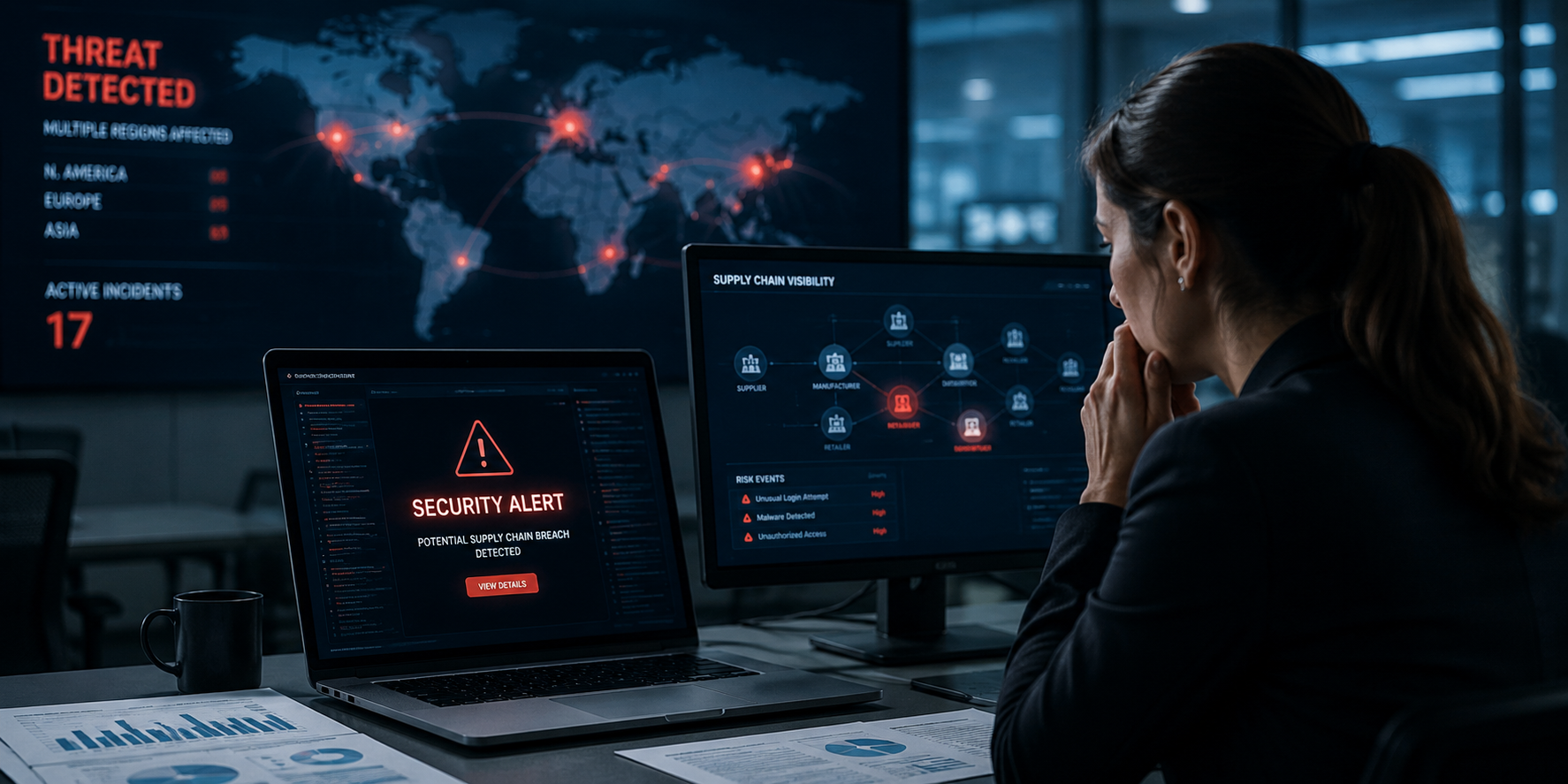
Justin Kuruvilla, Chief Cyber Security Strategist at Risk Ledger, replied in writing to The Supply Chainer: "When an incident like the recent Klue breach happens, downstream companies are often entirely dependent on the party that experienced the breach actively notifying them or on any public disclosure of the breach by the supplier. Breaches also create a massive operational burden on both sides, as clients rush to contact the vendor if they find out what happened, often resulting in the vendor being overwhelmed by numerous requests for information at once. Another crucial factor is that most organisations simply cannot map their indirect supply chain dependencies. This means that organisations often have no way of knowing how a compromised token or integration could cascade up from a 4th party to a 3rd party, until the fallout hits their own environment."
Risk Ledger operates a supplier network that maps connections across extended supply chains rather than assessing vendors in isolation. The MOVEit Transfer attack demonstrated the pattern at scale. Organizations with no MOVEit installation of their own were hit anyway, because a critical supplier had one. The exposure ran through a dependency the buyer had never inventoried. Kuruvilla points to the same structural blindness now.
Point-in-Time Assessments and the Eleven-Month Blind Spot
Most third-party review still happens at onboarding. A questionnaire is completed, a certificate is filed, and the relationship is treated as understood. Kuruvilla is blunt about what that produces: a snapshot of how secure a supplier was on the day the assessment was signed. It says nothing about whether that supplier has since changed technology providers, added subcontractors, or created new integrations that alter the buyer's exposure.
The regulatory picture does not help. Notification requirements vary sharply by industry and jurisdiction, and a vendor operating across several may be moving slowly for reasons that have nothing to do with obstruction. Buyers waiting for a formal disclosure are waiting on a process built for compliance, not for operational speed.
Sphera, working the physical side of the same problem, has reached a similar conclusion about where risk analysis should start. Scott Lehmann, VP Product Management at Sphera, told The Supply Chainer in a previous inquiry: "The Strait of Hormuz didn't create new supply chain risks. It made invisible ones visible. Multiple industries discovered they shared the same upstream dependencies... Leading enterprises are no longer starting their risk analysis from a supplier list. They're starting from their products, decomposing each product line through components and materials down to Tier 2 and Tier 3." The domain differs. The failure mode is identical.
What Changes After the Map
Concentration risk, once visible, rarely triggers a replacement. Widely adopted suppliers are widely adopted for a reason, and swapping them is expensive and slow. What changes, according to the company, is the quality of the decision - and the relationship. Kuruvilla describes a "Defend-as-One" model in which suppliers understand their own weight across an ecosystem and buyers gain faster access to information when incidents occur.
Operators should remain cautious about how quickly that collaboration materializes under pressure. A vendor in active incident response with two hundred clients calling has limited capacity for network-first anything. The harder question is whether the mapping happens before the breach or after.