
Transpacific Rates Slide As Carriers Enter Post-LNY Lull Amid Expanding Fleet Pressure
 By Sophia Hernandez · Feb 11, 2026 · 3 min read
Global container markets have moved decisively beyond the pre–Lunar New Year bump, and pricing behavior suggests the industry has already entered the traditional late-winter lull. Despite operational disruptions in both the US and Europe, underlying demand signals remain muted, reinforcing concerns about capacity oversupply and margin compression across major east–west lanes.
The most striking development has been the speed of the correction. Asia–US West Coast spot rates fell more than 20% last week to roughly $1,900 per FEU, returning to early December levels. In a typical year, rates remain elevated until post-holiday backlogs clear. This year, however, the retreat has been immediate, suggesting that retailers are exercising caution rather than rebuilding inventories aggressively.
Muted Demand Meets Expanding Capacity
Asia–US East Coast rates also softened, dropping 10% to about $3,457 per FEU. On Asia–Europe lanes, prices to Northern Europe and the Mediterranean declined 8–9% week-on-week, settling near $2,548 and $3,784 per FEU respectively. Carriers are signaling March general rate increases, but the market’s ability to absorb them remains uncertain.
Judah Levine, head of research at Freightos, noted that the pattern diverges from historical norms. “This year, however, Asia - US West Coast rates that slipped more than 20% last week to about $1,900/FEU are all the way back to early December levels, suggesting that prices are already entering the post-LNY, pre-peak season lull,” he said.
The National Retail Federation projects first-quarter US ocean imports will be down 7% year-on-year, reflecting retailer caution and difficult comparisons to last year’s frontloaded volumes. Meanwhile, US ports have largely recovered from winter storms, though inland rail congestion continues to cause delays. In Europe, a second wave of storms temporarily closed Western Mediterranean ports, with carriers warning that schedule disruptions could drive short-term congestion.
Carrier Earnings Reflect Structural Imbalance
Record global container volumes in 2025 were insufficient to offset the impact of fleet expansion. Several major carriers reported earnings declines, and fourth-quarter losses reappeared in parts of the sector despite volume growth. Uncertainty around Red Sea transits continues to cloud forward outlooks, with profitability projections for 2026 hinging heavily on routing stability.
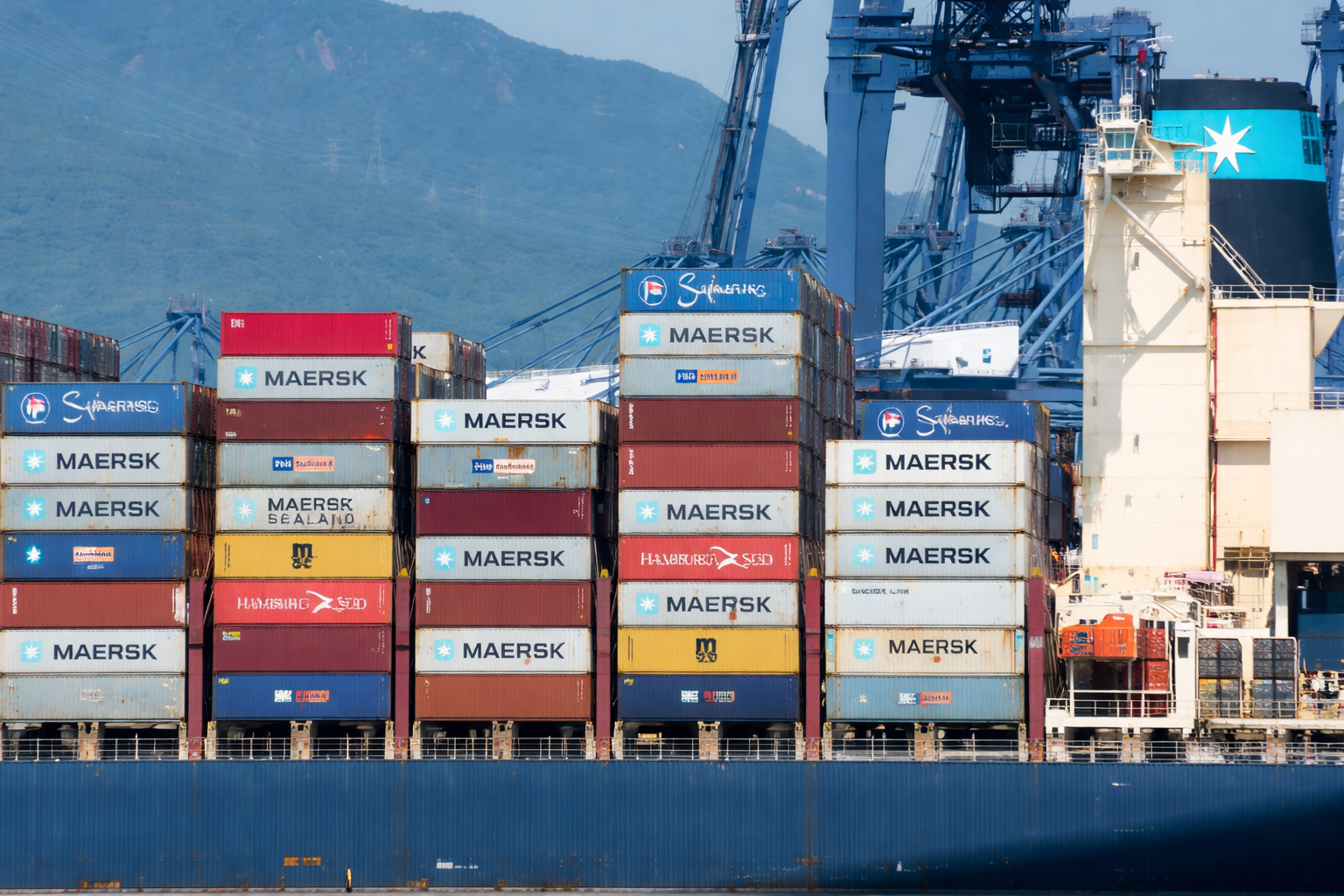
In a recent interview with CNBC, Maersk CEO Vincent Clerc described the operating environment as structurally fragile, stating that “visibility remains extremely limited and the range of outcomes for 2026 is unusually wide,” underscoring how geopolitics and capacity growth are reshaping carrier economics.
Trade Policy Adds Another Variable
Trade policy developments are introducing additional volatility. Recent executive actions reducing tariffs on India while empowering discretionary tariff enforcement tied to Iran and Cuba signal a more formalized escalation mechanism in US trade enforcement. At the same time, disputes over Panama port concessions and China-linked development plans are adding complexity to global maritime governance.
In air cargo, China–North America rates climbed 9% to over $7.30 per kilogram, possibly reflecting pre-holiday demand. Seasonal South American flower exports ahead of Valentine’s Day pushed rates to North America and Europe up 8% and 17% respectively since late January. However, broader air volume growth is projected to slow this year, particularly as cross-border e-commerce flows adjust to tightening de minimis policies in the US and EU.
For supply chain leaders, the message is increasingly clear: weather disruptions and geopolitical events may create short-term turbulence, but structural capacity expansion and cautious demand are exerting stronger downward pressure on freight economics. In 2026, execution discipline and scenario planning may prove more critical than spot rate volatility in determining logistics performance.