The Cargo You Can’t See Leaving the Strait of Hormuz: Biofouling
 By Charles Weber · Jun 15, 2026 · 3 min read
Vessels facing prolonged anchorage in the Gulf prior to transiting the Strait of Hormuz encounter accelerated biofouling buildup, directly impacting operational performance and supply chain costs. Extended stationary time in warm saline waters promotes rapid organism settlement on hulls, increasing hydrodynamic drag, fuel consumption, and overall voyage expenses.
Dr. Mario N. Tamburri of the University of Maryland Center for Environmental Science and Director of the Maritime Environmental Resource Center told The Supply Chainer: “stationary ships integrate several key processes known to increase the likelihood of invasions… when vessels remain immobile for extended periods, biotic exchange between ship and environment can increase, with more time and opportunity for organisms to colonize vessels.” He emphasized that such lay-ups, similar to disruptions in the Red Sea and Gulf, lead to heavy biofouling accumulation that persists for months to years, imposing significant operational costs through increased fuel consumption, reduced speed, and higher maintenance needs for supply chain operators.
Industry Cost Implications
Industry estimates show that heavy biofouling can raise fuel use by 10-20% or higher, with potential increases up to 40%, adding tens of thousands of dollars per voyage depending on vessel size and route. For large containerships operated by major lines, these delays compound schedule pressures and downstream port congestion costs.
In response to a query from The Supply Chainer, Povl D. Rasmussen, Maersk stated: “We use hull coatings from leading industry producers, which provide a strong foundation to mitigate the impact of biofouling, so we do not consider this a major issue. However, given the prolonged idling of the vessels in the Gulf, they will undergo cleaning prior to re-entering service to ensure optimal performance.”
The Supply Chainer approached other relevant shipping companies including Hapag-Lloyd, COSCO, ONE (Ocean Network Express), ZIM, and Evergreen Line - requesting comment on biofouling management practices in the region.
All declined or refused to comment on the matter.
Karl Lander, Environmental Services Director at Subsea Global Solutions, in a written response to The Supply Chainer, highlighted the practical challenges of addressing heavy biofouling on idle vessels in warm waters. “Heavy fouling, particularly hard calcareous fouling, requires aggressive cleaning technologies that if improperly used can damage the coating system,” he explained. Lander noted that capture systems optimized for lighter conditions may struggle with denser growth, potentially clogging equipment. For stationary vessels in the Gulf, he pointed out a key nuance: “the majority of the fouling will have come from the local waters, and capture may not be as critical from a biosecurity concern.”
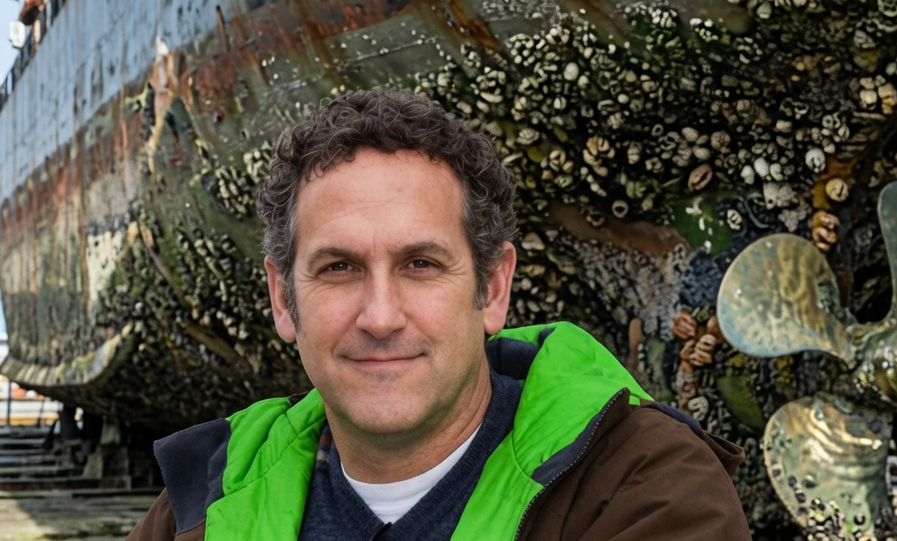
According to Lander, IMO guidance supports a two-step approach in such cases—initial trimming of fouling followed by capture cleaning—while stressing the need to protect coatings. Subsea Global Solutions employs a range of tools from soft brushes for light slime to aggressive systems for macrofouling, tested with major coating manufacturers, along with 1-micron filtration capable of UV disinfection.
Mark J. Spalding of The Ocean Foundation addressed this issue in his recent opinion column. He highlighted how extended idling in the Gulf maximizes biofouling due to warm waters and low speeds, leading to fleet-wide fuel penalties and biosecurity risks upon departure, while noting the shadow fleet as an uncontrolled vector outside standard management. Spalding urged legitimate operators to implement IMO Biofouling Guidelines proactively with inspections, record-keeping, and capture-based cleaning before exiting to avoid costly detentions and disruptions.
Dr. Mario N. Tamburri further shared that “there is an urgent need… for both international and national biosecurity policy actions” and highlighted available tools including “underwater inspections of stationary vessels and in-water treatment and cleaning technologies to remove biofouling,” recommending their use to mitigate the operational impacts of extended lay-ups.
For supply chain operators, effective management requires timely underwater inspections and hull cleaning technologies before departure. These steps help maintain optimal speed, control fuel budgets, minimize maintenance downtime, and ensure compliance with evolving port and regulatory standards, thereby safeguarding reliable ETAs and cost predictability in global trade lanes.
Major service providers offering hull cleaning and biofouling management services in the Persian Gulf include:
- Subsea Global Solutions (USA/Global) – https://www.subseaglobalsolutions.com/
- Albwardy Damen (UAE) – https://www.albwardydamen.com/
- GAC EnvironHull / HullWiper (UAE/Oman) – https://www.gac.com/
- ADNICO Marine (UAE) – https://adnicomarine.com/
- Viking Marine Services (UAE/Singapore) – https://vikingmarines.com/
- Hydro Marine Services (UAE) – https://www.hydromarineservices.com/