Roundtable Discussion: From Warehouse Optimization to Decision Orchestration - The Next Phase of Intelligent Supply Chain Operations
 By The Supply Chainer · May 8, 2026 · 4 min read
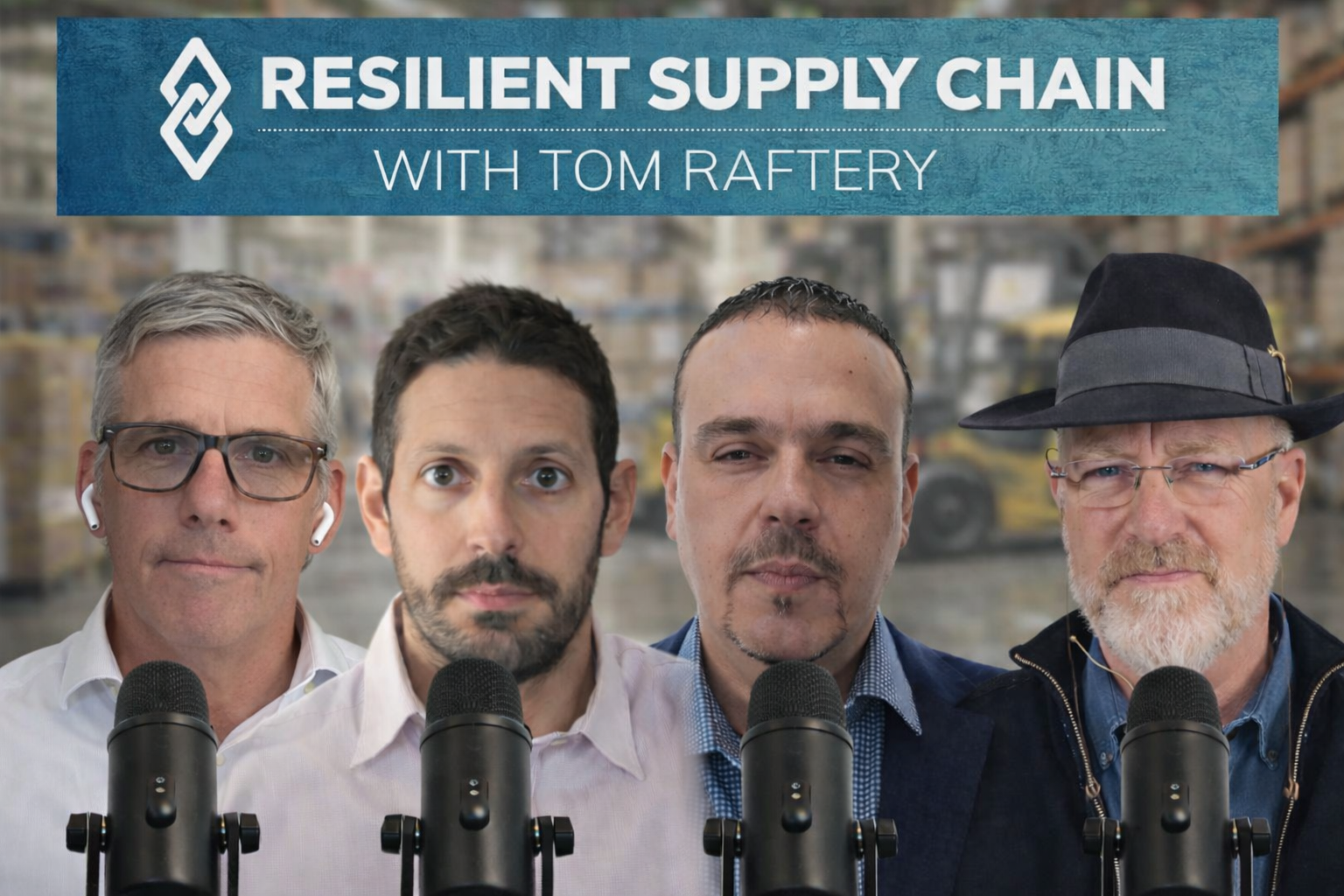
In a special roundtable hosted by Tom Raftery, three supply chain technology leaders examined a core question shaping the industry: are companies truly optimizing operations, or simply coping with growing complexity? The discussion, featuring Gonzalo Benedit (Aera Technology), Keith Moore (AutoScheduler), and Mor Peretz (CaPow), pointed to a clear shift toward decision orchestration as the next frontier.
The roundtable exposed a deeper operational reality: most supply chain organizations have mastered visibility but still struggle with timely, cross-functional decisions under pressure. As complexity scales—whether from volatile demand, labor constraints, or network disruptions—traditional optimization approaches are hitting hard limits. The three leaders described a transition from static planning tools to dynamic orchestration layers that can read, prioritize, and act on exceptions in real time, moving the conversation from data collection to decision velocity. Listen to the full discussion on Resilient Supply Chain Podcast
From Data to Decisions
Opening the discussion, Gonzalo Benedit challenged how organizations approach complexity. “When I look at today’s reality, what we see very often is human dealings with a level of complexity, scale and speeds that they are unable to handle. The way they look at the problem requires a lot of manual coordination and leaves a lot of decisions on the table,” he said. His argument: visibility alone is no longer enough.
Tom Raftery pushed on the role of data, asking about the cost of poor decisions. Benedit responded: “You cannot leverage the latest technologies or AI if you don’t have the right data. But at the same time, many organizations believe fixing data is not possible. Today, there are technologies that can help you address the data needed to make the right decisions and execute with speed.”
Keith Moore reinforced the gap between data and outcomes. “Companies spend all this time building a data lake with a bunch of data in it that never gets used because it’s not the data that informs the decision,” he said, highlighting the need to connect data directly to operational decisions.

Orchestration vs. Adding More Resources
Raftery then turned to a central tension: should companies invest in more automation or better coordination?
Moore’s answer was clear. “There’s only two ways to improve performance in a warehouse. You either work faster or you work more intelligently. Working more intelligently is where most people miss the opportunity,” he said. He pointed to persistent inefficiencies: “Downtime in a facility can account for anywhere from 10% at a really good site to 30 or 40% of the time that is just wasted in that operation.”
Peretz agreed, describing how organizations often react under pressure. “When a facility gets stressed, sometimes this creates not the most rational decisions. Most of them would be just to dump more resources on the same problem, not necessarily getting the optimization you really need,” he said. Instead, he emphasized identifying and removing constraints rather than masking them.

Benedit added a cross-functional perspective: “Organizations continue to operate in silos that are not truly connected. The question is how do you make sure that whatever action you take is the right action for the broader interest of the company, not just one function.”
Systems, Execution, and People
When Raftery asked what still holds companies back, Moore pointed to execution rather than technology. “Quite simply software is easy, people are hard. You can have the best technology in the world, but the change management of rolling it out is everything,” he said.
Peretz highlighted the same challenge from the operational side. “One of the primary questions we get is how much headache this transformation is going to add to the organization. If the integration requires major changes in how people work, that becomes a major setback,” he explained. For adoption to succeed, solutions must be seamless and minimally disruptive.
Benedit pointed to a broader shift in how work is structured. “Today you can take care of decisions at a level of frequency and granularity that was not possible in the past. You don’t need humans to go all the way. Humans are on the loop, not in the loop, supervising and guiding the machine,” he said.

What the Next Phase Looks Like
Looking ahead, Raftery asked what decision orchestration will look like in the coming years.
Benedit described a move toward speed and autonomy. “There is a shift from visibility to velocity. The key is the ability to compress the time between a disruption and the corrective action. Every day something is happening, so companies need to react faster and in a more coordinated way,” he said.
Peretz brought the discussion back to operations. “Downtime is a choice and we have to stop stopping,” he said, arguing that eliminating hidden inefficiencies can unlock significant performance gains without adding capacity.
Moore summarized the structural shift underway. Orchestration, he suggested, is becoming the dominant driver of performance, enabling companies to align systems, workflows, and decisions into a single coordinated operation.
Across the discussion, one theme remained consistent: the next phase of supply chain performance will not be defined by more technology, but by the ability to orchestrate decisions across the entire system in real time.