Retailers Wanted Faster Delivery. Drone Operators Are Quietly Building Local Aviation Networks Instead
 By Sophia Hernandez · May 23, 2026 · 4 min read
For years, drone delivery was treated largely as a futuristic retail experiment.
Pilot programs generated headlines. Short demonstration flights attracted investment. But most logistics operators remained skeptical that autonomous aerial delivery could scale economically beyond controlled test environments.
That skepticism is beginning to shift.
The current phase of the drone delivery market looks far less focused on novelty and far more focused on infrastructure. Operators are now building maintenance facilities, local manufacturing capacity, airspace coordination frameworks, and integrated fulfillment partnerships designed to support repeatable suburban logistics operations at scale.
The operational conversation is also changing. Retailers and delivery platforms are no longer asking whether drones can fly. They are asking how autonomous delivery integrates into existing dispatch systems, marketplace workflows, and last-mile execution models without disrupting fulfillment reliability.
At the same time, the underlying infrastructure supporting those networks is creating a second challenge that receives far less public attention: trust in the embedded systems operating inside increasingly autonomous logistics environments.
Drone Delivery Is Moving Beyond Pilot Programs
One of the clearest signs of the market transition came this month from Flytrex, which announced the opening of a new manufacturing and maintenance facility in Texas as part of a broader expansion strategy across the Dallas-Fort Worth region.
The company, which focuses on autonomous suburban food delivery, says the facility will support plans to scale toward 60 delivery sites across the metro area by mid-2027 while producing up to 1,000 drones annually.
The move reflects a larger operational shift happening across the drone logistics sector. Instead of centralized manufacturing feeding isolated pilot projects, operators increasingly appear to be building localized operational ecosystems where manufacturing, maintenance, testing, and delivery operations exist inside the same market.
In written responses provided to The Supply Chainer, Amit Regev, Co-Founder and CEO of Flytrex, described how retailer expectations around drone logistics have evolved significantly over the past two years.
“A few years ago, most conversations around drone delivery were innovation-focused. Today, retailers and logistics providers are asking practical questions around reliability, economics, and how to integrate autonomous delivery into their existing fulfillment stack. Retailers no longer want standalone drone programs. They want drone delivery embedded into the systems and workflows they already use, whether through marketplace integrations, dispatch systems, or existing delivery networks. We are also seeing significantly more focus now on scalable infrastructure and unit economics rather than isolated pilot deployments,” Regev wrote in the company’s response to The Supply Chainer.
That distinction matters operationally.
Retailers already operate highly optimized delivery ecosystems balancing couriers, batching logic, routing algorithms, driver availability, and store-level fulfillment timing. Drone operators attempting to function outside those systems create additional complexity rather than reducing it.
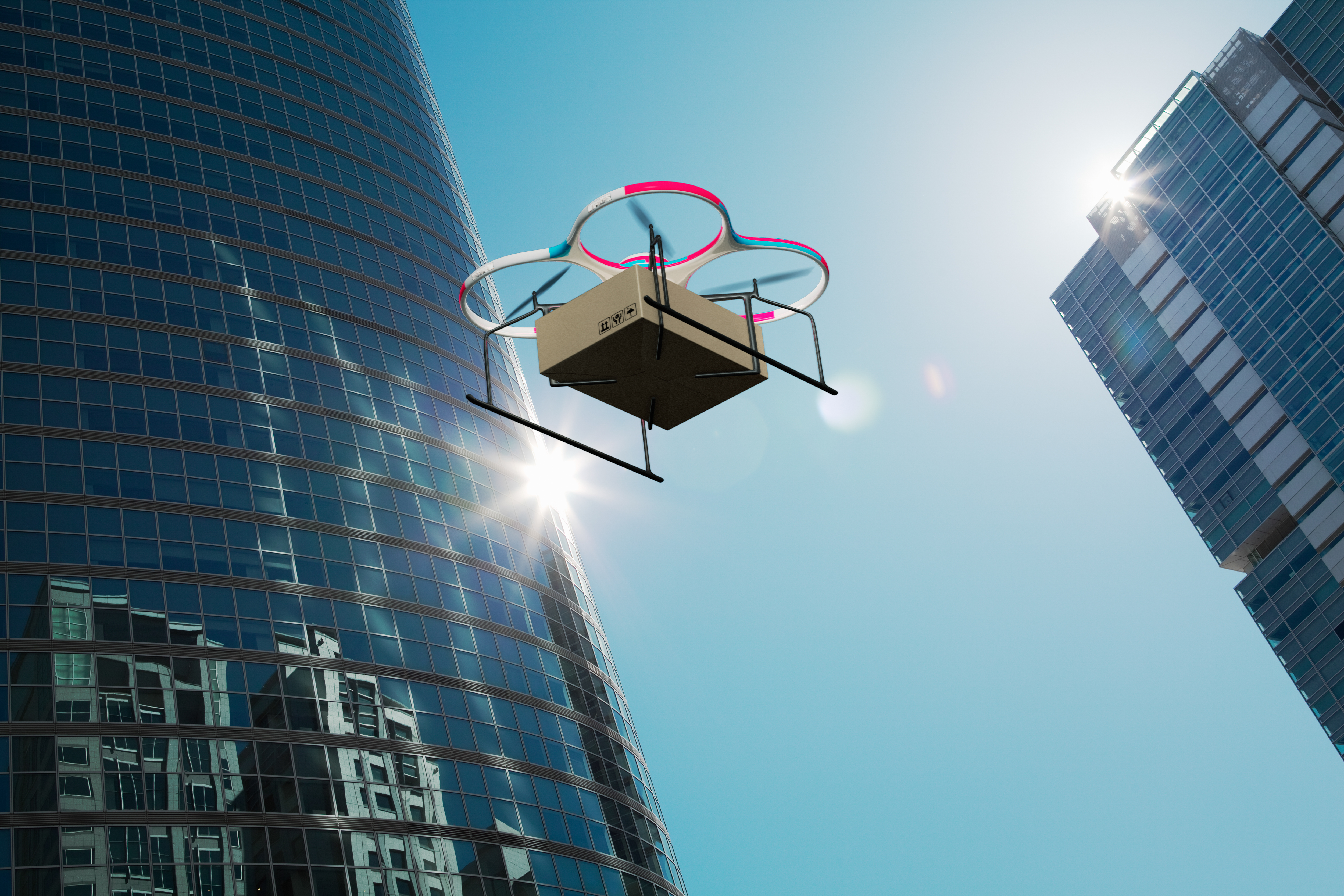
As a result, much of the current industry push is centered on integration into existing logistics layers rather than replacement of them. Flytrex itself has expanded integrations with DoorDash and Uber Eats while emphasizing hybrid delivery models that combine drones with traditional last-mile networks.
The company claims customers in active delivery zones typically receive orders within five minutes of drone takeoff. But operators across the industry still face unresolved questions around airspace regulation, weather dependency, suburban zoning constraints, and long-term delivery economics once infrastructure expansion costs are fully incorporated.
Autonomous Logistics Creates a Hardware Trust Problem
As drone delivery systems become more autonomous, another operational concern is quietly moving closer to the center of the discussion: trust in the underlying hardware infrastructure itself.
That issue extends well beyond drones alone. Across logistics automation, warehouse robotics, autonomous vehicles, and embedded industrial systems, operators are becoming increasingly dependent on highly specialized microelectronics that are difficult to verify once deployed.
Intel has been pushing this issue more aggressively in recent months, particularly around the risks tied to semiconductor visibility and validation across complex hardware supply chains.
In written commentary submitted to The Supply Chainer, Steve Orrin, Federal Chief Technology Officer at Intel, argued that many organizations still treat semiconductor exposure primarily as a sourcing problem when the larger operational risk increasingly lies in lifecycle trust and validation.
“Organizations need tighter control and verification across the full microelectronics lifecycle, from design through fabrication and sustainment, so trust is established earlier and maintained over time. Limited visibility into how processors, memory, and embedded components are designed and validated creates exposure that often cannot be detected or corrected once systems are deployed operationally. That is especially important in increasingly autonomous environments where organizations depend on embedded systems they may not fully control or inspect directly,” Orrin wrote in Intel’s response to The Supply Chainer.
The warning reflects a broader structural shift happening across supply chain technology.
Logistics operators are becoming increasingly dependent on autonomous systems while simultaneously losing direct visibility into many of the embedded components powering them. In highly automated environments, failures inside processors, firmware layers, or trusted hardware systems can create operational exposure that is difficult to isolate once fleets are already active.
That does not mean the drone delivery market is slowing down. If anything, the opposite appears true.
The industry is gradually moving away from headline-driven experimentation and toward operational infrastructure buildout. Manufacturing facilities, maintenance operations, dispatch integrations, airspace coordination systems, and embedded hardware governance are becoming part of the same logistics conversation.
The larger implication is that drone delivery is no longer evolving primarily as a retail innovation story.
It is increasingly becoming an infrastructure story.