Resilient Supply Chain Podcast: Workforce Planning Is an Operating Model Decision
 By The Supply Chainer · Sep 23, 2026 · 3 min read
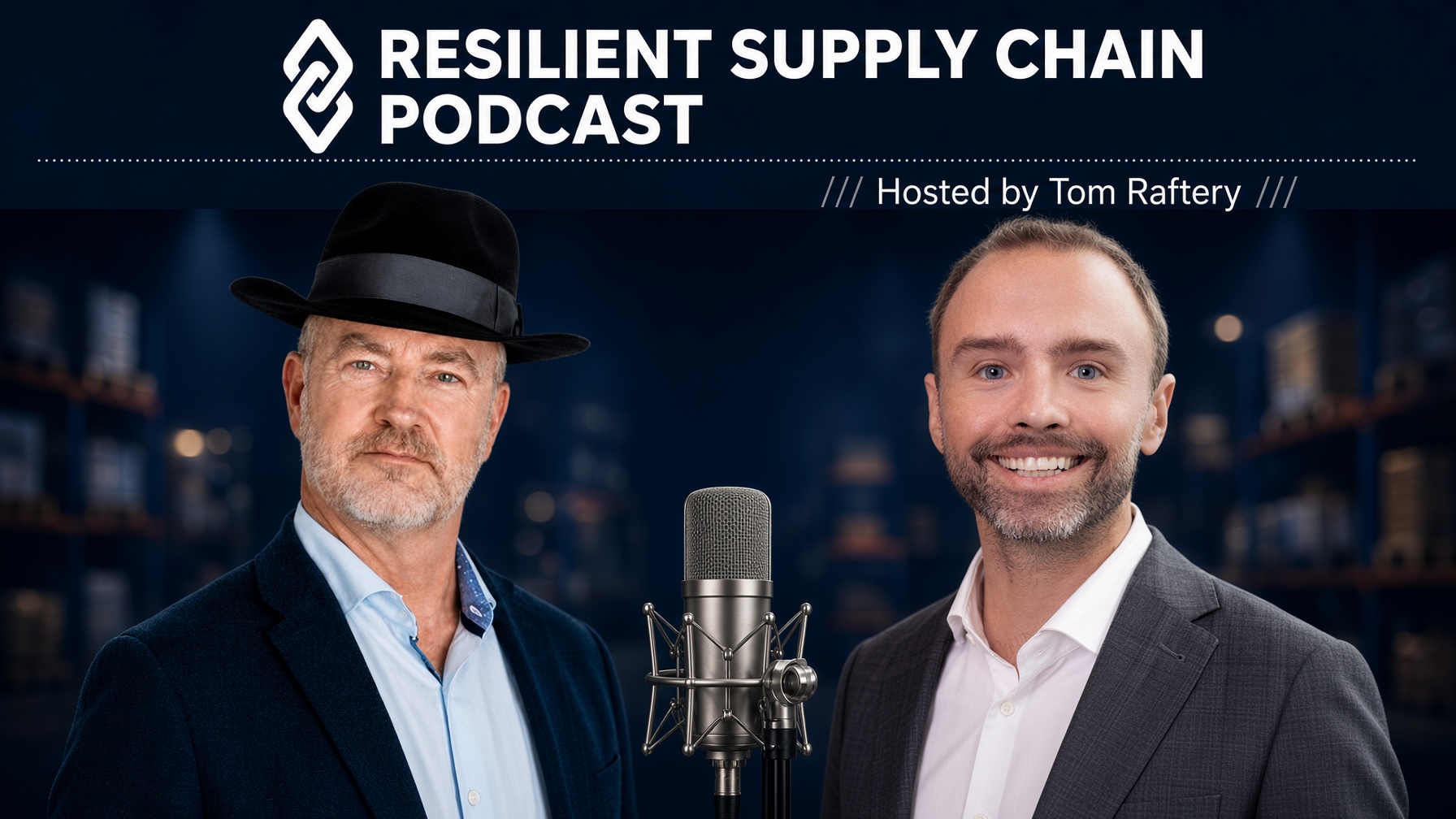
Workforce planning is often treated as an HR responsibility, but its consequences are operational: missed shifts can mean lost throughput, delayed orders, higher churn and, ultimately, lost customers. In the latest Resilient Supply Chain Podcast, host Tom Raftery speaks with James Terry, Head of Revenue at Indeed Flex, about the trade-offs involved in matching labour capacity to volatile supply chain demand. Terry brings more than 15 years of staffing and workforce management experience to a discussion that reframes labour availability as a question of capacity, data and operating economics rather than recruitment alone. For supply chain leaders, the issue is how to maintain reliable capability without creating cost structures that cannot flex with demand.
The full episode is available at www.resilientsupplychainpodcast.com
Short-Term Savings Can Create Longer-Term Risk
The central tension is deceptively simple. When demand falls, sending workers home early reduces labour cost immediately. But for workers who depend on predictable hours, that decision can make the employer less attractive, encouraging them to find more reliable work elsewhere.
The result can be higher churn precisely when demand returns. Organisations must then recruit, onboard and train replacements, turning an apparent saving into a delayed operational cost. Terry describes the approach as “penny wise and pound foolish”, arguing that labour decisions need to be assessed against their medium- and longer-term consequences rather than the current shift alone.
Cost, Quality and Speed Require Trade-Offs
Workforce planning also involves choices that cannot simply be optimised away. Terry identifies three competing objectives: low cost, worker quality and speed. “You can usually have two of the three, but you can't have all three,” he says. The implication for operations leaders is that staffing policy should reflect the specific business requirement. Peak periods may justify different priorities from steady-state operations, while critical roles may require accepting higher cost in exchange for reliability or quality. Treating every staffing requirement identically can obscure those trade-offs.
Flexibility Does Not Have to Mean Instability
The conversation also challenges the assumption that workforce consistency requires the same employees to work the same fixed pattern every week. A more useful definition, particularly where demand fluctuates, may be consistent access to people who already understand the work and can return without starting from zero.
That distinction matters because rigid schedules can exclude otherwise capable workers whose availability does not fit traditional shift structures. Terry argues that combining a stable core workforce with a flexible layer can provide additional capacity during peaks while giving operations a pool of experienced workers able to cover gaps.
Data Fragmentation Becomes a Decision Problem
The final strategic issue is organisational. Warehouse management systems hold operational data, while HR and workforce platforms hold hiring, attendance and retention information. Those systems frequently remain separate. As Terry puts it, “that data's not integrated.” The result is that different functions can make individually rational but mutually contradictory decisions. Integrating those signals creates the possibility of linking actions such as cutting a shift to later effects on turnover, fulfilment and productivity. AI may help expose those relationships, but the underlying requirement is more fundamental: HR and operations need shared data and shared accountability for the outcome.
For supply chain leaders, workforce planning is therefore becoming less a question of filling vacancies and more a question of operational governance. As labour markets change and demand remains uneven, organisations will need to understand the downstream consequences of staffing decisions, connect workforce and operational data, and test flexible models against measurable outcomes such as retention, fulfilment and throughput. The resilience advantage will come from treating labour capacity as part of the operating system rather than as a separate HR process.