Resilient Supply Chain Podcast: AI, Accountability and the Future of Supplier Diversification
 By The Supply Chainer · Feb 24, 2026 · 2 min read
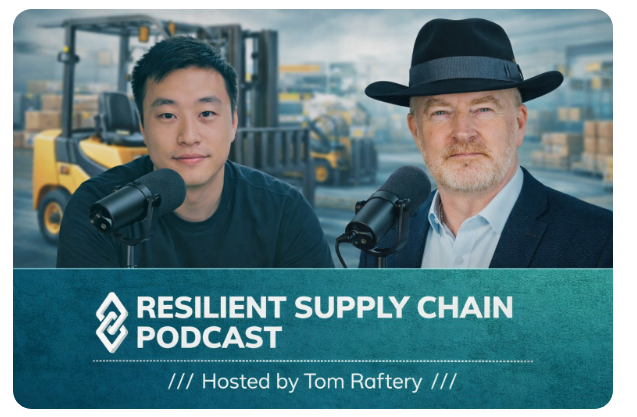
In the latest episode of the Resilient Supply Chain Podcast, host Tom Raftery is joined
by Ricky Ho, Founder and CEO of SourceReady, to explore how artificial intelligence
is reshaping supplier discovery, risk management, and diversification strategy. The
discussion examines how relationship-driven sourcing models are being challenged by
geopolitical volatility, tariff exposure, sanctions risk, and increasing regulatory scrutiny.
The full episode is available at www.resilientsupplychainpodcast.com.
Raftery opens the conversation with a central tension facing procurement leaders: as AI
tools become more embedded in sourcing decisions, accountability does not disappear.
“In the end, someone’s going to have to take responsibility if there is a mess up,” Ho
notes during the episode. The question is not whether AI will influence supplier
selection, but how organisations govern those decisions.
The episode highlights a structural issue in modern supply chains: concentration risk.
Many companies remain heavily dependent on a single country or region for
production. While cost efficiency has historically driven this approach, Ho argues that
tariffs, trade restrictions, and climate-related disruption have exposed the fragility of
over-concentration.
Beyond tier-one suppliers, the discussion turns to visibility gaps in lower tiers. Customs
data, certification records, sanctions exposure, and supplier-of-supplier relationships
often remain opaque until disruption occurs. According to Ho, AI can process large
volumes of trade and compliance data to surface hidden dependencies and recommend
diversification strategies before risks materialise.
The conversation also reframes cost. Tariff volatility, long shipping lead times,
regulatory changes, and compliance failures represent what Ho describes as “delayed
costs.” They may not appear on the initial purchase order, but they eventually affect
margins, continuity, and reputational risk.
Importantly, the episode does not position AI as a replacement for procurement
professionals. Instead, it presents AI as a decision-support layer capable of scanning
global supplier networks, screening compliance risk, and automating early-stage
supplier outreach. Human judgement, contractual governance, and executive
accountability remain essential.
For supply chain and procurement leaders navigating increasing regulatory complexity
and geopolitical uncertainty, the episode offers a pragmatic look at how data-driven
supplier intelligence can support more resilient operations.