Ports Shift From Capacity to Coordination as Singapore and Rotterdam Outline Diverging Paths to Resilience
 By Hannah Kohr · Mar 24, 2026 · 3 min read
As supply chain volatility continues to test global trade flows, leading ports are redefining resilience beyond physical capacity, focusing instead on coordination, digital infrastructure, and long-term ecosystem planning.
In response to a media query from The Supply Chainer, the Maritime and Port Authority of Singapore (MPA) outlined a broad strategy aimed at strengthening Maritime Singapore’s competitiveness while preparing the sector for sustained uncertainty. The approach centers on an upcoming Maritime Singapore Master Plan, targeted for 2027, which will guide long-term investment, workforce development, and innovation across the maritime ecosystem.
MPA emphasized that maintaining Singapore’s position as a global hub depends on accelerating technology adoption and embedding innovation across operations. This includes expanding the use of artificial intelligence, supporting maritime R&D, and developing a globally capable workforce through structured programs and international exposure.
Operationally, Singapore is scaling digital and autonomous capabilities. Trials of unmanned surface vessels are set to expand from the second half of 2026, focusing on surveillance, anomaly detection, and hydrographic operations. At the same time, the Maritime Digital Twin is being deployed to improve coordination across stakeholders, enabling real-time data sharing for vessel operations, incident response, and service planning.
Complementing these efforts, investments in 5G infrastructure and Just-In-Time coordination platforms are already improving vessel turnaround times and enabling more efficient, data-driven port operations.
Rotterdam Focuses on Real-Time Coordination Under Disruption
While Singapore emphasizes long-term transformation, Rotterdam’s response highlights the immediate operational reality of managing disruptions as they unfold.
In a written statement to The Supply Chainer, Sigrid Hesselink, spokesperson at the Port of Rotterdam Authority, said: “International disruptions can significantly affect port capacity, planning, and cargo flows. As port of Rotterdam, we are increasingly focusing on joint preparedness. This approach, whereby we all chain parties work together closely, has proven effective during the pandemic, the 2021 Suez Canal blockage, and the sanctions imposed on Russia after the invasion of Ukraine.”
“Our priority is timely coordination through connection, information sharing, and alignment. This allows us to address disruptions collectively and limit their impact on the port and the wider supply chain. For example, we make better use of existing infrastructure in the port and hinterland and apply available data more broadly in planning and operational decision-making. This helps stakeholders in the port and hinterland to anticipate changes in volumes, arrival patterns, or capacity earlier.”
Hesselink added: “Strong collaboration across the chain is crucial for a more resilient and efficient port system. Smart data solutions such as Rail Connected, Nextlogic and PortAlert, along with the continued strengthening of our port community system (Portbase), play an important role in this.”
As shipping disruptions continue to expose decision bottlenecks across global logistics networks, the delay between disruption and response is emerging as a critical point of failure for many organizations.
In comments shared with The Supply Chainer, Nitin Jayakrishnan, CEO and co-founder of Freehand, said: “Most companies don't lose when a corridor goes down, they lose in the 72 hours after while someone is still building the spreadsheet. A large food manufacturer we work with had ocean capacity pulled on a key trans-Pacific lane mid-quarter. The corridor problem was solved in hours, but the internal decision took three days: which lanes to shift, which carriers had contract availability, and what the landed cost delta was across modes. By then, spot air had moved. The data existed, it just lived in three systems that didn't talk to each other.”

“AI can’t change the disruption, but it can change the lag between disruption and decision. When rate logic, carrier contracts, and mode trade-offs are held in a single context layer, rebalancing looks less like a war room and more like a routing confirmation.”
Jayakrishnan added: “The honest answer isn't speed, it's cognitive triage. Logistics teams are good at solving hard problems. The issue is that most of their day is spent on problems that aren't hard, they're just numerous. A mid-market shipper we work with was triaging 400+ invoice exceptions a month manually - same carriers, same accessorial disputes, recurring patterns. Our agentic AI system learned them in 90 days and suppressed 70% of that queue automatically.”
“That’s not just efficiency, that’s the team getting their judgment back for decisions that actually need it: carrier negotiations, network design, anything with real strategic leverage. AI/Automation doesn't replace freight expertise, it stops wasting it.”
Two Models, One Direction
Taken together, the responses illustrate a shared shift across global ports: resilience is increasingly built on data, coordination, and ecosystem alignment rather than standalone infrastructure.
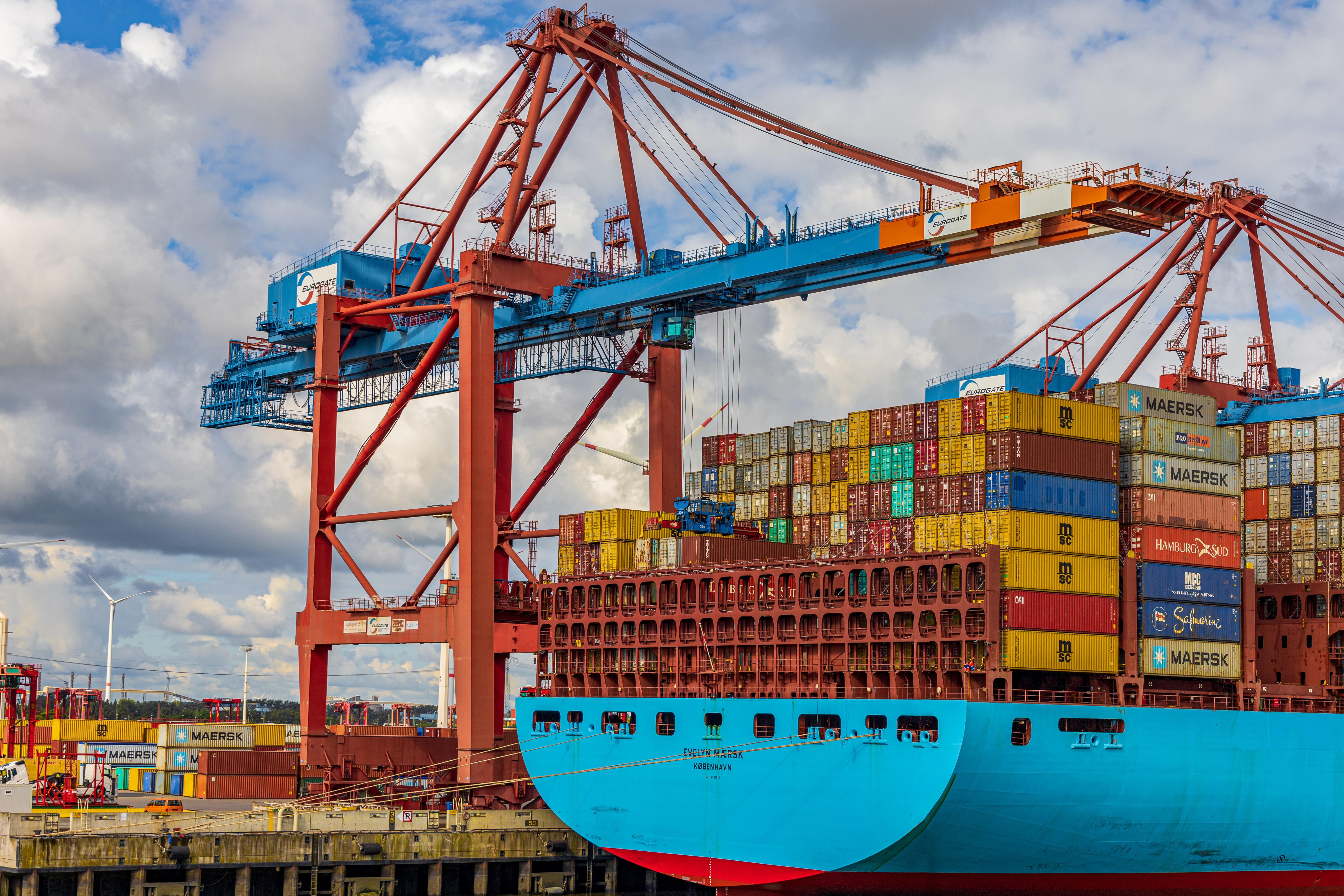
For supply chain leaders, the implication is consistent. Whether through long-term strategic planning or real-time operational coordination, the ability to align decisions across networks is becoming the defining capability in navigating disruption.