Port Radio Networks Break Under Throughput Surges
 By Sophia Hernandez · Jun 18, 2026 · 3 min read
Southeast Asian container terminals operate under constant pressure to coordinate vessel berthing, automated crane sequences, yard handoffs, and manual ground operations across multiple shifts without communication delays. A single missed handoff between an automated stacking crane operator and a yard coordinator can cascade into vessel delays, missed departure windows, and penalty fees that compound across daily operations. When port throughput increases 15 to 20 percent within a fiscal year, as nearshoring accelerates and transhipment volume redistributes across the region, those coordination breakdowns multiply faster than legacy analog radio systems can handle.
The operational friction affects everyone on the terminal floor. Crane operators need real-time instruction changes when vessel loading sequences shift. Yard planners must coordinate with gate staff to prevent container backlogs. Safety teams require priority channels to broadcast hazard alerts across congested work zones. Ground staff moving between terminals lose communication when analog systems force radio set changes mid-shift. Channel congestion increases, voice clarity degrades, and the information lag between automated systems and human operators widens precisely when volume demands faster decision cycles.
Legacy Systems Cannot Scale With Volume Growth
Most large terminals still rely on analog radio infrastructure built for lower throughput environments. These systems provide voice communication but lack the bandwidth to integrate data streams from terminal operating systems, the channel capacity to prevent congestion during peak operations, or the interoperability to maintain seamless contact across multiple terminal phases. As container volume grows, operators add more radio channels and more handsets, but the underlying architecture cannot scale without performance degradation. Digital communication platforms promise unified voice and data integration, priority alert functions, and centralized network management, but the transition requires operators to evaluate whether extending existing infrastructure or migrating to a new platform makes operational sense when terminal capacity expands by 50 percent or more.
Scalability Determines Network Viability Under Volume Growth
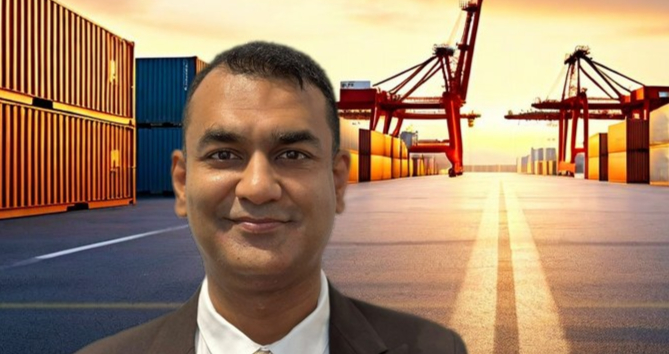
PSA Singapore handles over 37 million TEUs annually across multiple terminals with 24/7 automated operations. When the port migrated from analog to a TETRA digital communication system, the platform needed to support more than 4,000 users making around 540,000 voice calls daily without congestion or latency. Rajat Gupta, AMEA Vice President at Motorola Solutions, explained the operational shift in written responses to The Supply Chainer. "Moving from analogue to advanced digital communications helps large port, terminal, and shipping operators scale their operations when they grow in volume and complexity. PSA Singapore's previous analogue system was experiencing channel congestion, but its new TETRA system delivers clear, reliable and instant communication to maintain frequent contact among personnel on the ground, supporting better exchange of information, faster decision making and optimised coordination for shipment movements. By integrating voice and data communications, the new system enables seamless interoperability across multiple terminals, eliminating the need for ground operators to switch radio sets. Furthermore, digital platforms provide critical safety features, such as priority alerts that bypass standard communication queues, enabling rapid response within PSA's bustling, 24/7 automated operating environment."
The platform criteria extend beyond voice clarity. Operators expanding terminal capacity must evaluate whether systems can handle simultaneous voice and data traffic without performance drops, maintain unified communication across separate terminal phases without operator hardware changes, and provide mission-critical reliability features such as priority channels that bypass standard queues during safety incidents. When Tuas Phase 2 adds 21 deep-water berths by 2027, the communication infrastructure must scale in parallel with crane deployments and yard automation without creating new coordination silos.
Automation Creates New Communication Requirements
Terminal automation shifts operational coordination from sequential radio calls to continuous data exchange between systems and human supervisors. Automated stacking cranes, horizontal transport vehicles, and gate processing systems generate real-time telemetry that ground staff and vessel planners must access instantly to adjust workflows. Legacy analog systems cannot integrate that data layer. Digital platforms collapse voice and data into unified channels, allowing operators to see equipment status, container locations, and vessel schedules while maintaining voice contact with teams across the terminal.
Weston LaBar, CEO at Harbor Trucking Association, told Transport Topics, "I'm a fundamental believer that automation can help to create jobs but just different types of jobs." The operational model requires communication infrastructure that supports both automated systems and the human oversight roles that manage exceptions, coordinate between automation zones, and respond to incidents that machines cannot resolve independently.
When throughput surges, legacy systems fail due to communication traffic congestion and limited bandwidth. Other bottlenecks include increased latency in voice and data transmission, which creates operational silos where staff cannot communicate across different terminals. Centralized digital networks provide greater scalability to manage increased demand, helping terminals maintain oversight while coordinating automated systems and keeping vessel planning, ground staff, and safety teams connected for faster, safer operations.