Parcel Vision Systems Hit Performance Wall on Exceptions
 By Sophia Hernandez · Aug 7, 2026 · 3 min read
Parcel carriers deploying vision-guided robotics at scale report that technical demos rarely translate into sustained financial returns when automation confronts the operational realities of damaged packaging, torn labels, and irregular package geometries that drive disproportionate cost in high-volume sortation environments.
According to the Pitney Bowes Parcel Shipping Index, U.S. parcel volume reached 22.4 billion shipments in 2024, a 3.4% increase over the prior year, intensifying pressure on sortation infrastructure. Address inconsistencies and incorrect geocoding cause 7-8% of deliveries to be misrouted, according to logistics technology provider Locus, while Descartes reports that 76% of supply chain and logistics operations are experiencing notable workforce shortages that make exception handling increasingly difficult to staff.
The gap between pilot performance and enterprise deployment centers on exception handling. Vision systems designed for controlled manufacturing lines struggle when forced to process millions of parcels daily under conditions where labels are obscured, poly bags create glare, and package orientation changes unpredictably at speed.
Integration Constraints in Legacy Infrastructure
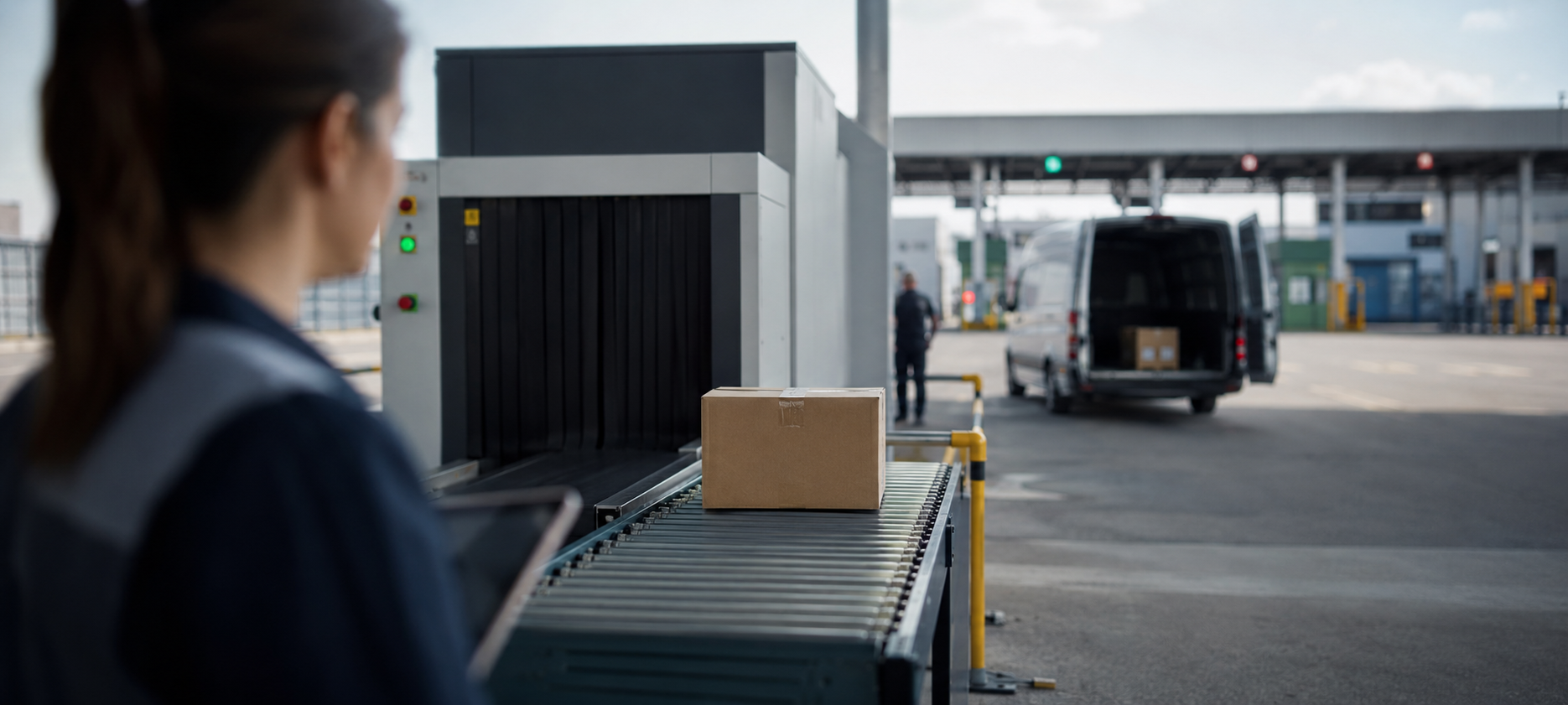
Operational constraints begin with variability in package presentation. Unlike controlled production lines, parcel hubs process packages of every size, shape, and orientation moving at high speed, requiring vision systems to maintain read accuracy without slowing throughput.
Ben Carey, Director of Product Management at Cognex, said in written responses to The Supply Chainer that the biggest constraint is variability. Unlike controlled manufacturing lines, parcel hubs handle packages of every size, shape and orientation moving at high speed, and vision systems still need to read a torn label, a reflective poly bag, or a barcode half-covered by tape without slowing the line down. Installed infrastructure adds another layer. Carriers have decades of investment in conveyors, sorters, warehouse control systems, and communication infrastructure, so new vision technology has to integrate incrementally rather than force a redesign. It needs to fit within existing mechanical footprints, avoid creating new obstructions, and support established communication protocols, allowing it to be deployed as a true drop-in upgrade without requiring customers to redesign systems or rewrite software they've already invested heavily in.
The data burden compounds integration challenges. Vision systems generate enormous amounts of operational data, but value creation depends on clean integration with execution systems that help workers manage exceptions rather than flood networks with unfiltered telemetry.
Fixed Automation Versus Flexible Robotics
Deployment decisions between fixed-line sortation and vision-guided collaborative robots hinge on predictability of package flow. Fixed-line automation delivers the lowest cost per parcel and fastest sustained throughput when volumes are high and package characteristics are standardized.

Vision-guided collaborative robots gain traction where flexibility outweighs raw speed. As e-commerce drives greater package variability, robots become valuable for tasks that cannot easily be reduced to predefined conditions, such as handling irregular parcels, sorting mixed SKU streams, or applying labels to packages with highly variable shapes and sizes. Area-scan 3D cameras enable robots to capture depth and geometry in real time, allowing adaptation to changing package characteristics without mechanical reconfiguration.
Robots also address physically demanding work. Applications such as palletizing, depalletizing, case loading, and trailer unloading involve repetitive lifting of heavy or awkward packages over extended periods, making them candidates for improving worker safety and maintaining consistent productivity.
In practice, most carriers deploy hybrid models. Fixed automation handles bulk standardized flow, while robotic cells cover exceptions, induction, irregular parcel handling, and container unloading, especially where labor availability is constrained. The decision rests on throughput requirements, package variability, facility space, labor availability, and total cost of ownership.
Sustained Performance Under Real Conditions
The operational gap lies in translating technical capability into sustained financial results. A demonstration that performs well on ten packages means little if performance degrades across millions of parcels under real operating conditions.
Exception handling exposes this gap most clearly. Automation processes the majority of parcels effectively, but damaged packages, unreadable labels, poor package presentation, and unconventional packaging drive a disproportionate share of operational cost. Operators need systems that manage those exceptions intelligently, not just systems that handle easy cases. These problems remain difficult to quantify, as many operators are only now gaining visibility needed to establish baselines and measure ROI. Once understood, however, they often represent the greatest opportunity for operational improvement.
Scalability and visibility also matter. Carriers want automation that expands across facilities without heavy customization and delivers meaningful operational data. Solving a problem once creates value, but delivering the same robust, predictable performance across multiple lines, facilities, and regions with a low service burden drives enterprise-scale value.
According to a 2025 MHI Industry Report, 63 percent of supply chain operators cited integration complexity as the primary barrier to scaling automation investments beyond pilot deployments.