Opinion: AI’s Expanding Role in Building Resilient Cross-Border Parcel Networks
 By By Jax Zheng, UniUni Director of Partnerships · Apr 21, 2026 · 3 min read
Retail e-commerce sales topped $6 trillion globally in 2024, fueling continued growth in international parcel flows. Cross-border orders now account for roughly one in five online purchases worldwide, with about 59% of online shoppers reporting purchases from overseas retailers, according to recent consumer research.
Amid this growth, tariffs, de minimis caps, currency fluctuations, and geopolitical tensions are adding new volatility to global parcel networks. Facing shifting demand patterns and evolving trade policies, many retailers are embedding AI across routing, customs compliance, fulfillment, and procurement functions to anticipate disruption and manage cross-border shipments more proactively.
Dynamic Routing in Volatile Trade Corridors
Retailers that once relied on relatively static shipping lanes and carrier choices are increasingly using AI platforms that continuously evaluate carrier performance, border congestion, and real-time cost dynamics.
For example, when shipping from the U.S. to Canada, these systems can analyze historical lane data alongside live border wait times at major crossings and recommend alternative routes if delays begin to spike.
Unlike earlier optimization tools that focused primarily on speed or price, newer AI-driven systems weigh multiple factors simultaneously, including capacity constraints, service commitments, and compliance considerations. This allows retailers to shift shipment volume between carriers when performance metrics fall below expected thresholds. The result is greater flexibility in cross-border delivery operations during periods of disruption.
Upstream Customs Clearance and Compliance Automation
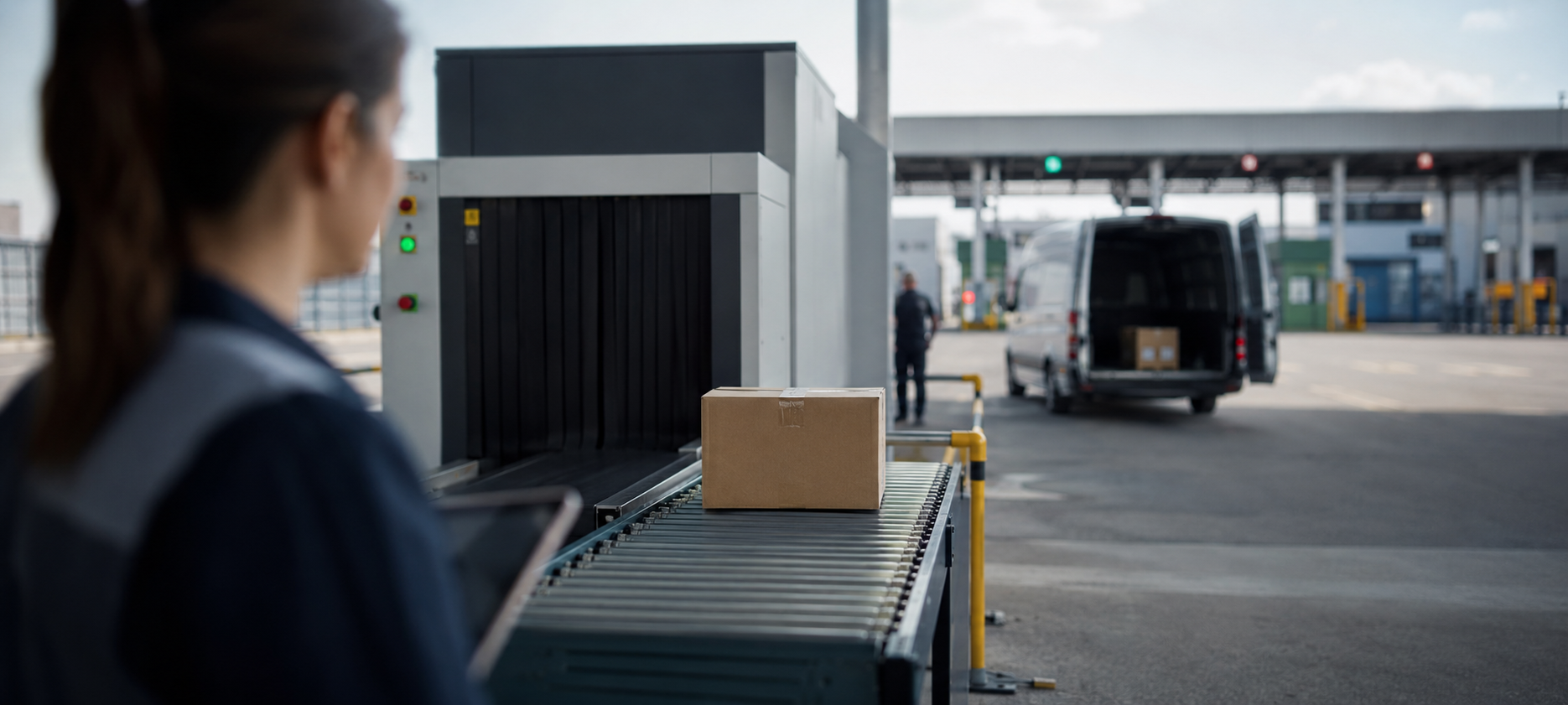
Customs clearance has long been one of the most persistent bottlenecks in cross-border parcel shipping, where classification errors and incomplete documentation often trigger delays.
AI systems are increasingly shifting customs compliance checks upstream to origin facilities in order to catch preventable errors earlier in the process. Studies suggest that documentation and classification issues account for a substantial share of customs delays.
AI-assisted classification tools are now capable of assigning product codes and flagging inconsistencies with relatively high accuracy. These systems can also adjust dynamically as tariff rates and de minimis thresholds change.
Retailers are also applying risk-scoring models to identify shipments likely to face greater scrutiny, such as electronics exceeding certain value thresholds, enabling earlier documentation and pre-clearance preparation. Beyond that, AI tools are being used to audit shipment data, identify potential duty overpayments, assist with declaration preparation, summarize regulatory requirements, and provide real-time operational guidance to staff.
Together, these capabilities can reduce manual effort while improving customs processing timelines.
Connected Intelligence Across the Parcel Network
As cross-border shipping grows more complex, retailers are beginning to integrate AI across last-mile delivery, fulfillment planning, and procurement decisions in order to reduce historically siloed decision-making processes.
Parcel performance data increasingly informs upstream decisions about carrier selection, inventory placement, and delivery strategy. AI-driven systems can link planning with execution by using real-time operational insights to guide where inventory should be staged and how shipment volumes are distributed among carrier partners.
Some retailers are also modeling tariff exposure and border congestion risks before positioning inventory, allowing sourcing and staging strategies to shift ahead of potential disruption. At the procurement level, predictive analytics can guide how shipment volumes are allocated among carriers, factoring in projected reliability, cost volatility, and corridor-specific risk rather than relying solely on historical averages.
This approach is contributing to more connected and resilient cross-border parcel networks.
Measurable Gains and Ongoing Challenges
As AI adoption expands within cross-border parcel operations, operational improvements are beginning to emerge. Automating classification and shifting compliance checks upstream helps retailers identify documentation errors earlier and reduce exception handling. Dynamic routing can lower cost per parcel, while predictive tools help reduce delivery delays and support more accurate delivery commitments.
At the same time, the growing use of algorithmic decision-making in logistics introduces new governance requirements. When systems influence customs declarations, duty calculations, or carrier allocation decisions, the underlying logic must remain transparent, auditable, and subject to human oversight.

In cross-border shipping, where regulatory change and geopolitical uncertainty remain constant, retail resilience is increasingly tied to data-informed operations capable of adapting quickly to disruption. With predictive models guiding routing, compliance, and planning decisions, retailers are becoming better positioned to anticipate customs issues, tariff shifts, and corridor volatility before disruptions propagate across their networks.
The author Jax Zheng is Director of Partnerships at UniUni. The views expressed are the author’s own and do not necessarily reflect those of The Supply Chainer editorial team.