MODEX 26 Marked a Shift from Planning to Real-Time Execution
 By Evan Porter · Apr 26, 2026 · 3 min read
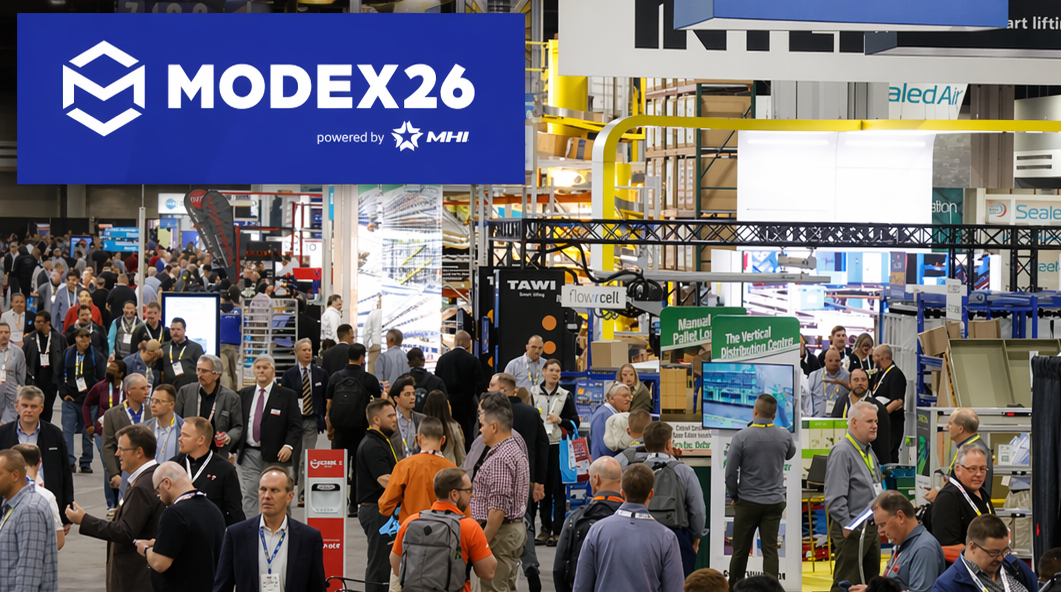
This year at MODEX 2026, the scale of automation on display was familiar, but the emphasis has continued to shift. Beyond robotics and point solutions, discussions across the floor pointed to systems that move from supporting decisions to executing them - continuously, and across operational layers.
While the spotlight shone on emerging infrastructure and orchestration solutions, the industry giants also delivered notable advancements that reinforced the broader shift from static planning to real-time execution. Boston Dynamics, in partnership with Jacobi Robotics, demonstrated a fully autonomous end-to-end receiving solution focused on inbound dock automation — one of the most labor-intensive and variable processes in warehousing — by reliably unloading loose-loaded trailers and streamlining the subsequent put-away workflow in dynamic environments. Honeywell Intelligrated presented its “Your warehouse, your way” vision through the new Momentum Core software platform, which unifies warehouse execution, control, and machine applications into a single modular system while integrating high-speed sortation, robotics, connected-worker tools, RFID, voice solutions, and lifecycle services to deliver real-time intelligence and unmatched flexibility across any facility scale or automation stage. Zebra Technologies introduced the rugged WS501-R wearable computer with hands-free high-performance RFID scanning along with its AI-optimized TC501 and TC701 mobile computers powered by the Frontline AI Suite, enabling frontline workers to capture, analyze, and act on data instantly at the point of task for improved visibility, faster decision-making, and higher productivity in picking, receiving, and proof-of-delivery operations. Dematic debuted its Command Center analytics platform, a vendor-agnostic intelligence layer that aggregates real-time monitoring, advanced AI-driven insights, and operational analytics across the entire warehouse to help operators move from reactive problem-solving to proactive, data-driven optimization.
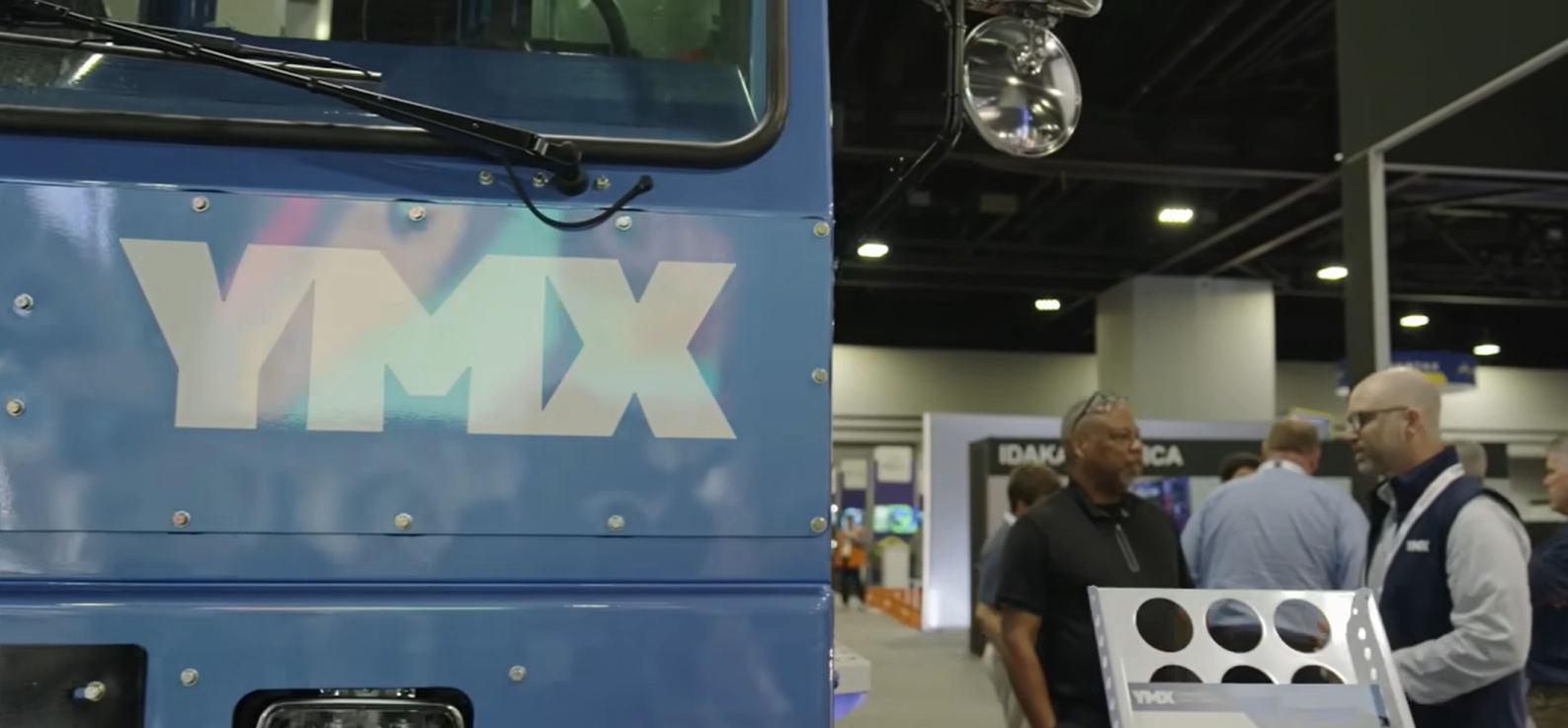
Across multiple booths and sessions, the focus turned to how autonomy is being applied in live environments rather than pilots. YMX Logistics highlighted the growing role of autonomy in yard operations, with a focus on integrating digital intelligence into day-to-day execution. “Autonomy happens at the convergence of digital intelligence and physical execution,” said Matt Yearling, CEO of YMX Logistics. “We’re seeing real progress in yard operations, but autonomy isn’t achieved through isolated technologies. It requires an operating system that continuously captures data, improves decision-making, and drives ongoing optimization. That’s what turns autonomy into consistent, predictable, scalable performance.”
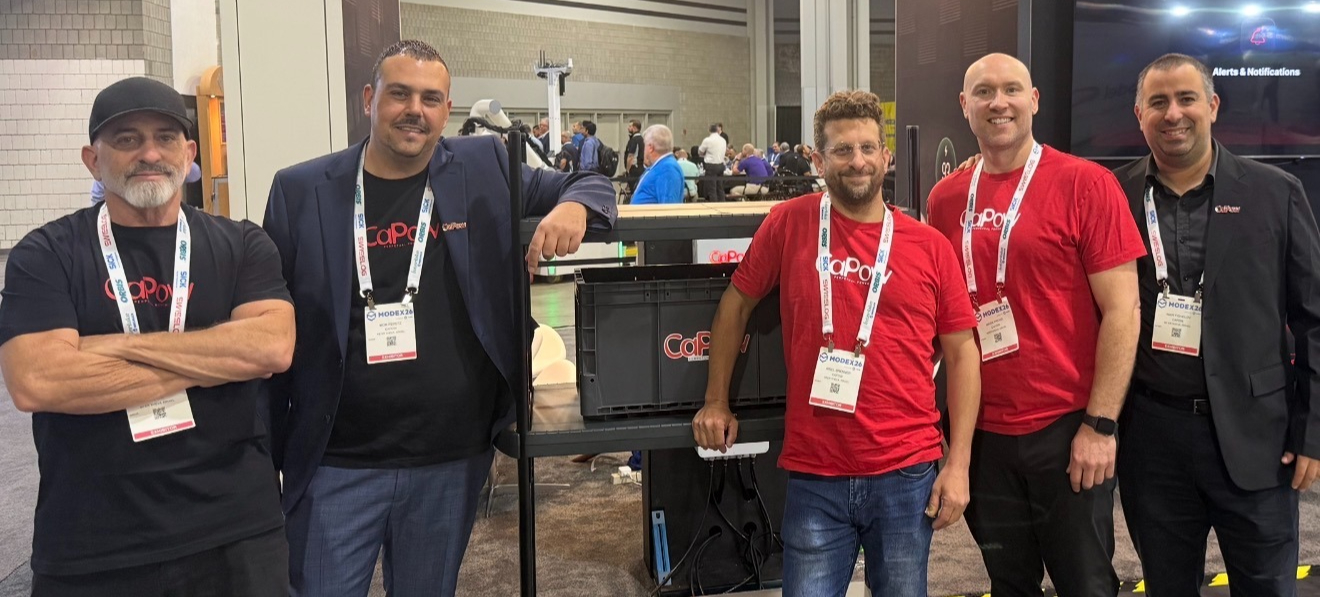
CaPow presented its Genesis Power-in-Motion platform, demonstrating mobile robots receiving energy while in operation. The live setup featured both Ocado Chuck and MiR600 running simultaneously on a shared energy infrastructure via a modular floor antenna system. This reflects a broader shift in how energy is treated within automation environments. When multiple robot types operate on a unified energy layer, energy is no longer a robot-level constraint but becomes infrastructure. As noted by Mor Peretz, CEO & Co-Founder of CaPow, “Energy is becoming a system-level consideration in automation. Once it’s integrated into the workflow itself, it removes a major constraint on fleet performance.”
The implications are operational. Instead of planning around charging downtime, spare robots, or dedicated charging areas, operators can design for continuous operation as a baseline. In the context of MODEX, this signals a broader transition from charging as an operational task to energy as a foundational layer enabling full-system optimization.
Inside the warehouse, AutoScheduler AI demonstrated its Warehouse Decision Agent, designed as an orchestration layer on top of warehouse management systems. The platform continuously re-optimizes schedules in response to live constraints, coordinating labor, dock doors, and inventory while adjusting to disruptions such as delays or staffing changes.
At the same time, Movu Robotics pointed to a parallel shift in physical automation. Across MODEX and earlier at LogiMAT, pallet shuttle systems stood out as one of the most widely adopted technologies. “2026 was clearly the ‘year of the pallet shuttle’,” said Beth Marshall, Sales Director for the UK at Movu Robotics. The strong increase in demand reflects the fact that the solution has no single point of failure, can be scaled as needed, and is more energy efficient - contributing to sustainability targets while helping manage unpredictable energy costs.
A similar shift is playing out at the decision layer. Aera Technology will present customer-led sessions with The Estée Lauder Companies and Kerry Group, focusing on how decision intelligence is being operationalized across different stages of adoption. “The real opportunity in front of supply chains isn’t just gaining better insights — it’s executing faster, more accurate decisions at scale,” said Gonzalo Benedit, Chief Revenue Officer at Aera Technology. “When organizations can act on decisions continuously, they unlock measurable improvements in cost, service, sustainability, and resilience, enabling adaptive, future-ready operations.”
Taken together, developments across yard, warehouse, and enterprise layers point to a consistent direction. The focus is moving away from static planning toward systems that continuously coordinate operations, respond to change as it happens, and execute decisions across the supply chain.