

"Official Pilot Checks Missed the Person Already on the Deck" - Experts Explain

A cargo flight does not stop because a cockpit door failed. It stops because the crew, the aircraft and the load still have to clear the destination after a security event, and the people who make that call are not working off the same file. Flydubai flight FZ1073, Dubai to Tel Aviv, transmitted emergency and unlawful-interference codes, made a steep descent and diverted to Tabuk on 30 September after a reported fight in the cockpit. Israeli officials say the co-pilot stabbed the captain and tried to crash the aircraft before passengers and crew intervened. The systems built for this moment face the cabin, not the other seat. Air cargo uses the same airside clearance.
Official Records Did Not See the Seat
Ofer Ronen, chief executive of Satya Digital, told The Supply Chainer that for staff requiring unescorted access to airside and security-restricted areas, including pilots, ICAO's insider-threat guidance already requires several layers of vetting, repeated as part of ongoing checks. "These include identity verification, employment history, education, criminal history, character/references, and potentially other information depending on national requirements." The incident, he said, will have shaken Israeli and other authorities. "Immediately, there has already been an expansion of security checks on pilots flying into the country, with Israeli authorities no longer relying solely on the airlines to conduct those checks themselves."
The lesson he drew is not more checks. "The lesson that aviation security will take from this is not that they need to conduct more checks, but to make sure the checks they are carrying out are proactively looking in the right places." Conventional checks, he said, raise a question about whether official records can identify ideological radicalisation "in a digital age where people live mostly online and threats emerge in real time. Flight FZ1073 highlighted the cost when those warning signs are missed, and it could have been a lot, lot worse."
That reading matches the limit already on the record from the cockpit side. Jeff Ketelaars, co-founder of Security Guards Only and a pilot, told Security Guys that whatever investigators conclude about the first officer's motive, "the threat is one aviation has faced for decades: a trusted crew member turning on the people beside him." A locked door, plus trusting the person behind it, has not served aviation well. He cited FedEx 705, EgyptAir 990, Germanwings 9525 and Horizon Air 2059. On Germanwings, the locked door kept out the one person who could have saved the aircraft.
The Clearance Is Split Across Three Files
Ronen said cargo operations are generally built around contingency options when a security event disrupts a route, including rerouting or diverting through an alternative airport. Before operations resume, the aircraft, crew and cargo still need to meet the destination's security requirements, which takes coordination between the airline, the airport operator, regulators and security authorities, including a reassessment of crew clearance, secure-area access and cargo screening where necessary.
The 30 September incident, he said, shows why the information itself matters, particularly with an insider threat. If the reporting is confirmed, failures appear at several points: information reportedly held by Omani authorities may not have been shared internationally, flydubai's vetting may not have gone beyond official records, and Israeli authorities may not have had what they needed to identify the risk on their own. "If that information had been shared and accessible to everyone involved in the vetting process, there would have been more opportunities to identify the risk before it reached the aircraft." Centralising that intelligence matters, he said, when control sits at several decentralised points. Otherwise the airline, the airport and the authorities each decide on a different set of information. For cargo, that same coordination is what lets flights keep moving without opening a new gap.
The Door Still Assumes the Threat Is Outside
Lady Olga Maitland, founder of the Defence and Security Forum and The Resilience Imperative, said a physical struggle that can affect control should trigger an aviation-security investigation by the regulator, the airline and national security authorities, not an HR file. "What needs to be looked at was when an authorised crewmember on the flight deck caused deliberate interference with aircraft control." She called for a category of flight-deck internal security event. Whether this was a breakdown or an attempted seizure changes the threat model, and that is not yet known.
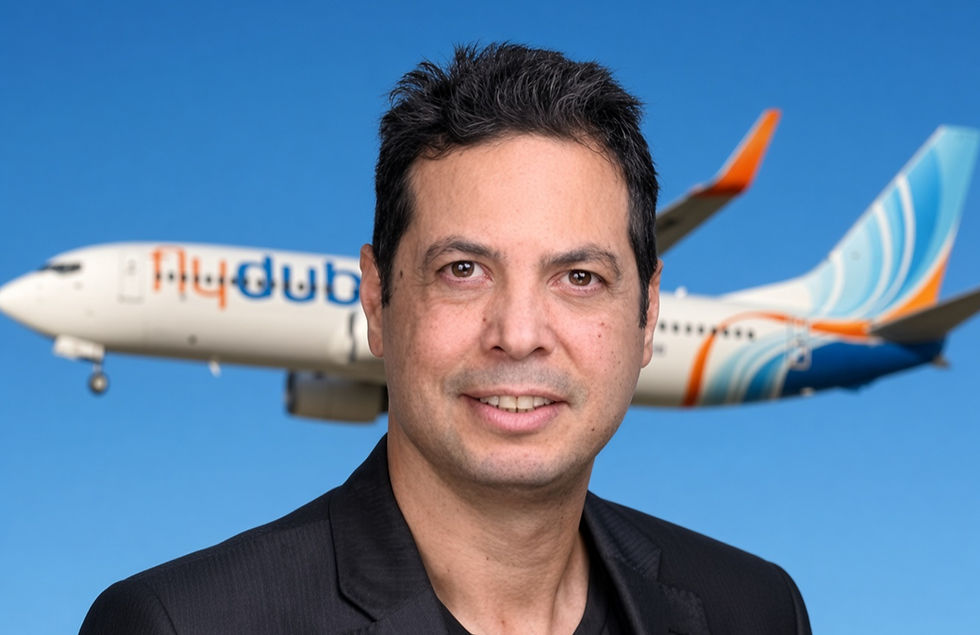
In a written reply to a media query, Leroy Dsouza of Fly Dubai official said: "We understand the interest in this story. While we recognise there are many questions at this stage, the circumstances surrounding the incident are still being investigated. We are not in a position to provide any additional comment beyond our published statements."
A diverted passenger aircraft and a held cargo flight fail at the same point. The reinforced door, the keypad and the camera were built for a rush from the cabin. They do not see the next seat, and they do not put the same warning in front of the airline, the airport and the destination authority before the aircraft is accepted. Until that file is shared, a cargo operator can reroute the flight and still be clearing crew and load against a record that already missed the person on the deck.


