
21 Taiwan CFS Operators Penalized Over Coordinated Handling Fee
 By Evan Porter · Sep 10, 2026 · 3 min read
Taiwan’s Maritime and Port Bureau told The Supply Chainer: “The penalties targeted the operators’ agreement to coordinate fee collection, while individual operators remain free to set and register their own tariffs without government intervention.”
A Taiwanese court ruling against 21 container freight station operators has reinforced a principle with direct consequences for exporters: terminal operators may determine their own charges, but they cannot coordinate those decisions with competitors.
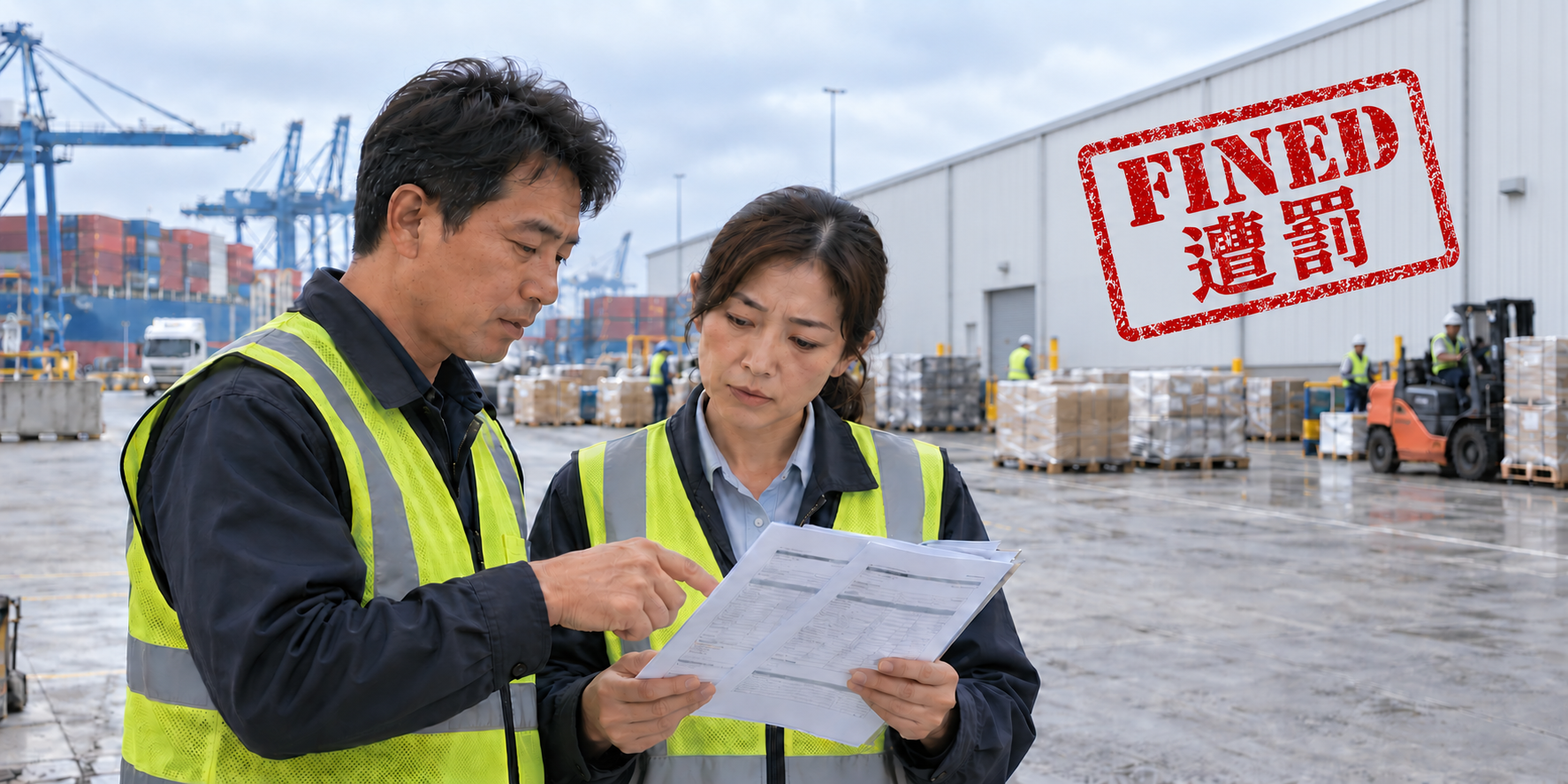
The case concerned a mechanical-handling fee applied to CFS export cargo weighing less than three metric tons. Taiwan’s Fair Trade Commission found that the operators had acted collectively in deciding whether the fee would be collected and when it would apply.
The Supreme Administrative Court dismissed the operators’ appeals on 19 November 2025, making the penalties final.
Regulator Confirms the Basis of the Penalties
In a written response to a query from The Supply Chainer, Taiwan’s Maritime and Port Bureau clarified that the penalties were not imposed merely because operators established or collected the handling fee. The issue was their agreement to coordinate its collection.
The Bureau also explained that CFS operators independently establish or amend their tariffs and submit them to the maritime authority for record. The government is not authorised to intervene in commercial tariff decisions.
That distinction is operationally important. A station may impose an additional charge when a small consignment requires equipment, labour or staging. The competition concern arises when rival stations align the charge, threshold or implementation date instead of making independent decisions. The Bureau declined to assess the practical impact on exporters, saying that it is a regulatory authority rather than a CFS operator or academic institution. It recommended seeking operational perspectives from exporters, terminal businesses, industry associations and Taiwanese experts.
Why a Small Handling Fee Can Matter
For smaller exporters, the impact is not limited to the amount charged. If competing stations apply the same fee under the same conditions, a shipper may have little practical ability to avoid it. The cargo may already be tied to a sailing, freight forwarder, consolidation schedule or designated receiving station. Moving it to another facility can introduce additional trucking, documentation and cut-off risks that cost more than the disputed fee.
Taiwan exported a record $640.75 billion of goods in 2025, an increase of 34.9% from 2024, according to official trade data. The Port of Kaohsiung alone handled approximately 9.22 million TEU in 2024. Repeated application of even a narrowly targeted charge can therefore affect a significant volume of trade.
US Carriers Fixed Puerto Rico Freight Rates and Surcharges
A previous US case showed how coordinated shipping charges can affect customers in markets with limited alternatives. Horizon Lines pleaded guilty in 2011 to participating in a conspiracy to fix prices for coastal freight services between the continental United States and Puerto Rico. According to the US Department of Justice, competing carriers agreed to fix, stabilise and maintain freight rates and surcharges, allocated customers and rigged bids.
The case did not involve the same type of CFS handling fee as the Taiwanese dispute. The underlying commercial risk was nevertheless similar: supposedly competing service providers coordinated charges imposed on shippers.
The original plea agreement called for Horizon Lines to pay a $45 million criminal fine, although the court later reduced the amount after considering the company’s financial condition. Other carriers and executives were also prosecuted as part of the investigation.
The Puerto Rico case demonstrated why authorities examine more than published tariffs. A fee can appear legitimate when viewed independently, while communications between competitors may reveal that its amount or application was coordinated.
The Compliance Risk Moves Behind the Tariff
The Taiwanese ruling settles this particular dispute, but it does not remove the conditions that made coordination possible. Exporters may still be tied to particular stations through carrier arrangements, consolidation networks and cargo cut-off requirements.
The next challenge is preventing formal agreements from being replaced by informal alignment through association meetings, competitor discussions or shared commercial signals.
CFS operators should be able to document the independent costs and operational analysis supporting tariff changes. Exporters and freight forwarders should examine unexplained similarities in new fees, weight thresholds and implementation dates across competing facilities. The ruling does not require handling charges to disappear. It requires each operator to show that its charges were independently determined.