When One Typhoon Clogs the World's Busiest Ports
 By K.R. Samiksha · Sep 10, 2026 · 2 min read
A container ship that misses its berthing window at Yangshan by a few hours can end up anchored offshore for a week or more, accruing detention and demurrage charges while downstream customers wait on cargo that should already be moving. That is the position many shippers connected to Shanghai and Ningbo-Zhoushan found themselves in after a typhoon swept through East China's coastline this year. The storm itself lasted days. The congestion it left behind is still working through the system weeks later, forcing companies to rethink how they plan around weather risk.
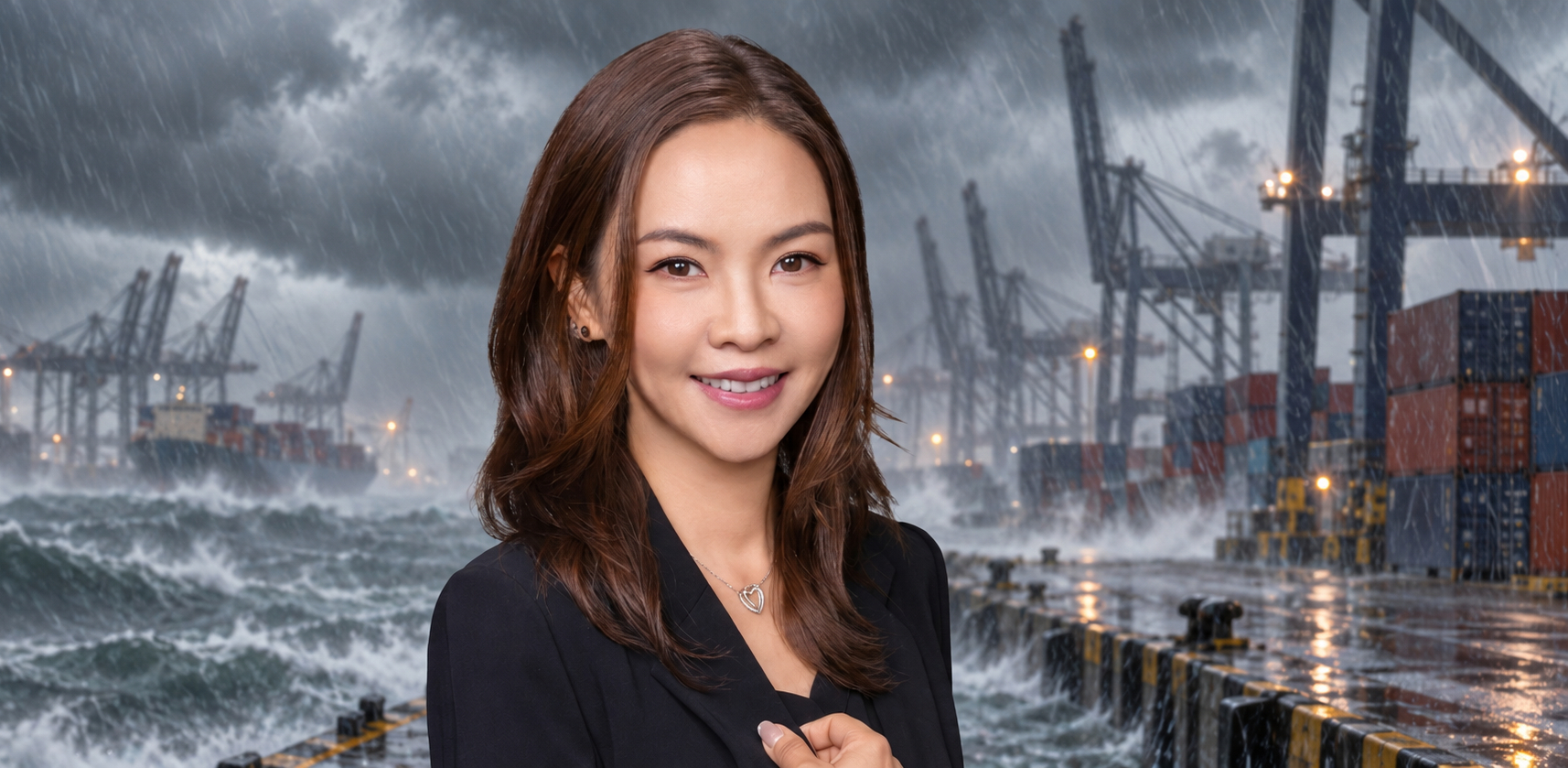
In a written response to The Supply Chainer, Suki Cheung, CEO of MG Ship, an Asian logistics technology company supporting clients in Shanghai and Ningbo through the disruption, said the old assumption that operations return to normal within days no longer holds. She pointed to vessel queues extending seven to ten days, terminal yard utilization approaching 90%, and more than 4 million TEU of cargo waiting across major North Asia ports in the weeks after the storm passed. According to Cheung, the relevant question for shippers has shifted from how strong a storm is to how quickly the supply chain around it can recover, since delayed vessel schedules, constrained equipment and imbalanced inventories can end up costing more than the weather event itself.
When to reroute and when to wait
That shift is already shaping routing decisions. With Shanghai and Ningbo-Zhoushan handling more than 4.3 million TEU of accumulated backlog and vessel waits reaching up to 11 days at some Yangshan berths, Cheung said the case for rerouting to alternative gateways such as Qingdao, Xiamen or Shenzhen strengthens once projected delays exceed seven days for time-sensitive cargo. Lower-priority freight with sufficient inventory buffers may still be better served by waiting out the queue. Delays are no longer confined to East China either, she noted, with congestion already spilling into transshipment hubs including Singapore, Hong Kong and Port Klang, with knock-on effects expected in Europe and North America in the coming weeks.
A governance problem, not just a logistics one
Cheung's response also raised who inside a shipper organization should own the fix. Once port congestion becomes structural rather than seasonal, she argued, inventory buffering stops being a logistics decision and becomes one for senior leadership - the Chief Supply Chain Officer, Chief Operating Officer or executive team, working with procurement, logistics, sales and finance - using shared indicators like vessel waiting times and yard utilization to decide when to adjust sourcing, carrier allocation or coverage.
That emphasis on shared, real-time indicators echoes what other logistics providers have told The Supply Chainer as disruptions multiply across global shipping lanes. Responding in writing to a separate Supply Chainer inquiry, Signe Wagner, Global Head Media Relations at Kuehne+Nagel, said that "in a volatile environment of potential route disruptions, supply-chain resilience depends on flexibility, visibility, and integrated planning," adding that "real-time shipment tracking, predictive analytics, and scenario planning support better decision-making under uncertainty." Kuehne+Nagel said it expects disruptions of this kind to keep pushing supply chains toward more resilient, flexible operating models.