What to Do When Your Container Arrives with Unexpected Guests
 By Hannah Kohr · Jun 7, 2026 · 3 min read
Containers cross oceans daily carrying everything from electronics to apparel. Yet occasionally, these steel boxes deliver more than ordered cargo. Live stowaways—animals that survive long voyages—highlight biosecurity risks, operational disruptions, and the need for robust protocols in international logistics.
Real Incidents from Around the World
Real-world incidents reported in the media illustrate the phenomenon. In Minnesota, U.S., distribution center workers opened a container from China and discovered a severely dehydrated cat that had endured an 8,000-mile journey over three weeks without adequate food or water. The animal, nicknamed Xiao Mao, was nursed back to health.
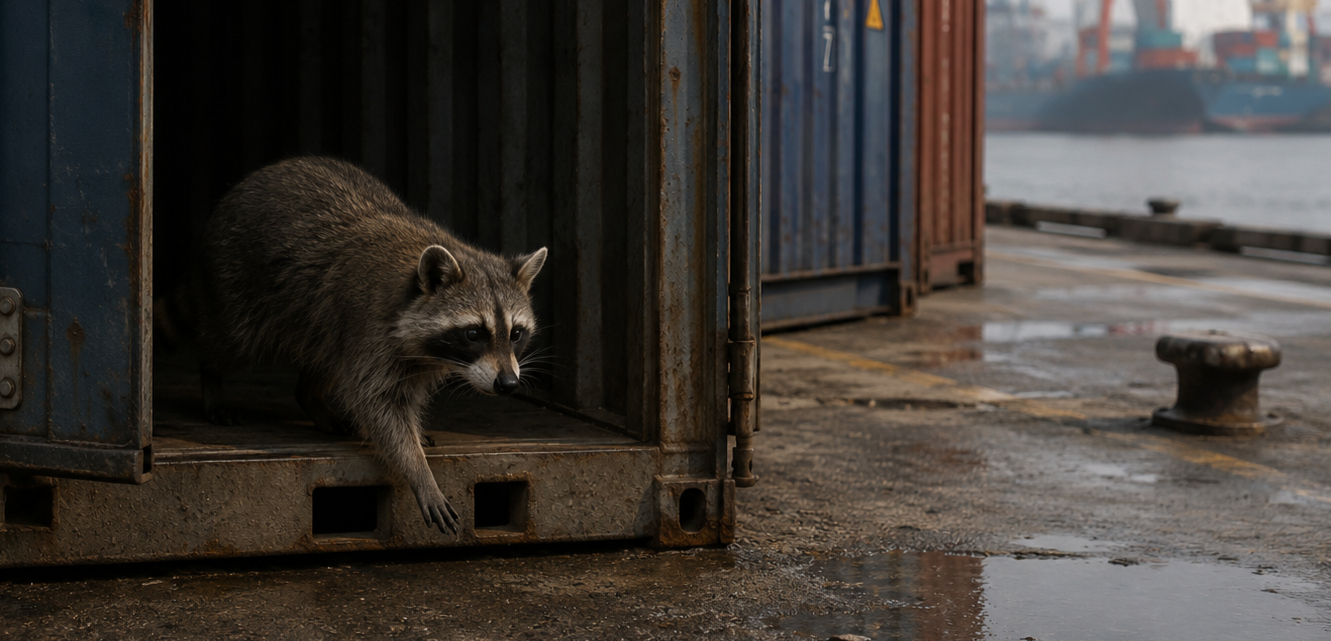
In Belarus, customs inspectors found a live raccoon inside a container transporting a vehicle from the United States. The raccoon had survived the transatlantic crossing and was resting on the car's dashboard before being transferred for care.
Shipping professionals in Honolulu, Hawaii, encountered a three-foot boa constrictor inside a household goods container arriving from California. The snake was safely captured and relocated.
On the remote island of Saint Helena, workers unloading cargo from Ascension Island found an unexpected gecko species, which was handed over to biosecurity teams for assessment.
In a 2005 case at the Port of Los Angeles, a crane operator spotted 32 Chinese migrants emerging from a container after a roughly two-week voyage from Hong Kong.
More recently, in Molokai, Hawaii, hardware store staff discovered a live 20-inch gopher snake in a container from California; authorities euthanized it due to invasive species concerns.
Response Protocols and Operational Impact
These cases demonstrate how stowaways range from mammals and reptiles to humans, often surviving extreme conditions inside sealed environments. For supply chain managers, such discoveries trigger immediate operational halts. Containers must be isolated, areas secured, and relevant authorities notified, including customs, veterinary services, and invasive species specialists. Delays can cascade through distribution networks, increasing costs and affecting just-in-time inventory systems.
Standard response procedures emphasize rapid risk assessment. Biosecurity teams evaluate threats to local ecosystems, agriculture, and public health. Live animals may require quarantine, rehabilitation, or humane euthanasia, depending on regulations and species status. Human stowaways activate immigration and law enforcement protocols. Documentation of incidents supports compliance with international standards like those from the International Maritime Organization and helps refine container inspection processes.
Expert Insights and Preventive Strategies
Experts stress proactive measures. "Commercial shipping is one of the biggest ways invasive species are transported globally," noted Danielle Verna, an environmental monitoring specialist with over a decade of research on the topic. "The more shipping we do, and the more connections we make, the more potential we create for the spread of species."
Another perspective from biosecurity professionals highlights innovation: "By rethinking container design, we can mitigate the risks of invasive species and safeguard biodiversity, forests, and global food supplies."
Supply chain leaders should integrate enhanced sealing techniques, regular pre-loading inspections, and advanced monitoring technologies such as sensors or AI-driven imaging at ports. Training dockworkers and warehouse staff to recognize signs of stowaways can minimize surprises. Collaboration with carriers, insurers, and regulators strengthens resilience against these rare but impactful events.
As global trade volumes grow, awareness of "unexpected guests" remains essential. Implementing stricter biosecurity in logistics not only protects operations but also contributes to environmental stewardship. Companies that treat these incidents as learning opportunities can reduce risks and maintain smoother supply chain flows.