Resilient Supply Chain Podcast: Operational Discipline and the Hidden Risk in Fulfilment
 By The Supply Chainer · Jun 30, 2026 · 3 min read
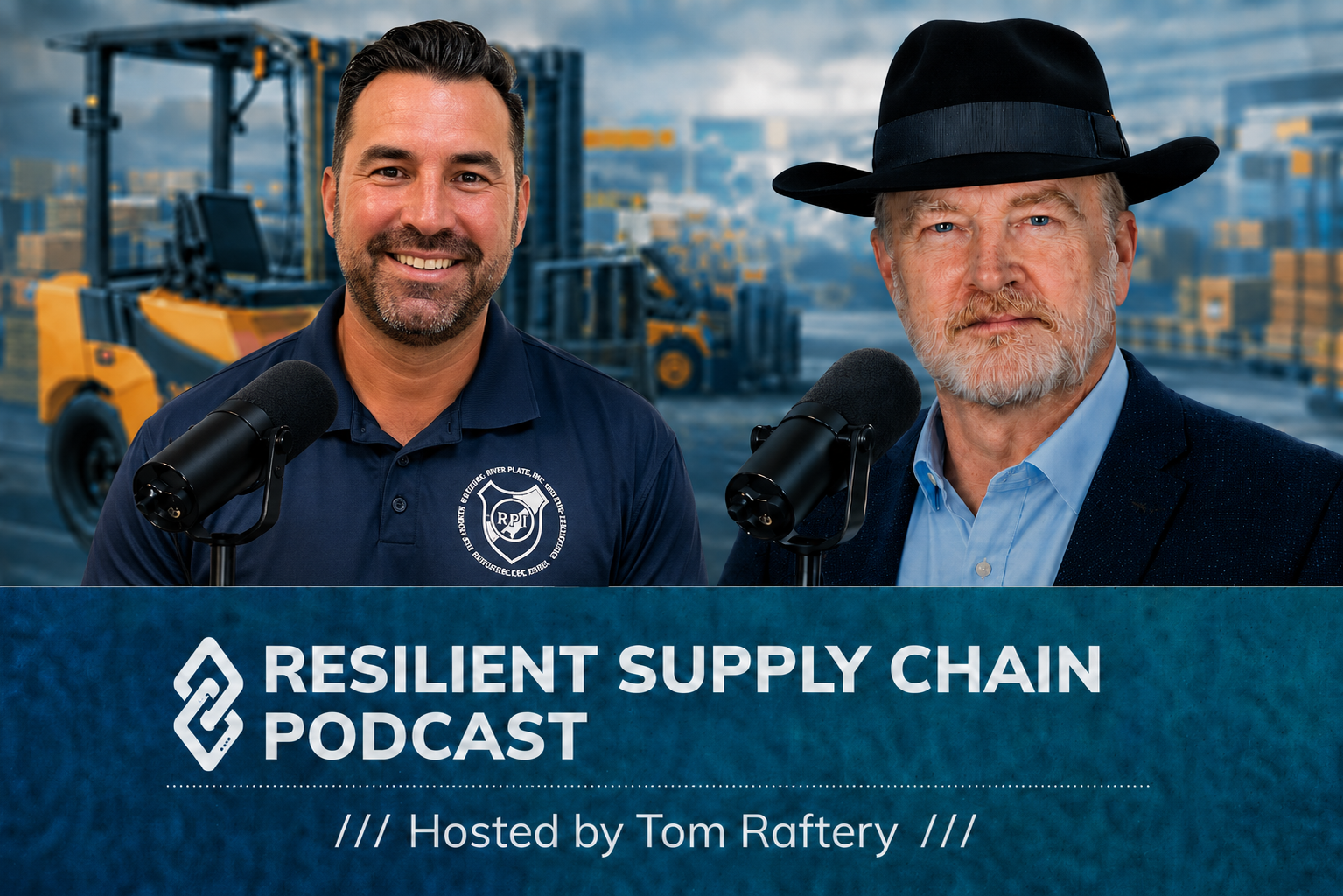
The latest episode of the Resilient Supply Chain Podcast, hosted by Tom Raftery, features Leo Rodriguez, Vice President at River Plate Inc., a Southern California-based third-party logistics provider operating across e-commerce, retail, warehousing, distribution, freight logistics, kitting and assembly. The conversation examines fulfilment as a strategic risk function rather than a downstream execution task. For supply chain leaders, the discussion is timely because customer expectations, retail compliance, parcel cost pressure, and data dependency are exposing weaknesses that were once hidden inside warehouse workarounds. The full episode is available at www.resilientsupplychainpodcast.com or in your podcast app of choice.
Exceptions Become Operating Models
A central theme in the discussion is the risk created when exceptions become normalised. Rodriguez argues that fulfilment rarely fails because of a single dramatic event. More often, failure emerges from repeated tolerance of non-compliance, incomplete data, rushed inventory handling, or informal process changes that gradually become embedded.
“You can do that once or twice, but you can’t make that the norm,” Rodriguez says. The point is less about rigidity than governance. A fulfilment operation needs enough discipline to protect inventory accuracy, system integrity and customer promise, while remaining flexible enough to adapt when tariffs, carrier constraints, demand changes or channel complexity shift the operating context.
Physical Operations Must Match System Reality
The conversation also highlights the importance of synchronising the physical operation with the digital record. Warehouse management systems, transportation management systems, order management systems and ERPs can only support resilience if the data flowing through them reflects reality on the floor.
Rodriguez notes that “everything that’s happening physically in the operation needs to happen virtually in your systems.” That observation cuts to a persistent failure mode in modern logistics. Visibility is not the same as accuracy. If item data, carton dimensions, pallet configurations, ASNs, EDI documents or inventory positions are wrong, dashboards may simply accelerate poor decisions.
Fulfilment Risk Often Starts Inbound
One of the more useful strategic takeaways is that fulfilment failures often begin before the outbound process starts. Packaging, item setup, carton markings, labelling, retail compliance, and channel requirements need to be considered early, particularly when brands move from direct-to-consumer into retail, wholesale or marketplace fulfilment.
A product configuration that works well for container efficiency can become costly later if it exceeds retail channel dimensions or weight limits. That can force rework, new cartons, value-added services and additional labour inside the 3PL environment. The result is margin leakage that could have been avoided earlier in the manufacturing or packaging stage.
Automation Helps, But Only After Discipline
AI and automation appear in the discussion as important tools, but not as substitutes for process maturity. Rodriguez describes automation as part of the operational tool belt, particularly where repetitive decisions, inventory velocity patterns and inbound placement can be calculated more consistently. However, the conversation avoids treating technology as a cure-all.
The more nuanced point is that automation performs best when the underlying process is stable, well-governed and data-rich. Where workflows are broken, AI risks scaling confusion rather than resolving it. For leaders assessing fulfilment partners, the implication is clear: technology capability matters, but so do operating discipline, experience, accountability and communication.
Choosing 3PL Partners as a Governance Decision
The episode also reframes the choice between in-house fulfilment and outsourcing. Rodriguez argues that 3PLs are not merely service providers but extensions of the brand, affecting customer experience, compliance performance and scalability. Cost remains important, but “cheaper is not better” if low pricing comes at the expense of visibility, responsiveness or execution quality.
For senior supply chain, procurement and operations leaders, the wider lesson is that fulfilment resilience depends on disciplined execution at the edges of the business. Governance cannot stop at supplier selection or system implementation. It has to extend into data quality, packaging decisions, compliance design, exception management and the working relationship between brand, manufacturer, carrier and 3PL.
As supply chains face continued disruption, regulatory pressure and cost volatility, the operational details of fulfilment will carry increasing strategic weight. The organisations that manage those details deliberately will be better positioned to reduce avoidable risk, protect margin and maintain customer trust under pressure.