Port of Brussels Sees Inland Waterways Gain Ground as European Importers Rethink Freight Resilience
 By Alex Badmington · Aug 14, 2026 · 3 min read
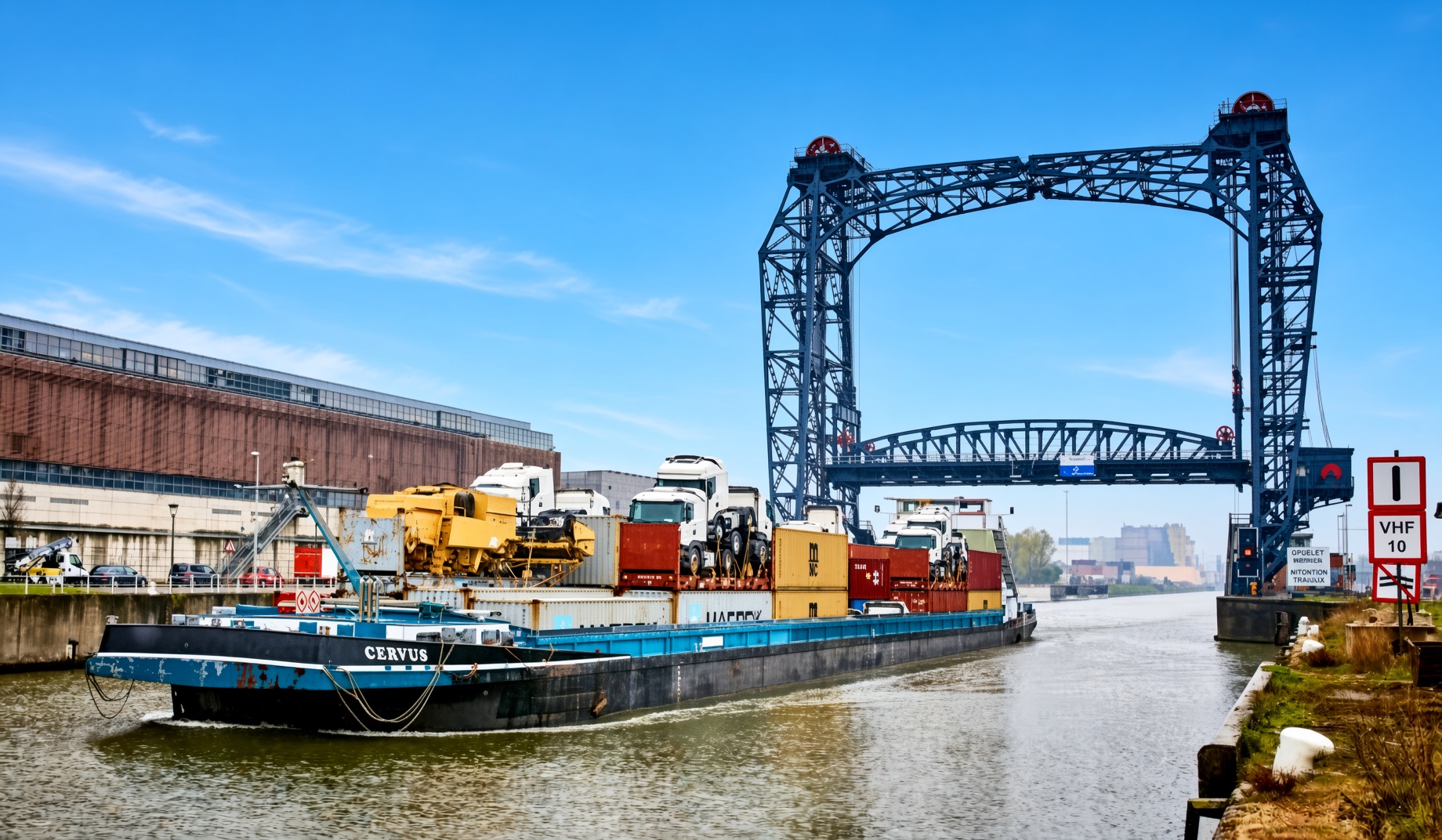
European importers navigating volatile freight cycles are rediscovering inland waterways as operational ballast when ocean spot rates swing and road capacity tightens. A single barge moves the cargo equivalent of dozens of lorries, reducing pressure on congested highways while keeping goods flowing when disruption strikes modal chokepoints.
According to Eurostat, EU inland waterway freight transport increased by 4.5% in 2024, totaling 473 million tonnes, as importers sought alternatives to volatile ocean and road networks. Germany and the Netherlands dominated EU inland waterway transport in 2025, accounting for 71.9% of the total, underscoring the strategic role of river corridors in absorbing freight when traditional modes face capacity constraints.
Multimodal Capacity Over Single-Mode Substitution
Sylvain Godfroid, team manager for communication at Port of Brussels, explained in written responses to The Supply Chainer: "We see inland waterways not as a substitute for road transport, but as an essential part of a resilient multimodal transport system. Resilience comes precisely from having different modes available and using each of them where it is most efficient. One of the main strengths of inland navigation is its capacity to move large volumes of goods efficiently. A single barge can carry the equivalent of many lorries, reducing pressure on already congested road networks. This is particularly relevant for large and regular flows of goods such as construction materials, petroleum products, aggregates or waste. The objective is not to eliminate road transport - lorries remain essential, particularly for the last mile. The advantage of multimodal logistics is that goods can be transported by water for the longest possible part of their journey, with road transport used where it is most relevant, especially for final delivery."
Infrastructure Visibility Lags Availability
One persistent barrier is perception. Since the 1970s logistics chains have organized around road haulage, and many shippers do not consider waterway options even where terminals and barge services exist. The European Union has designated inland waterways as part of the solution to network congestion and emissions reduction - Brussels sits on two Trans-European Transport Network corridors - yet translating policy into daily freight decisions remains slow.
Godfroid noted that Port of Brussels developed a dedicated mapping tool for the construction sector to surface companies, terminals, and infrastructure that support waterway-based logistics. The goal is practical: make the ecosystem visible so firms understand integration pathways. Awareness alone does not shift tons; modal change also requires suitable transshipment points, sufficient volumes, and preservation of urban port land with direct waterway access.
Operational Upside in Crisis Cycles
Structural growth in waterborne freight has been evident since the Port of Brussels became a regional public company in the 1990s, though year-to-year volumes track broader economic conditions. Traffic fell sharply in 2009 during the financial crisis and again in 2025 amid Belgian economic headwinds and prolonged institutional uncertainty in Brussels. Beyond those dips, long-term demand reflects sustained interest in making logistics more sustainable and using the canal more effectively.
Lucien Besse, COO and Co-Founder at Shippeo, a Paris-based real-time transportation visibility platform, as previously reported by The Supply Chainer: "The port-to-warehouse coordination gap remains one of the most costly and least controlled areas of import logistics. When a receiving window is missed, teams relying on traditional TMS or Excel react too late, overpay avoidable fees, waste time on manual investigation."
Urban regions benefit when goods reach city edges by water, reducing lorry distance and frequency for final delivery. That cuts congestion, road-wear costs, and local emissions. The Brussels canal maintains full navigability even as drought and low water levels restrict other European rivers, offering reliability during periods when alternative modes face capacity constraints.
The practical challenge remains converting infrastructure into habit. Multimodal resilience requires shippers to design waterway segments into supply chains at the outset, not retrofit them after road or ocean freight disruptions expose single-mode fragility.