Gulf Supply Chains Under Pressure as Iran Tensions Raise Concrete Disruption Risks
 By Freddie Bolton · Feb 1, 2026 · 4 min read
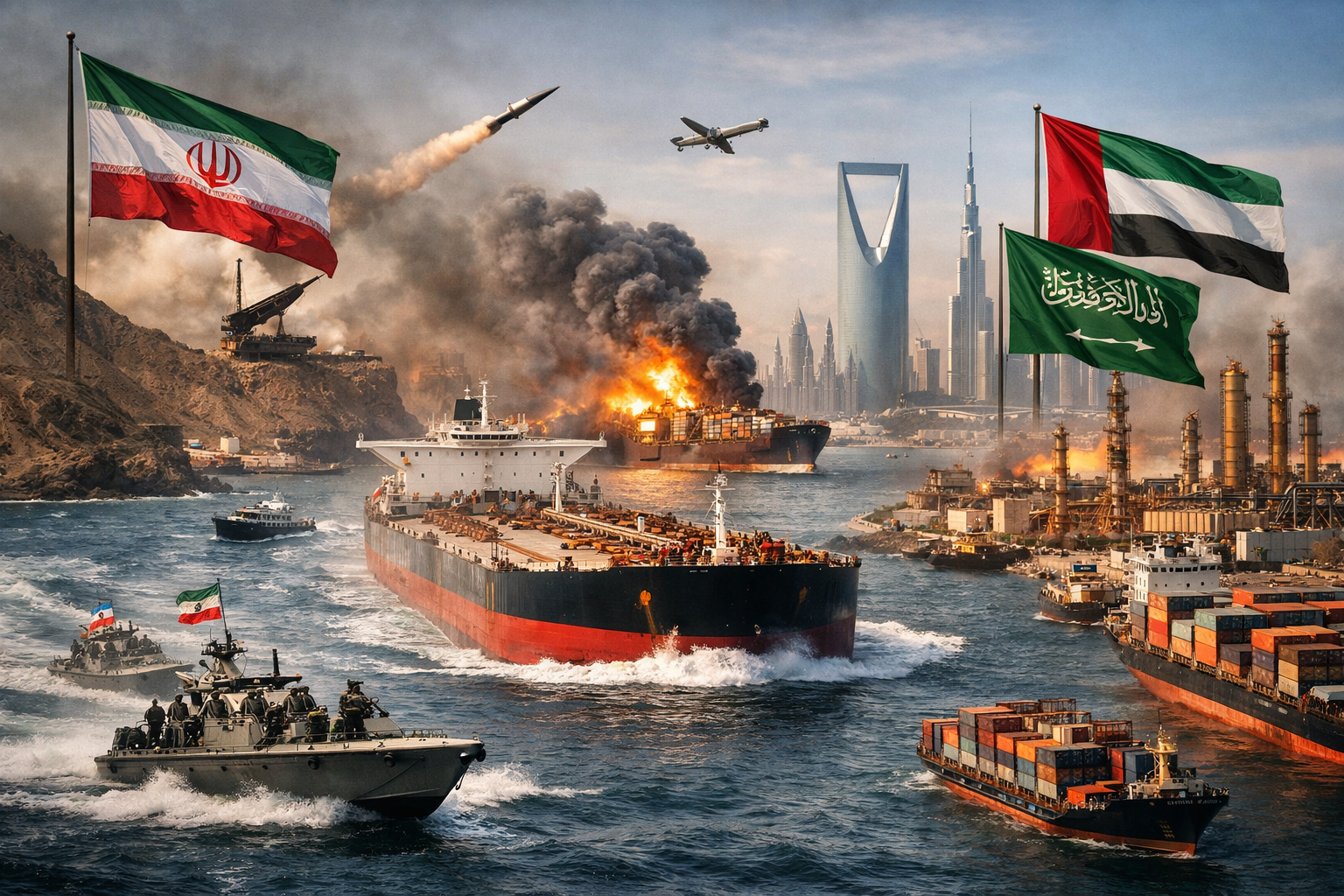
Escalating tensions involving Iran are translating into measurable pressure on supply chains across the Gulf, with direct implications for Iran itself and for its two largest regional trading counterparts, Saudi Arabia and the UAE. Unlike earlier periods of rhetorical instability, recent developments have produced quantifiable impacts on shipping costs, insurance premiums, transit times, and trade flows, forcing logistics planners to move from contingency planning to active mitigation.
At the center of the risk is the Strait of Hormuz. According to the US Energy Information Administration, around 21 million barrels of oil per day passed through the strait in 2024, representing roughly 30 percent of global seaborne crude trade. Even partial disruption has outsized consequences. Following Iranian parliamentary statements in mid-2025 asserting the legal authority to restrict passage in response to military pressure, tanker insurers began applying war-risk premiums of up to 0.3 percent of vessel value per voyage, up from near-zero earlier in the year, according to shipping market data cited by Lloyd’s List.
Energy markets reacted immediately. Brent crude rose from $78 per barrel to above $90 within days of renewed escalation warnings in late 2025, amplifying fuel costs across maritime and air freight. As Maersk CEO Vincent Clerc told Bloomberg in December, “Even without a physical closure, uncertainty in Hormuz translates directly into higher freight costs and longer lead times.” That dynamic has become visible across Gulf-linked trade lanes.
Iran: constrained trade and rising logistics friction
For Iran, the impact is structural. Sanctions already limit formal trade, but logistics disruption adds another layer. Iranian crude exports, estimated by Kpler at 1.4–1.6 million barrels per day in 2025, rely heavily on ship-to-ship transfers and opaque routing through the Gulf. Increased naval monitoring and insurance scrutiny have lengthened average voyage times by 20–30 percent, according to tanker tracking data cited by the Financial Times. For non-energy imports, including food and industrial inputs, Iranian buyers are facing higher landed costs as regional carriers demand prepayment and risk buffers.
An Iranian shipping executive quoted by Reuters summarized the constraint bluntly: “The bottleneck is not ports or ships. It is insurance, routing, and uncertainty. Every escalation adds cost before cargo even moves.”
Saudi Arabia: export exposure and price volatility
Saudi Arabia’s exposure is different but no less material. The kingdom exported an average of 7.2 million barrels per day of crude and refined products in 2024, with roughly 60 percent transiting Hormuz despite alternative pipelines such as East-West Petroline. While higher oil prices can temporarily lift revenue, logistics volatility complicates planning for downstream industries and Vision 2030 manufacturing ambitions.
Aramco CFO Ziad Al-Murshed noted on the company’s Q3 2025 earnings call that “sustained regional instability increases shipping and compliance costs across the value chain, even when physical volumes are maintained.” Freight data supports that assessment. VLCC charter rates on Gulf-Asia routes rose from $35,000 per day to over $70,000 during peak tension periods in late 2025, according to Clarksons Research.
Non-energy trade is also affected. Saudi fertilizer exports, which rely on Gulf shipping lanes, saw contract renegotiations as buyers demanded delivery flexibility. Kpler estimates that nearly 35 percent of global seaborne fertilizer exports transit Hormuz, making even short disruptions globally significant.
UAE: logistics hub under indirect strain
The UAE, as the Gulf’s primary logistics and transshipment hub, faces indirect but systemic risk. Jebel Ali Port handled 14.5 million TEU in 2024, much of it dependent on predictable Gulf feeder connections. While UAE ports have not seen closures, operators report changes in vessel behavior. According to DP World data cited by The National, some carriers reduced Gulf port calls during high-risk weeks, consolidating cargo to limit exposure.
UAE Minister of State for Foreign Trade Thani Al Zeyoudi stated in January 2026 that “geopolitical instability introduces friction into trade flows even when infrastructure remains fully operational.” That friction shows up in longer dwell times, higher inventory buffers, and increased air-freight substitution for high-value goods.
Insurance costs are another pressure point. UAE-based logistics firms report that war-risk surcharges are now routinely embedded in contracts for Gulf transits, raising door-to-door costs by 5–10 percent for sensitive cargoes.
From geopolitical risk to operational reality
What distinguishes the current phase is that supply chain disruption is no longer hypothetical. Insurance pricing, freight rates, transit times, and inventory strategies are already adjusting to Iran-related risk. As one senior executive at a global container line told the Wall Street Journal, “You don’t need a blockade to disrupt supply chains. You just need enough uncertainty that planners lose confidence in timing.”
For Saudi Arabia and the UAE, resilience now depends less on reacting to crisis and more on sustaining predictable trade corridors under persistent tension. For Iran, the situation reinforces long-standing trade constraints while magnifying costs across every import and export decision. Across the Gulf, the situation has shifted supply chain risk from a background variable to a central operating condition.
Sources:
https://www.eia.gov/international/analysis/regions-of-interest/Strait_of_Hormuz
https://www.ft.com/content/iran-oil-exports-tankers-hormuz
https://www.bloomberg.com/news/articles/maersk-shipping-middle-east-risk
https://www.reuters.com/world/middle-east/iran-shipping-insurance-gulf
https://www.thenationalnews.com/business/economy/uae-trade-geopolitical-risk
https://www.kpler.com/blog/global-fertiliser-dependency-on-gulf-exports