AI Route Optimization Becomes Margin Defense As Last-Mile Costs Climb
 By Hannah Kohr · Feb 19, 2026 · 3 min read
Rising fuel prices, persistent driver shortages, and tightening labor regulations are forcing last-mile operators to rethink how delivery networks are structured. Across the US and Europe, logistics teams are confronting a simple constraint: scaling delivery capacity through additional labor and vehicles is no longer economically viable.
Transportation remains one of the largest cost centers for retailers, food distributors, and parcel carriers. With diesel prices volatile and wage pressures increasing, companies are under renewed pressure to reduce empty miles, improve dispatch efficiency, and maintain service levels without expanding fleet size.
In response to a query from The Supply Chainer, Dhruvil Sanghvi, Chief Executive Officer of LogiNext, argued that incremental adjustments are no longer sufficient.
“You can't solve today's delivery problems through merely hiring more drivers or more trucks, the math doesn't allow it anymore,” Sanghvi said. “Soaring fuel costs in the US and Europe are impacting heavily on margins, and the ongoing shortage of drivers is only making it more challenging.”
According to Sanghvi, the shift toward AI-driven dispatching and real-time routing is not optional under current conditions. “AI-powered route optimization is not a luxury, it's a necessity,” he said. “Businesses are converting delivery from loss to source of value.”
Redefining Delivery Efficiency
Traditional route planning models focused primarily on mileage reduction or static scheduling. Under inflationary pressure, that definition is evolving.
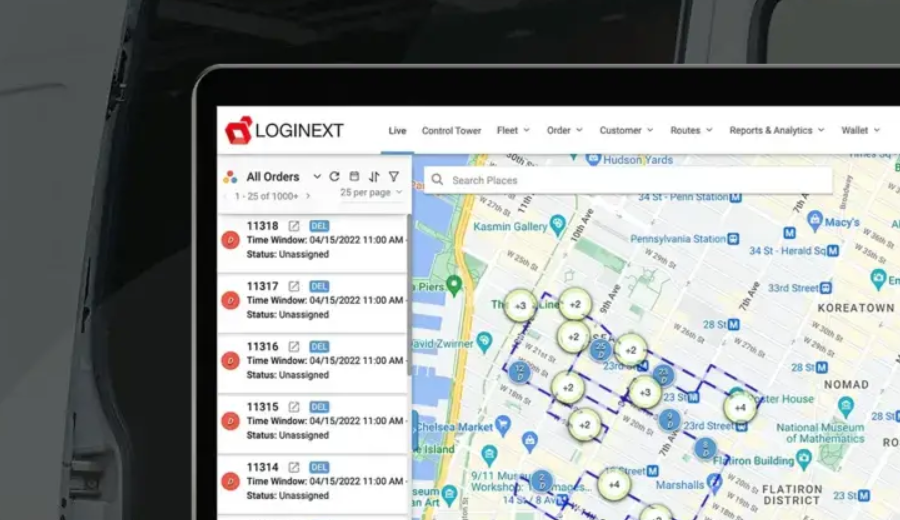
Sanghvi contends that efficiency now depends on dynamic adaptation to localized conditions. “We integrate real-time information on distance covered, road state, and driver availability,” he said. “That means a delivery route in California, where diesel is over $6 a gallon, looks very different from one in Texas. It’s not one-size-fits-all, it’s localized, AI-driven optimization at scale.”
He added that the objective is not simply fuel savings but operational compression. “Customers use LogiNext to reduce empty miles, automatically assign jobs to the most productive routes, and trim dispatch time by over 50%.”
The broader industry context supports that shift. As carriers invest heavily in fleet expansion and labor retention, technology platforms are increasingly positioned as the lever to extract performance gains from existing assets rather than expand capacity.
Sanghvi cited examples of companies reporting measurable gains through algorithmic routing. “Hungry Harvest cut last-mile costs by 22% through AI-driven micro-routes that factored in traffic, driver skill, and even weather,” he said, adding that European operators have reported improvements in speed and reliability through similar implementations.
While individual performance claims vary, the underlying trend is clear: margin defense in last-mile logistics is moving from physical expansion to software optimization.
Compliance As A Technology Driver
Beyond fuel and labor costs, regulatory scrutiny of gig-economy labor models is reshaping operational requirements. Courts and policymakers in the US, UK, and parts of the EU continue to evaluate worker classification frameworks, placing new compliance obligations on delivery operators.
Sanghvi sees regulatory complexity as an adoption catalyst rather than a constraint.
“As authorities clamp down on gig-economy platforms throughout the US, UK, and selected EU countries, compliance is moving from being a back-office thorn to a business fundamental,” he said. “Ahead, compliance is not going to hold back logistics software implementation, it is going to drive it.”
According to Sanghvi, platforms that integrate roster management, wage alignment, and audit tracking within dispatch systems can reduce administrative overhead while maintaining legal compliance. “Businesses will be relying upon platforms to change rosters dynamically, track hours, monitor driver behavior, and build audit-proof logs that comply with local labor regulations,” he said. The convergence of cost pressure and regulatory oversight may accelerate investment cycles. Companies that previously treated routing tools as incremental productivity upgrades are increasingly evaluating them as risk mitigation infrastructure.
From Cost Center To Competitive Lever
The transformation underway in last-mile logistics reflects a broader supply chain pattern. Where inflation and volatility compress margins, automation often becomes a structural response.
Sanghvi framed the transition in strategic terms. “Under inflationary pressure, AI in route optimization isn’t just about cost control, it redefines delivery efficiency as a strategic advantage,” he said. “Companies that embrace this shift will protect margins and customer trust, while those stuck in manual planning will keep bleeding profits.”
As operating conditions remain uncertain heading into 2026, last-mile execution may hinge less on fleet size and more on algorithmic precision. For operators balancing cost containment, compliance risk, and customer expectations, the competitive advantage increasingly lies in how intelligently routes are planned rather than how many vehicles are deployed.